Hunting elk on Hopi lands

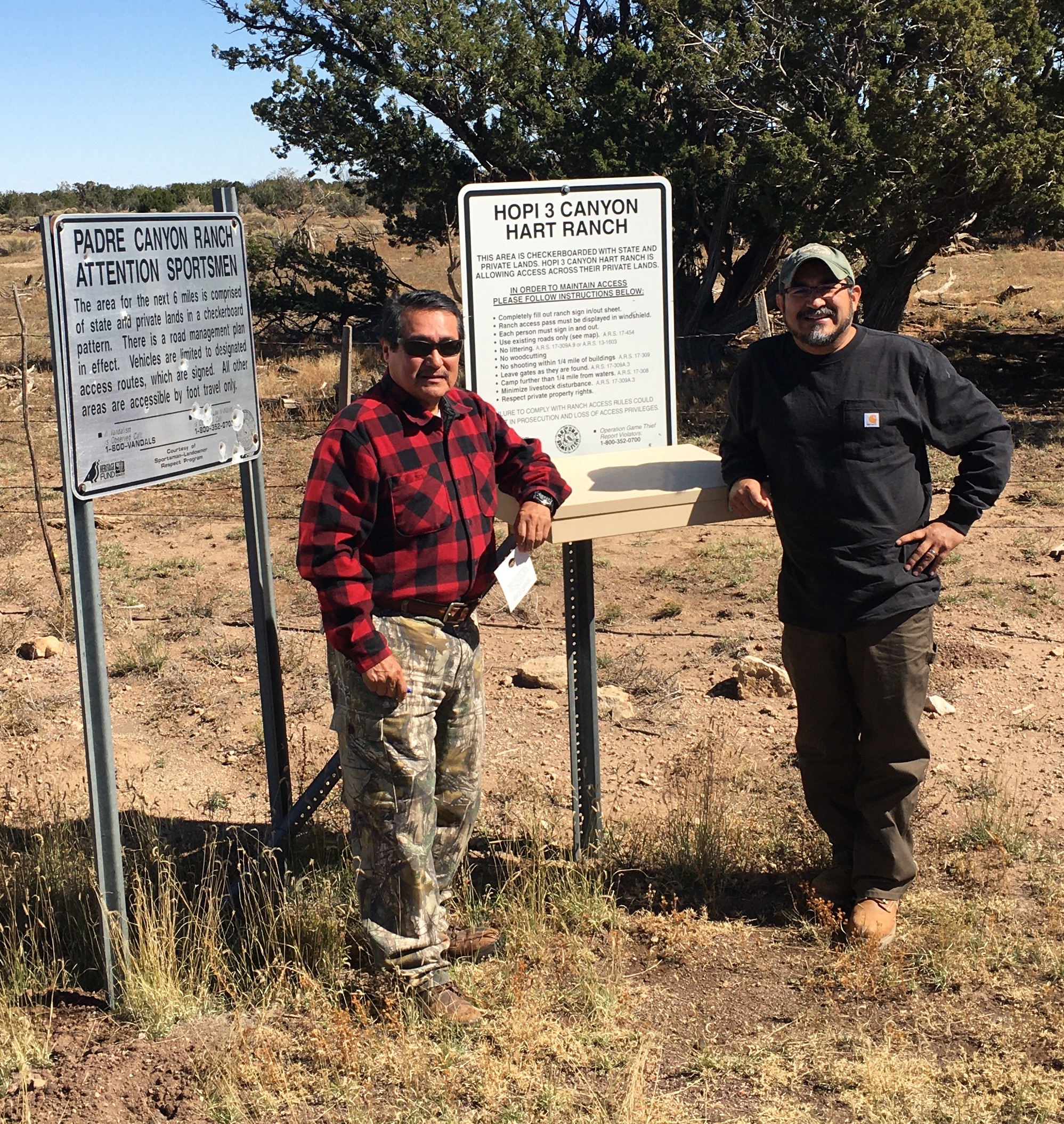
Author (right) standing next to his father, Willard Sakiestewa Gilbert (left). October 2021

My father and I drove east on Interstate 40 until we reached Exit 219, the Twin Arrows Navajo Casino turnoff.

After exiting the interstate, we headed south on a dirt road until we reached the first of two sign-in checkpoints, indicating that we had entered one of three ranches of the Hopi Three Canyon Ranch.

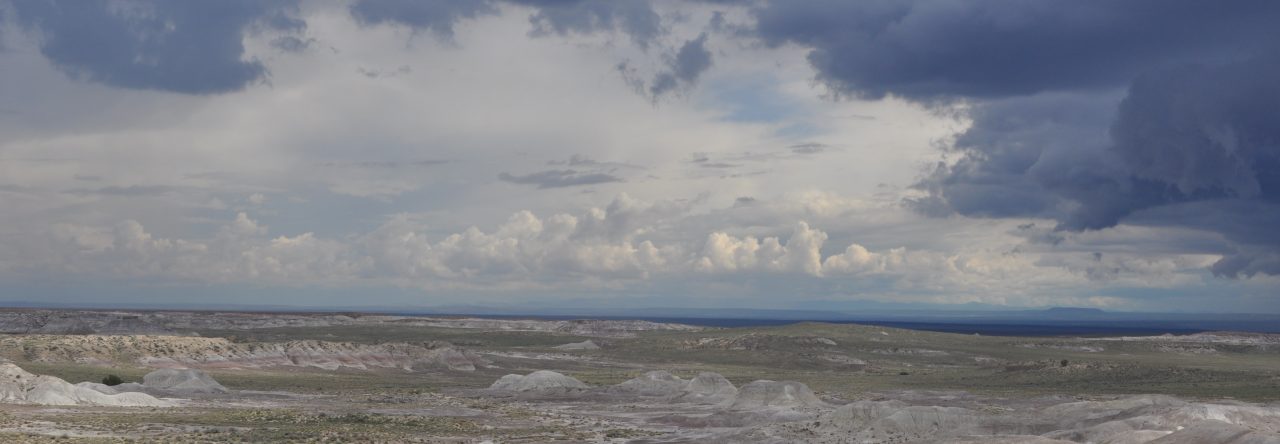
Since 2005, the Hopi Tribe has owned and managed the ranches near Twin Arrows. Consisting of 400,000 plus acres, the ranches are in the state’s hunting units 4A, 5A, and 5B North. Known for its beautiful hills and canyons, the region has attracted hunters for its elk, deer, and other wildlife.

Each year, the Hopi Tribe works with Arizona Game and Fish to reserve hunting permits for its members to hunt specific Hopi Trust Lands, including those comprising the Hopi Three Canyon Ranch. 

Before this trip, I had little experience hunting. My father taught me to fish when I was young, and I only occasionally hunted rabbits and squirrels. I had no previous knowledge hunting elk or any big game animal.

After driving for an hour, we reached our campsite, a secluded spot on a ridge overlooking a large valley. We set up camp and prepared for the next day’s hunt. Dinner that night was beef and potato stew and white rolls from Sam’s Club.
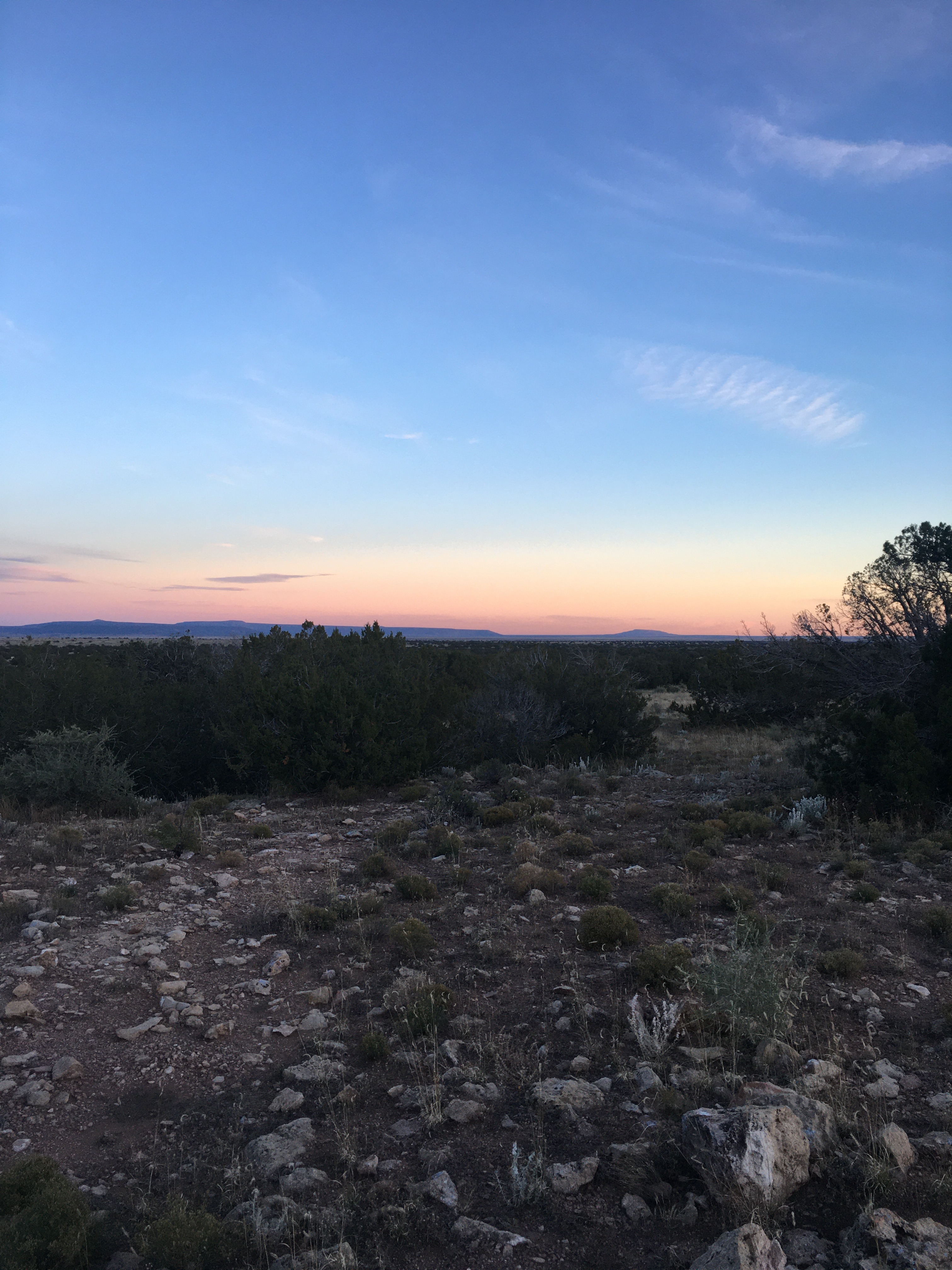
Hopi hunting grounds at sunset

There is something special and therapeutic about spending time outdoors and away from the hustle and bustle of city life. Here, on the Colorado Plateau, our cell phones, try as they may, could not acquire a signal: no calls, text messages, or internet. 

What normally consumes my time and dictates my day, my Apple smartphone became nothing more than a clock and camera. I felt free.

At night, the Milky Way and constellations I first learned about in grade school were visible. To the south, city lights from Phoenix glowed a golden hue, the same from Flagstaff in the northwest. And far in the distance, headlights from cars resembled a LED neon rope stretching from Winslow to Winona.

Each morning started the same. We woke up at 4:30, heated water for coffee, and talked about whether we heard elk during the night.

Elk bugling is a good sign for hunters. It means the herd is excited, and the seasonal rut is still on. Bugling bulls also imply the presence of female elk, referred to as cows. We had cow tags.
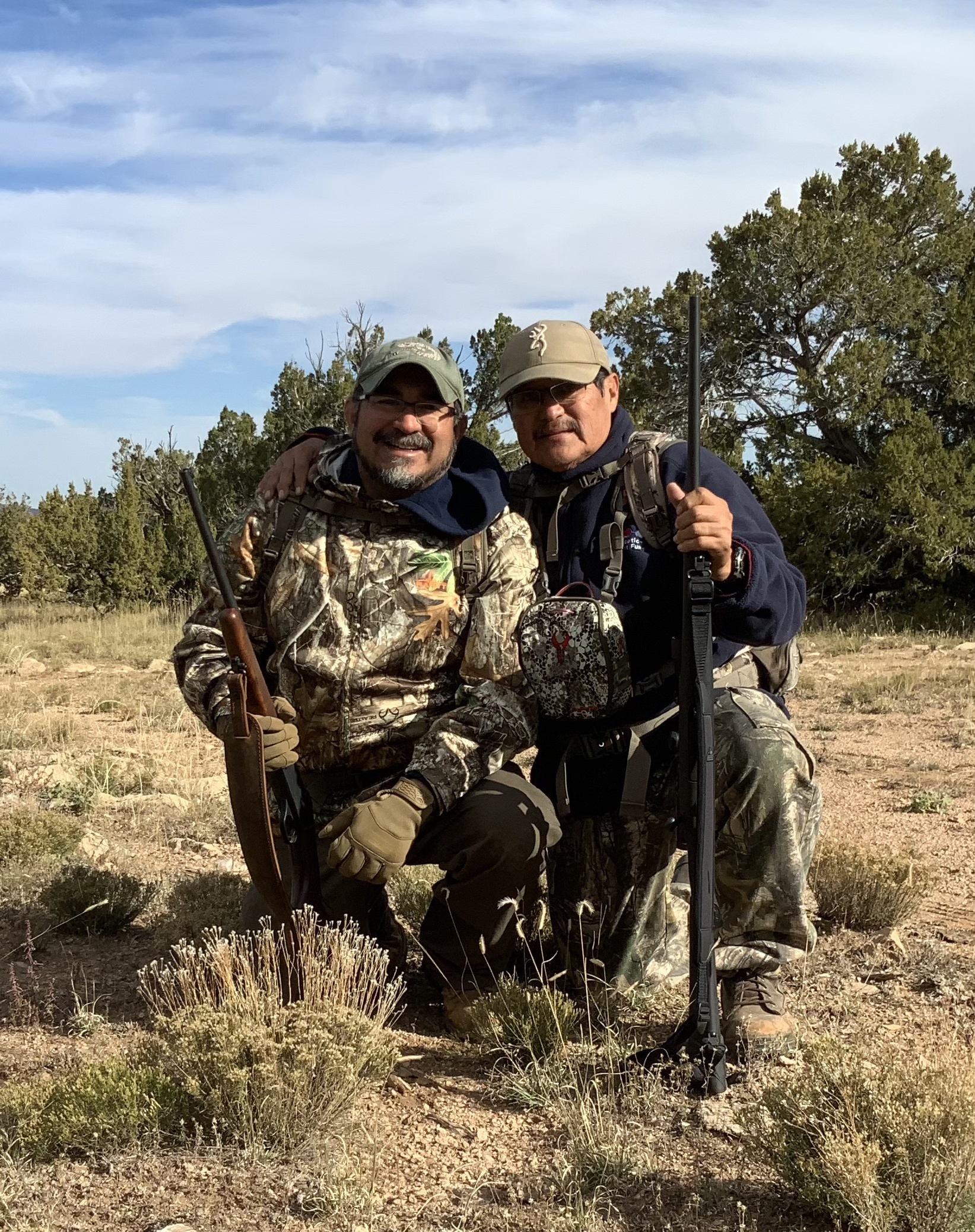
Last day of our 2021 Hopi Hunt

Slowly and carefully, we walked through a forest of cedar, stopping often to listen and paying close attention to movement near or far. Occasionally, if the wind was right, we caught the scent of elk urine. Although we encountered elk that first morning, we did not have a good or clean shot.

Hunting elk is hard work, physically and mentally exhausting. After three days, we packed our gear, broke down camp, and headed out. 

Sometimes, all one returns home with from a hunt are memories and experiences, and those are often more valuable than a freezer full of meat.

Hopi Student Invitation: ESA SEEDS leadership meeting

To all Hopi students:

This invitation is open to Hopi students (high school, undergrad, graduate, or those enrolled in any institution on or near the Colorado Plateau). This leadership meeting is seeking Hopi student representatives that have a desire and interest in agriculture as well as “students interested in sustainability, environmental science, and ecology will benefit a great deal from this meeting; it is a wonderful group of positive students.”Below is an invitation for the Ecological Society of America’s SEEDS western leadership meeting. Attached is the agenda.  We are hoping to serve student representatives of the Hopi Nation to bring greater diversity into our meeting.

INVITATION

You are invited to the Ecological Society of America’s SEEDS western leadership meeting in Flagstaff, AZ from Thursday, April 7 (late afternoon arrival) to Sunday, April 10 (morning departure).  The leadership meeting theme is “Ecological Sustainability in our Nation’s West”.  SEEDS students and advisors in California and the Colorado Plateau are welcome to participate, with all expenses covered by the SEEDS program (transportation, housing, meals). If you would like to participate in this meeting, please reply to Melissa Armstrong at Melissa@esa.org by April 4.

Participants will be interacting with ESA Vice President Dr. Laura Huenneke, experts in sustainability and action such as Black Mesa Water Coalition, Grand Canyon Trust, and the Wilderness Society, and of course from one another!  We will be taking a half day field trip to nearby San Francisco Peaks (topping out at 12,000 feet elevation), to highlight a high-profile example of sustainability efforts and stakeholders, in addition to the dramatic elevational gradients of local ecosystems.

Forty students will participate in the meeting.  The format of the meeting is a workshop series for the whole group in addition to breakout groups focusing on specific topics.  Students will work collaboratively within the breakout group of their choice before, during, and after the leadership meeting to produce a joint product of the meeting.  Breakout group descriptions will be provided before the meeting so students can select the group most interesting to them.

We hope you will be able to participate in our SEEDS western leadership meeting where we will be thinking about promoting sustainable communities and the role of students in leading these efforts.  Please join us to help make positive and meaningful contributions to the ecological sustainability.

Sincerely,

Melissa

Melissa Armstrong

Diversity Programs Manager

Ecological Society of America

3450 N. Jamison Blvd. | Flagstaff, AZ 86004

Phone 928-214-7301 | Email:Melissa@esa.org