A new running partner and those darn concrete slabs

Illinois is experiencing unseasonably warm weather. Today, it’s already in the low 70s, which is great weather to run in. Yesterday, I took advantage of the nice weather and hit the running trails near my neighborhood.

This winter I started running with a new friend named John who lives a block away from me. In the past I would usually run by myself. This is still the case, but once a week I run with John.

He is a stronger runner than me, which makes him a good running partner. And he’s already saved me from two potentially really bad spills. They both happened when we were running on uneven sidewalks with trip lips sticking up from between the concrete slabs.

While running at a decent pace, I tripped over those lips, lunged forward, and John quickly turned around each time to catch my fall. Had it not been for John, I would have hit the pavement face first – a bloody mess for sure!

So my near falls have taught me a few lessons: pay better attention to those darn concrete slabs, don’t let your feet drag (easy to do when you’re tired), and keep John running in the lead.

14th Annual Rattlesnake Master 5K and 10K Run

Over the past few weeks I have been lecturing in my courses on Hopi long distance runners.  At some point in the semester, I threw out the idea to my students that if they ran the Rattlesnake Master 10K (Urbana, IL) with me on November 6, I would give them 10 points of “extra credit.”

At most, I thought 1 or 2 students would agree to this proposal. Boy was I surprised when 18 students showed up on the day of the race!

Kudos to my students for waking up early on a Sunday morning, spending their money on race entry fees, and bracing the wind and cold. They made their professor proud.

Some ran the 10K race, while others opted for the 5K event. We had a great time, and today I made good on my promise and gave them each 10 well-deserved points of extra credit.

Trails kept open at the Oraivi Footrace

Oraivi Footrace (2009), Photograph by Matthew Sakiestewa Gilbert

This Saturday August 6, Hopi runner Juwan Nuvayokva and the village of Oraivi will host the annual Oraivi 8K Footrace and 2 Mile Fun Run and Walk.  The 8K race will begin at 6:30AM.  Be sure to arrive early if you intend to run but have not yet registered.  And bring extra cash with you to buy coffee, breakfast burritos, and race t-shirts and mugs. Kwakwha’ to all those who keep our trails open by running in this event!

Running through exhaust

Illinois cornfield and rural road - Photograph by Matthew Sakiestewa Gilbert

On Friday of last week I went on a run that brought me to the middle of corn fields outside the city of Champaign, Illinois. As I plugged away on a country road, a large truck drove by and I got a mouth full of exhaust. This is one of my least favorite parts about running on rural roads.

But it reminded me of Hopis during the 1910s and 1920s who “ate exhaust” in many marathons that they competed in. It was not uncommon for newspaper reporters or race officials to drive their automobiles 10 or 15 feet in front of the lead runners.  Some runners were so overcome with exhaust that they quit.

Back out at Hopi, runners did not have to contend with automobile exhaust, but when they competed in events beyond the mesas, it became a serious issue for them to manage.

It’s difficult enough to run long distances with high heat and humidity, and sore legs and feet, but adding the heavy exhaust element to running must have seemed unbearable.

And yet the vast majority of Hopi runners pressed on to complete (and sometimes win) the marathons that they started.

For the runners, the exhaust was simply another obstacle for them to overcome. It was one more hurdle for them to navigate through when they ran beyond their homelands in northeastern Arizona.

Matthew Sakiestewa Gilbert

Outrunning Chief Illiniwek

Photo courtesy of Action Sports International

I’ve been meaning to write a brief post about a 5K event that my wife, Kylene, and I ran in April. The race was part of the 2011 Christie Clinic Illinois Marathon held in Champaign/Urbana. The course started on the southwest side of the University of Illinois and proceeded north to “campus town” on Green Street. It eventually made its way back south to the school’s Memorial Stadium.  The race ended inside the stadium.  The picture on the left is of me sprinting the last 100 yards to the finish. My time was 28:27, and Kylene completed the course in 27:46. We both did better than we expected. Some of my students came out to cheer me on. One student even made a sign that read “Go Professor Gilbert!” He received extra credit. You can read about his observations of the race on his blog.  He writes about seeing a runner dressed up as the former University of Illinois mascot Chief Illiniwek. I also saw this individual before the beginning of the race. A lot of people wanted to take their photograph with him. He was decked out in feathers and a war bonnet.  He liked the attention, but he wasn’t much of a runner. I never saw him again after the first 30 yards.

CU on the Trails 5K Fun Run/Walk

CU on the Trails 2011 (I highlighted the wrong path I took in blue)

This morning my wife and I ran a 5K as part of the annual Champaign Park District’s CU on the Trails event. The idea behind the race is for people in the community to become familiar with the parks in Champaign and the running/walking trails that are associated with each one.

This was our third year participating in the race. The running conditions were not ideal, but they weren’t terrible either (40 degrees with rain).

Two years ago I ran in this event while pushing a double running stroller. I don’t recall my exact time, but I remember that it took me a while to run 3.1 miles. Today, only 15 or so runners showed up for the 5K. Everyone blamed the rain and wind for the low turnout.

Before the race, I thought I would do something different and try to  keep up with the lead runners.  For nearly two miles I was in third place, right behind the first and second runner. But then I ran out of steam and quickly realized that I needed to slow down.

At about this time, I approached a race volunteer and asked “how much longer?” He replied, “About two more miles, you’re almost halfway.” I had a hard time believing that I was “almost halfway,” but I kept going at my new (slower) pace.

When I crossed the finish line (a tree branch), nobody was there taking people’s times, and so I called out to the race organizers “Time?!” and one lady said, “9:37.” I smiled, but was too tired to laugh.

As I drank water and munched on a granola bar, my wife told me that some of us (she and I included) took the wrong “trail,” which put an additional 3/4 mile on the run. I think that information made us feel somewhat better about our times.

Our next 5K will be for the Christie Clinic Illinois Marathon in two weeks. However, I guarantee I won’t be able to keep up with the lead group in that event!

Matthew Sakiestewa Gilbert

I run because I’m Hopi

I have been running regularly for the past twelve months. This winter I found myself running in all kinds of wet and frigid conditions. Sometimes when I run, I imagine myself on the dirt trails out at Hopi, and not the city streets and paths of Champaign, Illinois. But Hopis have a long tradition of running beyond the mesas, and I like to think that this tradition still exists in the Midwest.

I am not the only one in my immediate family who runs.  My wife is an avid runner, and our daughters refer to themselves as “Hopi runners.”  They are also Irish on their mother’s side and I often remind them that the Irish are known for running long distances as well. I hope they will appreciate this more as they get older.

My daughter is already quite the runner.  I am constantly amazed by her running form and how effortlessly she makes running appear.  She and her sisters are sure to run cross-country in middle and high school.

Some people run to lose weight or to relieve stress.  Others run to lower their cholesterol or blood pressure. Although these are great benefits of running, I tend to focus less on these reasons. A friend once asked me why I run.  I simply replied, “I run because I’m Hopi, and that’s what Hopis do.”

Matthew Sakiestewa Gilbert

Photographs of the 37th Annual Louis Tewanima Footrace

This slideshow requires JavaScript.

Photographs by Matthew Sakiestewa Gilbert

I arrived at the village of Shungopavi at 5:30 in the morning. A crowd of people gathered at the baseball field. An event volunteer welcomed everyone to the race and gave instructions to the runners.

“The 10K race will begin in 20 minutes” he announced.

A large camera and flash hung around my neck. “Hey, are you with the press?” one man asked. “No, ” I replied, “I am working on a project with the Hopi Cultural Preservation Office on runners. I’m here to photograph the event.”

“The 10K race will begin in 5 minutes” the person behind the megaphone announced.

The runners gathered around the start line. The race had officially begun. Ten seconds later, the runners were gone.

I made my way to the southeast side of the village. The sun had not yet risen over First Mesa. In the valley below, a running trail etched its way through the rocky landscape.

“Any sight of the runners” I asked. “Not yet” a man replied. Everyone waited.

After 25 minutes, the first runner appeared in the distance. It was Hopi runner Juwan Nuvayokva from Oraivi. He ran with ease and strength, showing few signs of fatigue.

On the opposite end of the village 5K runners were climbing their way up the mesa. I arrived to see my father make the final push to the top.

Back at the baseball field the 1 and 2 mile fun runs had started. Children of all ages ran toward the camera.

People clapped and cheered as the youngest runner approached the finish. It was a perfect way to end the race.

Matthew Sakiestewa Gilbert

———————————————

Throughout the week I will be adding more photographs to the slideshow, so be sure to check back.

If you or a family member are pictured in the above slideshow, and you would like a high resolution copy of the photograph, please email me at sakiestewa@gmail.com. I want to also extend a special thanks to Bonnie Talakte, Catherine Talakte, and other event organizers for granting me permission to photograph the 37th Annual Louis Tewanima Footrace on Second Mesa.

Behind the camera at the Oraivi Footrace

This slideshow requires JavaScript.

Photographs by Matthew Sakiestewa Gilbert

For the past five years, Juwan Nuvayokva, an accomplished Hopi long distance runner, has organized the Oraivi 8K Footrace and 2 Mile Fun Run and Walk on the Hopi Reservation. Both races begin and end in the village of Oraivi on Third Mesa.

Last summer I received permission from Nuvayokva to take pictures of the Oraivi Footrace, which was held on August 9, 2009. When I arrived at the venue, I was informed that the person scheduled to photograph the race was unable to attend, and so the organizers designated me as the “official photographer” for the event.

Some of my pictures are posted on the Oraivi Footrace website, including other photos by George Silas and Lavanya Polacca. The above slideshow includes 41 of the nearly 1,800 photographs that I took of the race.

This year’s Oraivi 8K Footrace and 2 Mile Fun Run and Walk will take place on Sunday August 8, 2010. All individuals are encouraged to participate. There will also be a new race called the 1/2 Mile Kids Dash. For more information, please visit the Oraivi Footrace website at http://oraivifootrace.com/1.html

If you are pictured in the slideshow, and you would like a high-resolution copy of the photograph, feel free to contact me and I will send you the picture via email:   sakiestewa@gmail.com

Matthew Sakiestewa Gilbert

“Hopi Footraces and American Marathons, 1912-1930” (American Quarterly, March 2010)

For the past three years I have been working on a book on Hopi long distance runners and the American sport republic. Part of this project includes an article that I wrote titled “Hopi Footraces and American Marathons, 1912-1930.” This article recently appeared in the March 2010 Issue of American Quarterly (Vol. 62, No. 1, pp. 77-101). The American Quarterly is the flagship journal of the American Studies Association.

The photograph featured on the cover of the journal (pictured above) is of two trophy cups that Hopi runner Philip Zeyouma won at Sherman Institute. I took this photo at the Sherman Indian Museum in Riverside, California. Not long after the school established its cross-country team, Zeyouma won the Los Angeles Times Modified Marathon in April 1912. His victory also gave him an opportunity to compete in the 1912 Olympic Games in Stockholm, Sweden.

When Hopis such as Zeyouma, Harry Chaca, Guy Maktima and Franklin Suhu competed on the Sherman cross-country team, and Louis Tewanima ran for the Carlisle Indian Industrial School, their cultural identities challenged white American perceptions of modernity and placed them in a context that had national and international dimensions. These dimensions linked Hopi runners to other athletes from different parts of the world, including Ireland and Japan, and they caused non-Natives to reevaluate their understandings of sports, nationhood, and the cultures of American Indian people.

This article is also a story about Hopi agency, and the complex and various ways Hopi runners navigated between tribal dynamics, school loyalties, and a country that closely associated sports with U.S. nationalism. It calls attention to certain cultural philosophies of running that connected Hopi runners to their village communities, and the internal and external forces that strained these ties when Hopis competed in national and international running events.

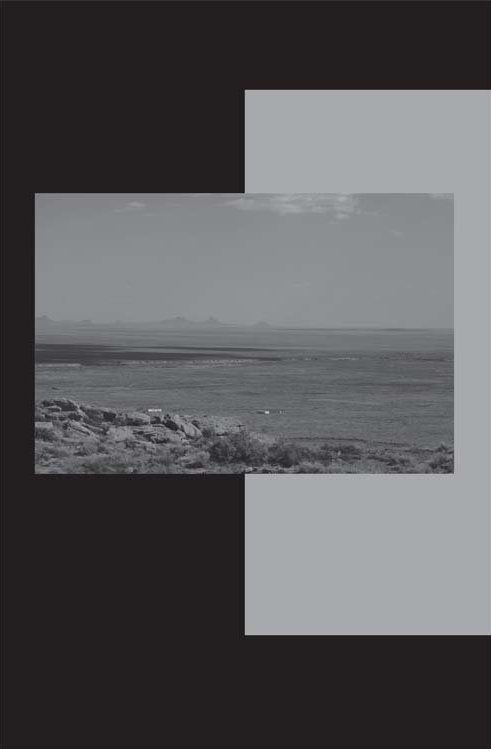
The back cover of the journal (pictured below) features a photograph that I took on the edge of Third Mesa near the village of Orayvi. At one point in the article I describe how one can stand in this location and see for miles in all directions:

To the south, the land extends beyond the Hopi mesas and the silhouette of Nuvatukiyaovi, or the San Francisco Peaks, is visible in the distance. In the valleys below, corn, melon, and bean fields stand out as green patches against a backdrop of earth and sandstone. From on top of the mesa one can enjoy the sweet smell of burning cedar, hear and feel the wind blowing over the mesa edge, and behold a breathtaking landscape surrounded by a canopy of deep blue sky. Looking east toward the village of Shungopavi on Second Mesa, running trails stretch from Orayvi like veins that connect and bring life to each of the Hopi villages. The trails near Orayvi give testimony to the tradition of running in Hopi culture and the continuance of running among today’s Hopi people. [p. 79]

I am indebted to several individuals who helped me revise this essay, including my colleagues at the University of Illinois, various Hopi and non-Hopi scholars, the Hopi Cultural Preservation Office, Lorene Sisquoc of the Sherman Indian Museum, and American Quarterly editors Curtis Marez, Jeb Middlebrook and Stacey Lynn.

If you would like a PDF copy of this article, please feel free to email me at sakiestewa@gmail.com, or submit a comment to this post.

Matthew Sakiestewa Gilbert

See also BEYOND THE MESAS post: Hopi runners article available for download