Hopi Tribe has new chairman

Earlier this month LeRoy Shingoitewa from Upper Moencopi was sworn in as the new chairman of the Hopi Tribe. Chairman Shingoitewa has a long history of promoting education among Hopi and non-Hopi people. Throughout his career he has served as the principal for Kinsey Elementary School in the mountain community of Flagstaff, Arizona, Moencopi Day School, and the Tuba City High School. Herman Honanie from Kykotsmovi was elected to be the Vice Chairman.

According to a recent report in the Navajo-Hopi Observer, Chairman Shingoitewa and Vice Chairman Honanie will be revisiting the passing of last month’s budget that eliminated funding for the Hopi Tutuveni. When asked in a public forum about the closure of the Hopi paper, Chairman Shingoitewa said: “Vice Chairman Honanie and I will be looking at the entire 2010 budget that was approved recently. Many of these budget decisions will need a second [visit] and the Tutuveni is only one of the areas we will take a second look at.” To read the entire story in the Navajo-Hopi Observer, click here.

[Chairman Shingoitewa’s father, Samuel Shingoitewa, attended Sherman Institute in the 1920s. In 2004, I had the priviledge of interviewing Samuel at his home for my book on the Hopi boarding school experience at Sherman.]
Remembering Polingaysi Qoyawayma

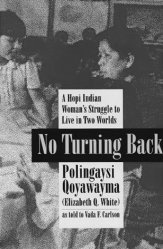
Nineteen years ago on December 6, 1990, Polingaysi Qoyawayma (Elizabeth Q. White), passed away with family at her side in Phoenix, Arizona. Born in 1892, Polingaysi was from the village of Orayvi on Third Mesa, and she is perhaps best known for her book (as told to Vada Carlson) No Turning Back: A Hopi Woman’s Struggle to Live in Two Worlds. I never had the honor of meeting Polingaysi, but her story is often told among our people. In November 1906, shortly after an internal dispute in her village, Polingaysi left by wagon with a group of Hopi children to the small town of Winslow, Arizona. From there she boarded a Santa Fe train to San Bernardino, California, then traveled south to Sherman Institute in Riverside. She experienced a different life in the “land of oranges,” and she wrote at length about her time at Sherman in No Turning Back. After spending almost three years at the school, Polingaysi returned to Orayvi and found it difficult to acclimate to reservation life. She eventually became the first Hopi to teach at a Hopi day school, and she encouraged her students to take the best of Hopi and American culture to succeed as a people. Although Polingaysi is often associated with No Turning Back, she also wrote a second book in 1941 titled The Sun Girl, which was illustrated by Hopi artist Komoki. In this children’s book, Polingaysi retells a story of a young girl named Dawamana (“Sun Maiden” or “Sun Girl”) from Orayvi who learns the Butterfly Dance at the village of Moencopi. In the foreword to the book’s 1978 edition, Robert Breunig of the Museum of Northern Arizona notes that “Mrs. Qoyawayma told this story many times to her school children. They became so enthralled with it that they asked that it be repeated again and again, and they learned it almost word for word, correcting deviations from one telling to the next. Finally, Mrs. Qoyawayma wrote the story down in the hope that all children would enjoy it.” Nineteen years after her passing, Polingaysi’s life and work are still remembered. She is one of the most revered teachers and writers in Hopi history, and her example and words continue to have great meaning and relevance for those in the present.

Matthew Sakiestewa Gilbert

NAJA on closure of Hopi newspaper

Ronnie Washines, President of the Native American Journalists Association (NAJA), has written a statement in the Native American Times on the recent developments surrounding the Hopi Tutuveni. Washines notes that “A fully functioning government needs a voice that can disseminate updated news and information regarding the factual status of that government at any given time. Newspapers, especially tribal newspapers, are in a position to provide accurate news reports from a unique vantage point and the Hopi tribal members should not be denied their accessibility to such an important news source as the Tutuveni.” To read the entire article in today’s edition of Native American Times, click here.

Hopis and earthquakes

When I screen Beyond the Mesas I enjoy taking questions from the audience. Some people ask me to explain more about the Orayvi Split, Chief Tawaquaptewa, or the reasons why the film makers produced the film. At a screening in the School of Social Work at the University of Illinois, Adelaide Aime asked me if there was anything that was not in the film that I wish we had included. This is a great question. The film producers spent a week on the Hopi Reservation to conduct interviews. We had many hours of material to work with, but due to time and budget constraints, we only used 35 minutes of the interviews in the final cut. One of the stories that I wish we had included in the film spoke to a unique occurence that Hopis experienced at Sherman Institute. Of the five people we interviewed who went to Sherman, two of these individuals talked about what it was like for them to experience an earthquake. Although I have written about Hopis and earthquakes at Sherman in my forthcoming book, it would have been great if these stories were also part of the film.

Matthew Sakiestewa Gilbert

No hope for the Hopi newspaper

The Hopi Tribal Council has passed a budget that will eliminate the Hopi Tutuveni, the official newspaper of the Hopi Tribe. Over the years, Stewart Nicholas, editor of the Hopi Tutuveni, and his staff have produced a remarkable paper. As I mentioned in a previous post, I believe that the closure of the paper is a major loss for the Hopi people. According to a report in the Arizona Daily Sun, the last issue of the Hopi Tutuveni will be in mid-December.

Hopi leader receives awards

In November 2007, the History Department at the University of California, Riverside, hosted a screening of Beyond the Mesas in the banquet room of Zacateca’s Cafe. A few days prior to the showing, I was told that I group of Hopis living in the San Diego area were planning on making the 2 hour trip for the event. One of these individuals was Nikishna Polequaptewa, Director of the American Indian Resource Center at UC Irvine. Yeseterday I heard that he recently received the American Indian Science and Engineering Society (AISES) Sequoyah Fellowship, and the National Center for American Indian Development “40 under 40” award for outstanding qualities as a Native American leader. Last week, a write-up about him appeared in the Navajo-Hopi Observer. Nikishna is doing great work at UC Irvine, but at some point he will return to Hopi. His lifelong dream is to serve as Chairman of the Hopi Tribe. Nikishna must be commended for his desire to give back to the Hopi community. He has a bright future ahead of him. To read the article in the Navajo-Hopi Observer, click here.

Matthew Sakiestewa Gilbert

Beautiful Resistance

Beyond the Mesas is part 1 of a 2 part series on the Indian boarding school experience. The 2nd film is titled Beautiful Resistance, which examines the boarding school experience through contemporary Native art. Some of the people highlighted in this 30 minute film are Hulleah Tsinnhaghinni, Wendy Weston, Tony Abeyta, Steven Yazzie, Joanna Bigfeather, and the late Hopi artist Michael Kabotie. To learn how you can order a copy of this film, click here.

Hopi newspaper may come to an end

For the past several weeks I have been hearing rumors that the Hopi Tutuveni, the official newspaper of the Hopi Tribe, will be closing down. This rumor was noted in Wednesday’s edition of the Arizona Daily Sun.

Closure of the Hopi Tutuveni would be a major loss for the Hopi people. One of the most significant aspects of the Hopi Tutuveni is that it provides a Hopi voice on current issues. So much of what has been written about our people comes from non-Hopis. The Hopi Tutuveni gives Hopis a venue to write about their history, culture, and current events from Hopi perspectives.

Furthermore, not only does the paper keep Hopis and non-Hopis informed about present issues, it also has historical significance. It records and preserves Hopi history, and it is a valuable resource for future Hopi and non-Hopi scholars.

One of the ways that I have shared my research on Sherman Institute with the Hopi community is by publishing in the Hopi Tutuveni. I realize that many people back home may not have access to academic journals, or certain books. But they have access to the Hopi newspaper. If the Hopi Tutuveni shuts down, who will write the narrative?

Matthew Sakiestewa Gilbert

Thankful for teachers

Six years ago I came across a portion of a letter written by a Hopi student in the Sherman Bulletin, the official school newspaper of Sherman Institute. It was published in June 1909, right before a group of Hopis returned to the reservation after spending three years at the school. I first wrote about this letter in an article titled “The Hopi Followers: Chief Tawaquaptewa and Hopi Student Advancement at Sherman Institute, 1906-1909” (JAIE, Fall 2005). The following section seems fitting to post on Thanksgiving Day:

“We Hopis are about to leave Sherman. I will not forget my teachers, for they have been kind to me, and I will try to come back here next year.” (The Sherman Bulletin, June 16, 1909).

A living history

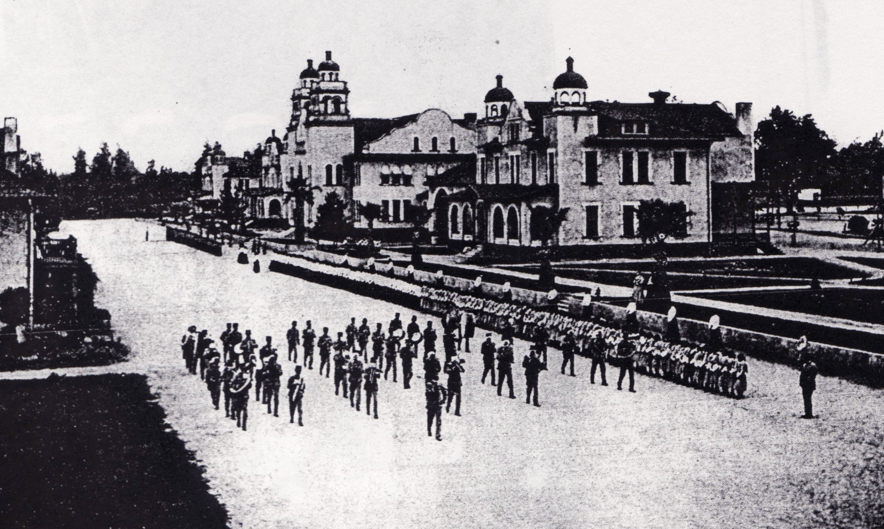
Sherman Institute marching band (1908), courtesy of the Sherman Indian Museum

Leigh J. Kuwanwisiwma of the Hopi Cultural Preservation Office once said to me that the Hopi boarding school experience is a “living history.” Some of the Hopis who attended boarding schools during the era of assimilation (1880s-1930s) are still with us today. Others are not, but their stories remain with their children and other family members. My grandfather, Victor Sakiestewa from Orayvi, attended Sherman from 1906 to 1909 and he played the clarinet in the school’s marching band. He was among the first Hopis to attend Sherman in the early twentieth century. Schools such as Sherman Institute, now called Sherman Indian High School, the Phoenix Indian School (“PI”), Stewart Indian School, Ganado Mission School, Santa Fe Indian School, and the Albuquerque Indian School, play an important role in Hopi history. The Hopi boarding school experience is indeed a “living history,” and by sharing and recording these stories we will help keep that history alive for Hopi and non-Hopi people. This conviction was a driving force behind the production of Beyond the Mesas.

Matthew Sakiestewa Gilbert