Native Historians and the Future of American Indian History

Below is a talk I gave at the Organization of American Historians conference (San Francisco, CA) on April 12, 2013. My talk was part of a panel discussion organized by Creek historian Donald Fixico on Native historians and the field of Native American history. At the time, I was an assistant professor of American Indian studies and history at the University of Illinois at Urbana-Champaign. It was an honor for me, especially so early in my career, to be invited to deliver a paper for this panel by such an esteemed Native historian.

********************************************

Native Historians and the Future of American Indian History

by Matthew Sakiestewa Gilbert

It’s an honor to be here today. 

I want to thank my fellow panelists, Rose Stremlau and Paul Rosier, our Chair Sherry Smith, and a special thanks to Don Fixico, who invited us to participate in this morning’s panel.

As many of you would agree, it’s an exciting time to work on American Indian history.

I think back to much of the 20th century when Native history was predominantly written by white, male scholars.

Some here might say that not much has changed.

Perhaps this is true, and it likely is, but there are shifts in our field that encourage me as an indigenous person, and that are worth discussing in today’s forum.

This morning, I want to focus my comments, albeit very brief comments, on the work and role of Native historians.

I’m encouraged by the number of Native historians who recently completed their Ph. D.s, secured faculty appointments, and are actively publishing their work. I’m thinking here of Oneida historian Doug Kiel, Cherokee and Choctaw historian Kent Blansett, and Apache and Dakota historian Kiara Vigil.

These, and many other Native historians, are on my “radar.” And they should be on all of our “radars” as we think about the future of American Indian history.

Some of these historians, such as Doug Kiel, have chosen to write about their own people, and some have attempted to explain their people’s histories by using indigenous frameworks and Native ways of understanding.

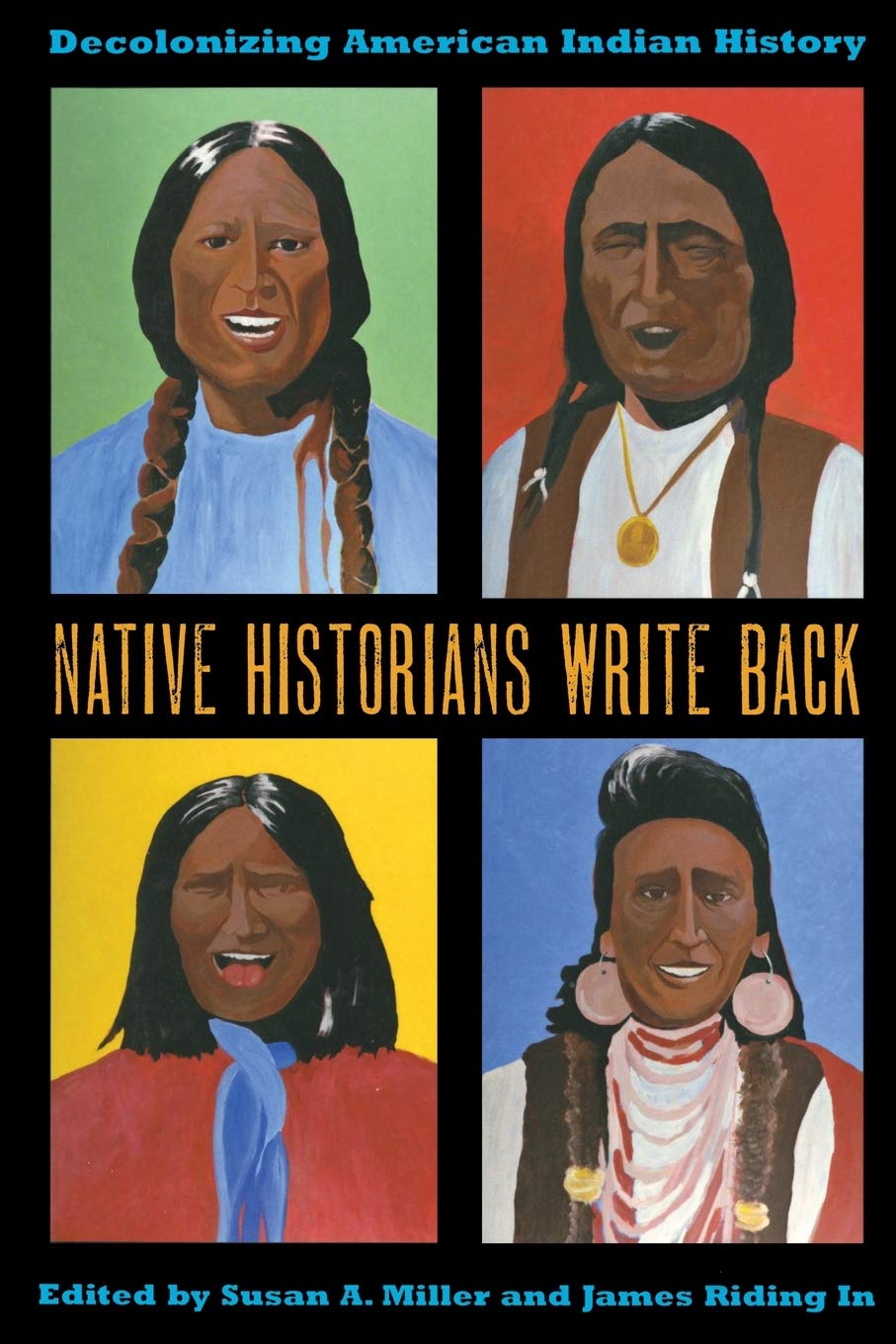
This, of course, reminds me of Seminole historian Susan Miller, who in her edited book Native Historians Write Back, keenly observed that Indigenous thinkers often prefer to “work within” their “own people’s specific worldview.”
Native historians understand this. We get it, but our use of indigenous frameworks (or epistemologies) in our work do not always clearly or convincingly translate with non-Native historians.

I experienced this most recently when I submitted an essay on Hopi runner Louis Tewanima to the Western Historical Quarterly. 

I was surprised that one of the reviewers had noted that my essay lacked a theoretical frame or argument. 

In my essay, I argued (in part) that when Tewanima competed and excelled in American and Olympic marathons, he followed in the tradition of ancient Hopi clan runners who once ran far beyond Hopi ancestral lands to bring blessings to the Hopi people. 

I situated Hopi culture at the center of the narrative, and I used a Hopi frame to explain his participation and success in national and international running events.

I did not want to write just another article on running – or even Native running. Nor did I want to provide readers with another romantic portrayal of Tewanima. 

Either my reviewer did not see the Hopi frame that I was employing, or he or she refused to accept it.

As Native historians, we need to continue asserting and introducing indigenous frameworks of understanding in so-called mainstream academic history journals. 

We know that this approach to Native history will be welcomed in American Indian Studies journals, but we have a broader (history) audience to reach with our work.

And this audience needs to be reminded that there are ways of thinking of Native history that go beyond the theories and models so commonly used and accepted by Western historians. 

Finally, some of us need to do a better job consulting the scholarship of Native historians and other thinkers when we research and publish on their indigenous communities. 

When we write about the Choctaw or Kiowa, we ought to honor their people by citing and listening to their scholars and other writers. Of course, I’m thinking here of Choctaw historian Jacki Thompson Rand, Choctaw writer LeAnne Howe, and Kiowa historian Jenny Tone-Pah-Hote.

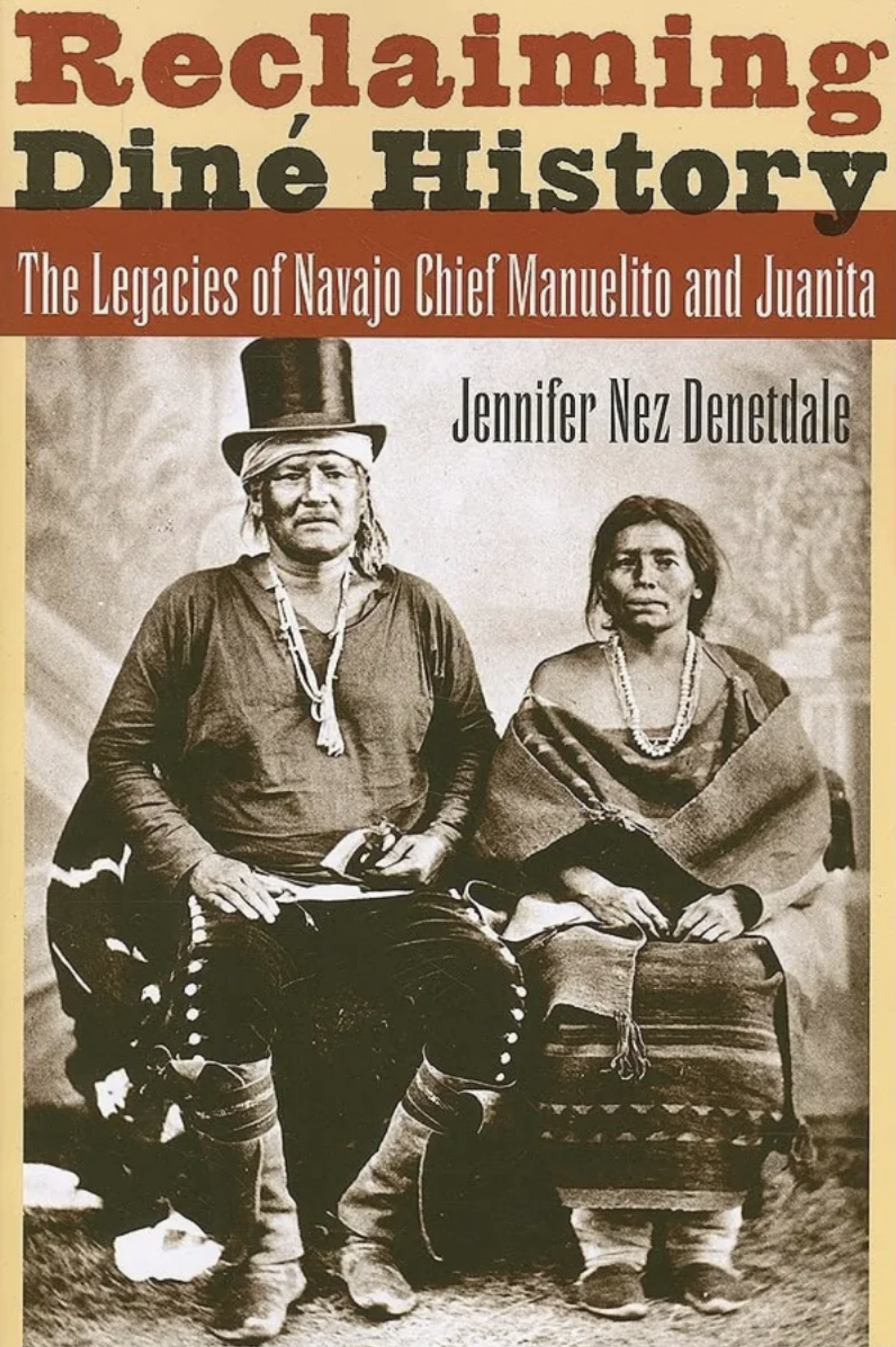
And when we write about the Dine’, we ought to ask ourselves how the work of Dine’ historians Jennifer Nez Denetdale, Lloyd Lee, and many others might enlighten our understanding of their people.
Some here might say that I am simply stating the obvious.

I wish this were the case, but having peer-reviewed numerous essays for journals and other academic publications in my relatively short academic year, I know that this remains a problem in our field.

Indigenous communities did not send us to academic institutions to receive Ph. D.s in history to simply increase the number of Native faculty at universities and colleges.

They did not send us to academic institutions to simply add a bit of color to a once predominantly white narrative.

We have a message to tell about our history and cultures. And we have a responsibility to tell these histories in ways that are meaningful and useful to our people.

When we write about our people, our voices matter. They have always mattered. 

I know that I spent my time talking about Native historians, but there are also young non-Native scholars such as Kate Williams and Kevin Whalen who are making noteworthy contributions. We should be appreciative when our Non-Native colleagues do it right and honor Indian people with their work.

In conclusion, I want to emphasize again that this is an exciting time to research and write on the history of American Indian people. We have a bright future ahead of us, and I look forward to seeing how the field will evolve and improve as Indian people take greater ownership of their past and write histories that originate from their communities and perspectives.

Kwa-kwa

AIS at Illinois to host former Postdoctoral Fellows

screen-shot-2017-02-16-at-1-16-01-pm

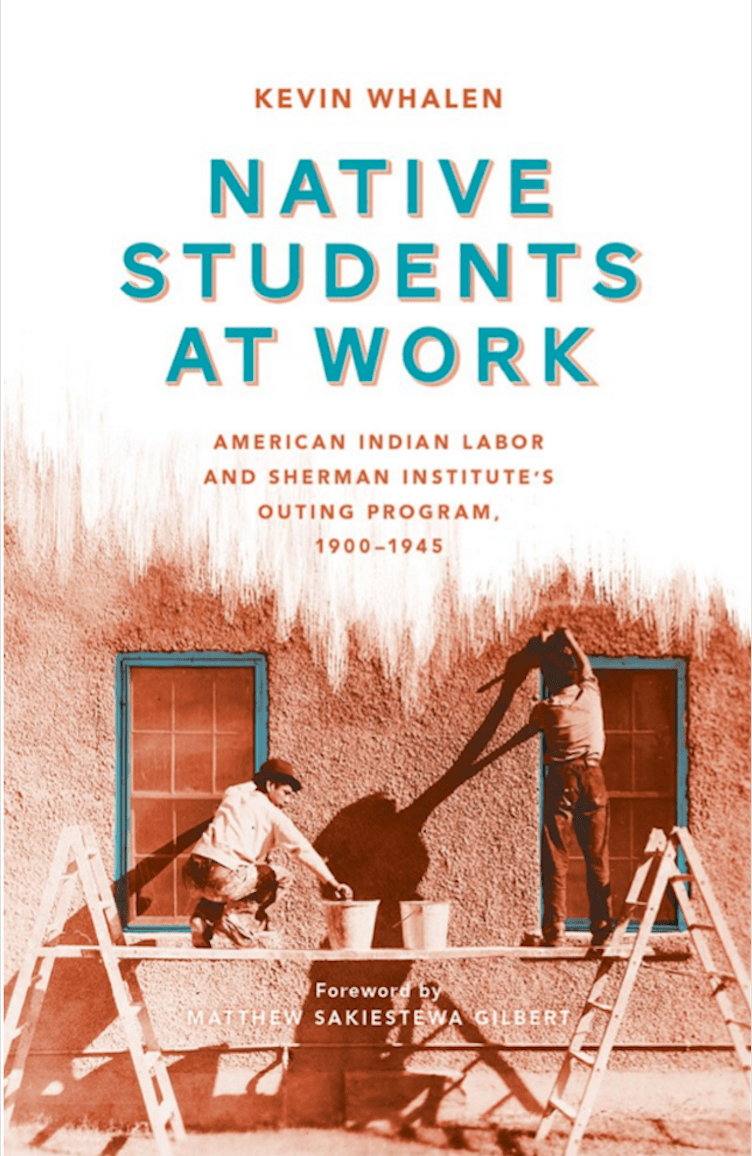
My foreword to Kevin Whalen’s Native Students at Work: American Indian Labor and Sherman Institute’s Outing Program, 1900-1945

Screenshot 2016-05-10 12.56.26

Foreword

Matthew Sakiestewa Gilbert

University of Illinois at Urbana-Champaign

Six years ago, I received an email from my former graduate advisor Clifford Trafzer about a student named Kevin Whalen, who was conducting research on Sherman Institute, an off-reservation Indian boarding school in Riverside, California. Although Cliff had written to me about his students in the past, his enthusiasm for this student, coupled with my interest in Sherman, caused me to take special notice of Kevin and his work. At the time of Cliff’s email, he and I were putting together an edited collection on Sherman with Oregon State University Press, and he wanted me to consider including Kevin’s essay in our book, a chapter he had written entitled “Labored Learning.”

In the academy it is common for established scholars to “guard turf” and to be critical of others who do work in their area of research. All junior faculty experience this to some degree, and even I allowed this mentality to influence my initial thoughts about Kevin. Who was this “star,” as Cliff described him, and what more could he possibly add to what I had already done? While these were my original reactions to Cliff’s description of Kevin, my opinion of him quickly changed once I began reading his essay. It took only a few pages into his chapter for me to realize that his work was too good, and his writing too polished, for me to deny that there was something unique and special about him and his project.

In the chapter that Kevin wrote for our collection, he explained that beginning in the early 1900s, officials at Sherman sent Native students off-campus to work as domestic servants, ranch hands, and many other occupations. He noted how school superintendents and local farmers and ranchers used the agricultural industry of Southern California to further deeply held U.S. government assimilation goals and to fill the region’s labor needs. And he explored the reasons why Indian students agreed (and often requested) to work “beyond” the “school walls” at places such as the Fontana Ranch, and at the many citrus orchards in the greater Riverside area. Although I had written about Hopi students who participated in the school’s Outing Program in my book Education beyond the Mesas, Kevin took the conversation of Indian labor at Sherman to a different level. Even at this point, I could see that he was establishing himself as an authority on Sherman and Indian labor at off-reservation Indian boarding schools.

While Kevin and I share an interest in Sherman Institute and Indian boarding school histories in general, there are other areas in our career trajectories that we have in common. We both graduated from the same PhD program, and we were mentored and taught by the same faculty, including Cliff and Ojibwe historian Rebecca “Monte” Kugel. As graduate students at the University of California, Riverside, we learned the importance of working with Native communities, and not just writing about them. Our professors taught us the value of contributing something useful to Indian tribes, and they urged us to consider how our research could benefit Native communities.

In many ways, the education that we received in Native history at UC Riverside was a combination of the theoretical and the practical. Familiarity with archives and the process of honing skills needed to analyze documents was only part of our training. Cliff and Monte also encouraged us to leave the comforts of campus and interact with and work alongside Native people. Kevin certainly experienced this. As a graduate student, he regularly accompanied Cliff to community gatherings on and off Indian reservations in Southern California, including the Colorado River Indian Tribes. And he interviewed numerous individuals for his book, including the director of the Sherman Indian Museum, Lorene Sisquoc, and former Sherman student Galen Townsend, to name a few.

After Kevin completed his PhD from UC Riverside, he became my colleague at the University of Illinois at Urbana-Champaign and continued working on his book as a Chancellor’s Postdoctoral Fellow of American Indian Studies. At the time, the American Indian Studies Program was at the center of a major national and international controversy surrounding the university’s dehiring of the program’s new faculty member Steven Salaita. Although he had just arrived on campus, Kevin stood by my colleagues and me as we protested the university’s decision and demonstrated our commitment to shared governance and academic freedom. Nobody expected Kevin to join the fight, but he eagerly engaged in the protests, and soon it became clear to all that our struggle had also become his struggle.

While Kevin found himself in the middle of a highly politicized situation, and one that required huge amounts of time and energy from the program, he did not allow it to distract him from his major research project. In fact, nearly every time I walked into his office, he was revising some aspect of his book. Whether he was agonizing over external reader reports or adding new material to chapters, Kevin was always working. He gained valuable insights from faculty, including our director, Robert Warrior, and twice participated in writer workshops where colleagues and graduate students critiqued his work and offered suggestions on ways to improve it. During his yearlong fellowship at Illinois, Kevin and I also spent hours together—usually over a meal, coffee, or a craft beer—talking about his book. We had long conversations about the field of American Indian studies, the growing literature on Indian boarding school studies, and the important contributions that he was making with his scholarship.

The following book, then, has emerged from numerous spaces, and each of these spaces has influenced Native Students at Work in unique ways. They have all done their part to transform what started as a chapter of an edited collection into the present volume. Kevin will no doubt write other books. He may even one day write a second book on Sherman or some other aspect of Indian boarding schools. But for me, this book will always remain special. Not many scholars get an opportunity to help shepherd a project along from its infancy to publication. I did just that, and I remain grateful to Kevin for allowing me to accompany him on this journey.

Sherman Indian Museum and UC Riverside

I recently returned from the 25th Anniversary California Indian Conference held at the University of California, Irvine. My former graduate advisor from UC Riverside, Cliff Trafzer, organized a panel on Sherman Institute titled “Out of the Vault.” In addition to myself, the panel members included Lorene Sisquoc, Director of the Sherman Indian Museum, Galen Townsend, Sherman Indian Museum Volunteer, Kevin Whalen, a graduate student in history at UCR, and Leleua Loupe of California State University, Fullerton.

Sisquoc began the panel by talking about the unique relationship between UCR and the Museum. For the past 10 or so  years, UCR history graduate students have worked alongside Sisquoc as researchers, volunteers, and interns. Beginning with Jean A. Keller, author of the first book on Sherman Institute, Empty Beds, graduate students have utilized the Museum’s collections to write two monographs, and several master theses, dissertations, and articles. Today, the mutually beneficial relationship between UCR and the Museum continues, and provides an excellent model of collaboration and community.

Matthew Sakiestewa Gilbert