Below is a talk I gave at the Organization of American Historians conference (San Francisco, CA) on April 12, 2013. My talk was part of a panel discussion organized by Creek historian Donald Fixico on Native historians and the field of Native American history. At the time, I was an assistant professor of American Indian studies and history at the University of Illinois at Urbana-Champaign. It was an honor for me, especially so early in my career, to be invited to deliver a paper for this panel by such an esteemed Native historian.
********************************************
Native Historians and the Future of American Indian History
by Matthew Sakiestewa Gilbert
It’s an honor to be here today.
I want to thank my fellow panelists, Rose Stremlau and Paul Rosier, our Chair Sherry Smith, and a special thanks to Don Fixico, who invited us to participate in this morning’s panel.
As many of you would agree, it’s an exciting time to work on American Indian history.
I think back to much of the 20th century when Native history was predominantly written by white, male scholars.
Some here might say that not much has changed.
Perhaps this is true, and it likely is, but there are shifts in our field that encourage me as an indigenous person, and that are worth discussing in today’s forum.
This morning, I want to focus my comments, albeit very brief comments, on the work and role of Native historians.
I’m encouraged by the number of Native historians who recently completed their Ph. D.s, secured faculty appointments, and are actively publishing their work. I’m thinking here of Oneida historian Doug Kiel, Cherokee and Choctaw historian Kent Blansett, and Apache and Dakota historian Kiara Vigil.
These, and many other Native historians, are on my “radar.” And they should be on all of our “radars” as we think about the future of American Indian history.
Some of these historians, such as Doug Kiel, have chosen to write about their own people, and some have attempted to explain their people’s histories by using indigenous frameworks and Native ways of understanding.
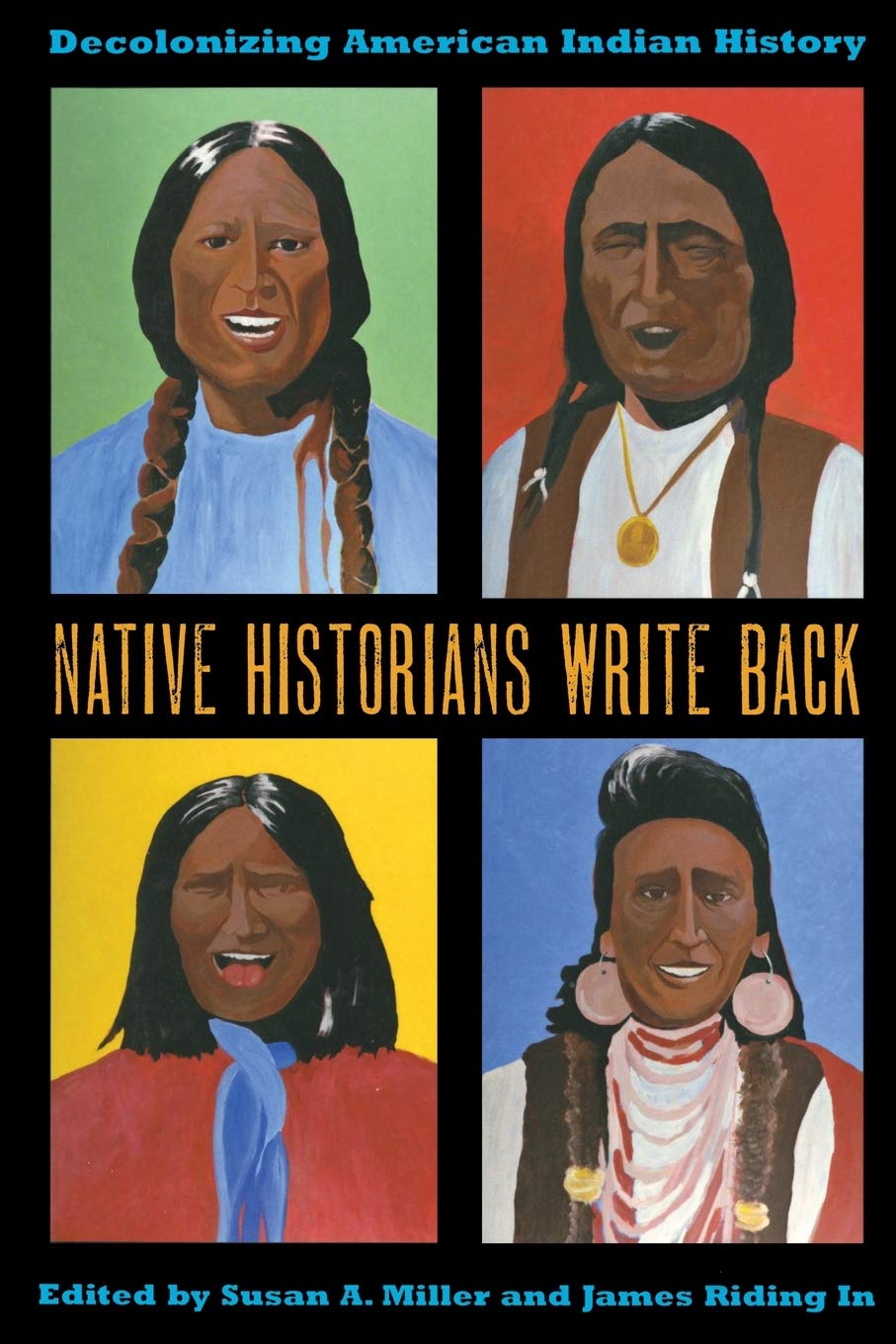
This, of course, reminds me of Seminole historian Susan Miller, who in her edited book Native Historians Write Back, keenly observed that Indigenous thinkers often prefer to “work within” their “own people’s specific worldview.”
Native historians understand this. We get it, but our use of indigenous frameworks (or epistemologies) in our work do not always clearly or convincingly translate with non-Native historians.
I experienced this most recently when I submitted an essay on Hopi runner Louis Tewanima to the Western Historical Quarterly.
I was surprised that one of the reviewers had noted that my essay lacked a theoretical frame or argument.
In my essay, I argued (in part) that when Tewanima competed and excelled in American and Olympic marathons, he followed in the tradition of ancient Hopi clan runners who once ran far beyond Hopi ancestral lands to bring blessings to the Hopi people.
I situated Hopi culture at the center of the narrative, and I used a Hopi frame to explain his participation and success in national and international running events.
I did not want to write just another article on running – or even Native running. Nor did I want to provide readers with another romantic portrayal of Tewanima.
Either my reviewer did not see the Hopi frame that I was employing, or he or she refused to accept it.
As Native historians, we need to continue asserting and introducing indigenous frameworks of understanding in so-called mainstream academic history journals.
We know that this approach to Native history will be welcomed in American Indian Studies journals, but we have a broader (history) audience to reach with our work.
And this audience needs to be reminded that there are ways of thinking of Native history that go beyond the theories and models so commonly used and accepted by Western historians.
Finally, some of us need to do a better job consulting the scholarship of Native historians and other thinkers when we research and publish on their indigenous communities.
When we write about the Choctaw or Kiowa, we ought to honor their people by citing and listening to their scholars and other writers. Of course, I’m thinking here of Choctaw historian Jacki Thompson Rand, Choctaw writer LeAnne Howe, and Kiowa historian Jenny Tone-Pah-Hote.
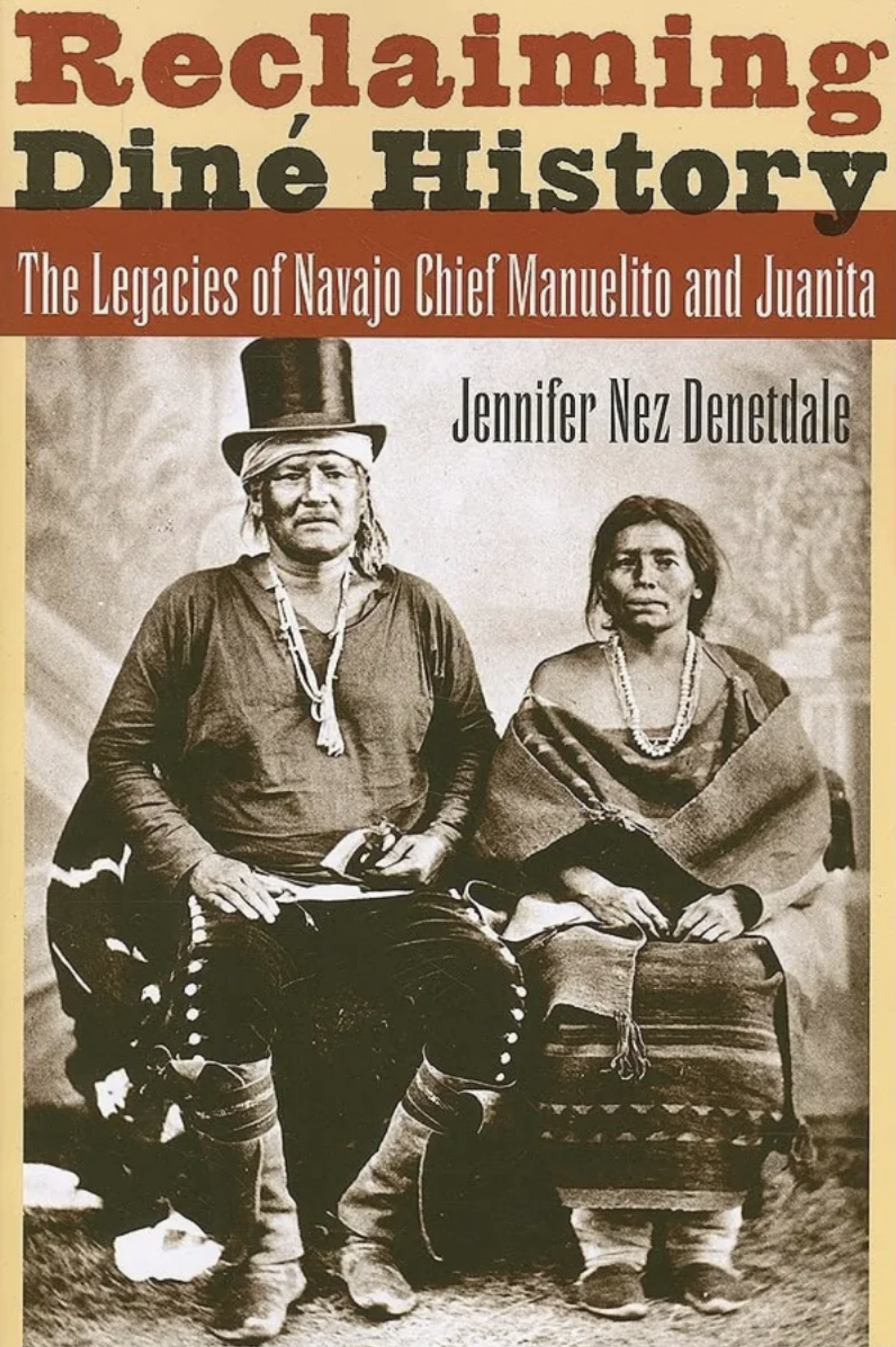
And when we write about the Dine’, we ought to ask ourselves how the work of Dine’ historians Jennifer Nez Denetdale, Lloyd Lee, and many others might enlighten our understanding of their people.
Some here might say that I am simply stating the obvious.
I wish this were the case, but having peer-reviewed numerous essays for journals and other academic publications in my relatively short academic year, I know that this remains a problem in our field.
Indigenous communities did not send us to academic institutions to receive Ph. D.s in history to simply increase the number of Native faculty at universities and colleges.
They did not send us to academic institutions to simply add a bit of color to a once predominantly white narrative.
We have a message to tell about our history and cultures. And we have a responsibility to tell these histories in ways that are meaningful and useful to our people.
When we write about our people, our voices matter. They have always mattered.
I know that I spent my time talking about Native historians, but there are also young non-Native scholars such as Kate Williams and Kevin Whalen who are making noteworthy contributions. We should be appreciative when our Non-Native colleagues do it right and honor Indian people with their work.
In conclusion, I want to emphasize again that this is an exciting time to research and write on the history of American Indian people. We have a bright future ahead of us, and I look forward to seeing how the field will evolve and improve as Indian people take greater ownership of their past and write histories that originate from their communities and perspectives.
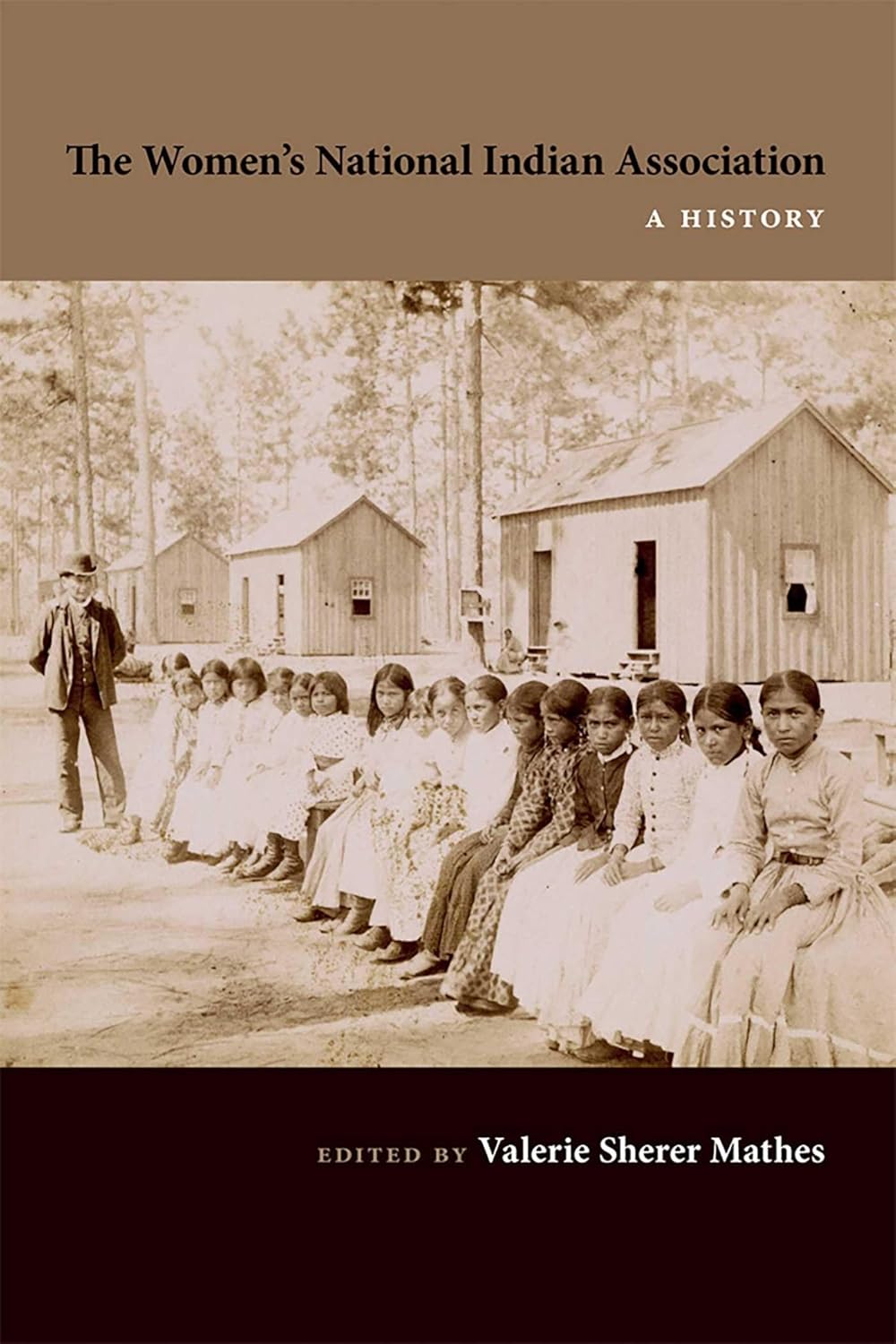
In October 2013, I had the honor of serving as the respondent for a conference panel on the Women’s National Indian Association (WNIA). The organization was founded in the late 1870s to advocate for Native women through Christianity and assimilation into white American society. Before the conference, I read papers by Valerie Sherer Mathes and Helen M. Bannan. Below are my remarks on the essays, which I delivered at the Western History Association annual conference (Tucson, Arizona). Two years later, the authors published their papers in Mathes’ edited book, The Women’s National Indian Association: A History, by the University of New Mexico Press (2015).
*******************************
Seeking the Native Voice in the Women’s National Indian Association
by Matthew Sakiestewa Gilbert
It is an honor to be here this morning.
I want to give a special thanks to our panelists, Valerie Mathes, Helen Bannan, and, of course, my friend and colleague, Margaret Connell Szasz, who helped organize this gathering.
There is so much that can and should be said about the papers, and yet I have purposefully kept my comments brief.
I have been asked to focus on the “Native voice” and its role and importance in historical narratives.
Historians who work hard to include the Native voice in their works realize that Native people have something important to say about their own histories.
They realize that Natives of the past once demonstrated great agency, and that their individual and collective experiences matter when they retell their stories.
We know that some historians are often content to simply peruse the literature for glimpses of the Native voice.
And when their search comes up empty, they say to themselves: “Well, if I can’t find it in a book or article, then the Native voice must not exist.”
This, as you know, is far from the truth.
As we have heard this morning, it’s been difficult for historians to uncover the Native voice in the larger history of the WNIA.
But does this mean that the Native voice (at last within this context) does not or has never existed?
Consider for a moment the several historical newspapers of this period that reported on the WNIA, and how many of them (at the very least) hinted at the Native voice in their articles.
For example, at the Association’s fifth anniversary gathering in Washington, DC, in March 1887, a Washington Post reporter noted that “The history [of the WNIA] is supplemented by passages from the letters of the Indians who have been thus benefited [by the WNIA] and is to be published by the society.” (The Washington Post, March 5, 1887, p. 2).
Did the Association publish these letters (presumably in The Indian Helper) as the Washington Post reporter suggested? If so, and if the letters are available to researchers, what might historians gain from these accounts?
Other newspaper accounts report on so-called civilized Natives who addressed the WNIA at several of the Association’s annual “Branch” gatherings.
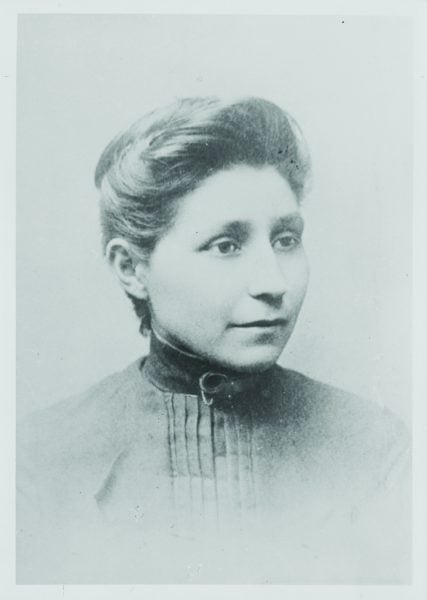
Dr. Susan La Flesche (Omaha). Photo courtesy of Omaha Magazine.
For example, at the Washington Branch of the WNIA’s annual meeting in May 1892, a reporter for the Washington Post noted that the Omaha physician Dr. Susan La Flesche, a “graduate of the Philadelphia Medical College for Women,” was scheduled to “address the meeting.” (The Washington Post, May 20, 1892, p. 4).
What did this prominent and very well-educated Omaha woman say in her address? Perhaps we will never know. But the historian in me wants to believe that there is an account of it somewhere.
One of the more powerful accounts of the Native voice and the WNIA took place in June 1884.
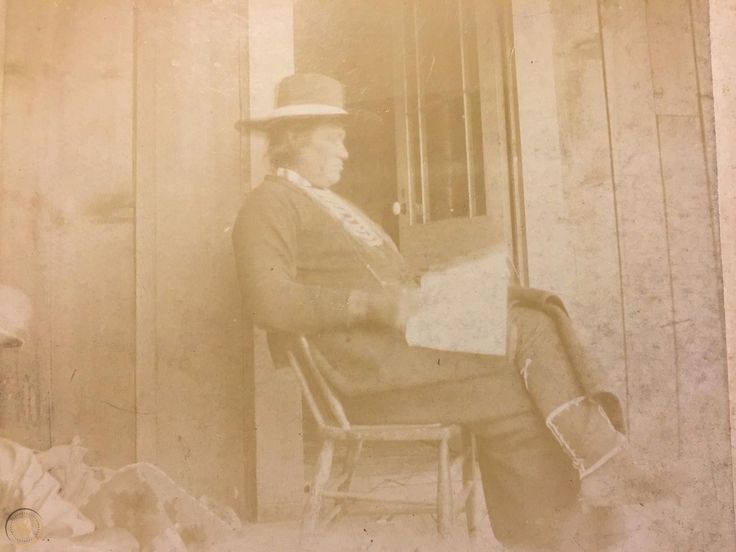
At this time, the WNIA had called together a meeting at the First Baptist Church in Philadelphia for its members to listen to Nez Perce Chief James Reuben talk about the wrongs of the U.S. government against his people.
A newspaper reporter for the Philadelphia Times noted that at the meeting, Reuben “gracefully took his stand behind the pulpit and, gazing cooly upon his audience, deliberately arranged a number of papers with which he had come prepared to fortify his cause.”
Here is how Reuben began his address:
“If only I could know your hearts and know how to address you and what things you are interested in, I could shape my address so as to please you all. I will speak, however, only upon the relations of my people and the Government.”
Chief James Reuben of the Nez Perce. Photo courtesy of Xero Okera.
Reuben then went on to give his audience a brief history of his tribe and told of the many treaties that the U.S. government broke with the Nez Perce. He asked the WNIA’s help in convincing the government to allow a group of 250 Nez Perce, who at the time had been forcefully removed to Oklahoma, to return to their homelands in present-day Idaho.
“My heart is true to you as a Red Man,” he said to members of the WNIA who had gathered, “and you will find that the red man is just as honest as the white man. If you succeed in this object, I congratulate you in the name of God, and I believe you will succeed. The Indian is a man and ought to have all the rights of a man.” (San Francisco Chronicle, June 16, 1884, p. 2).
In the late 1800s, Rueben’s voice mattered to the WNIA. And his voice ought to matter to us today.
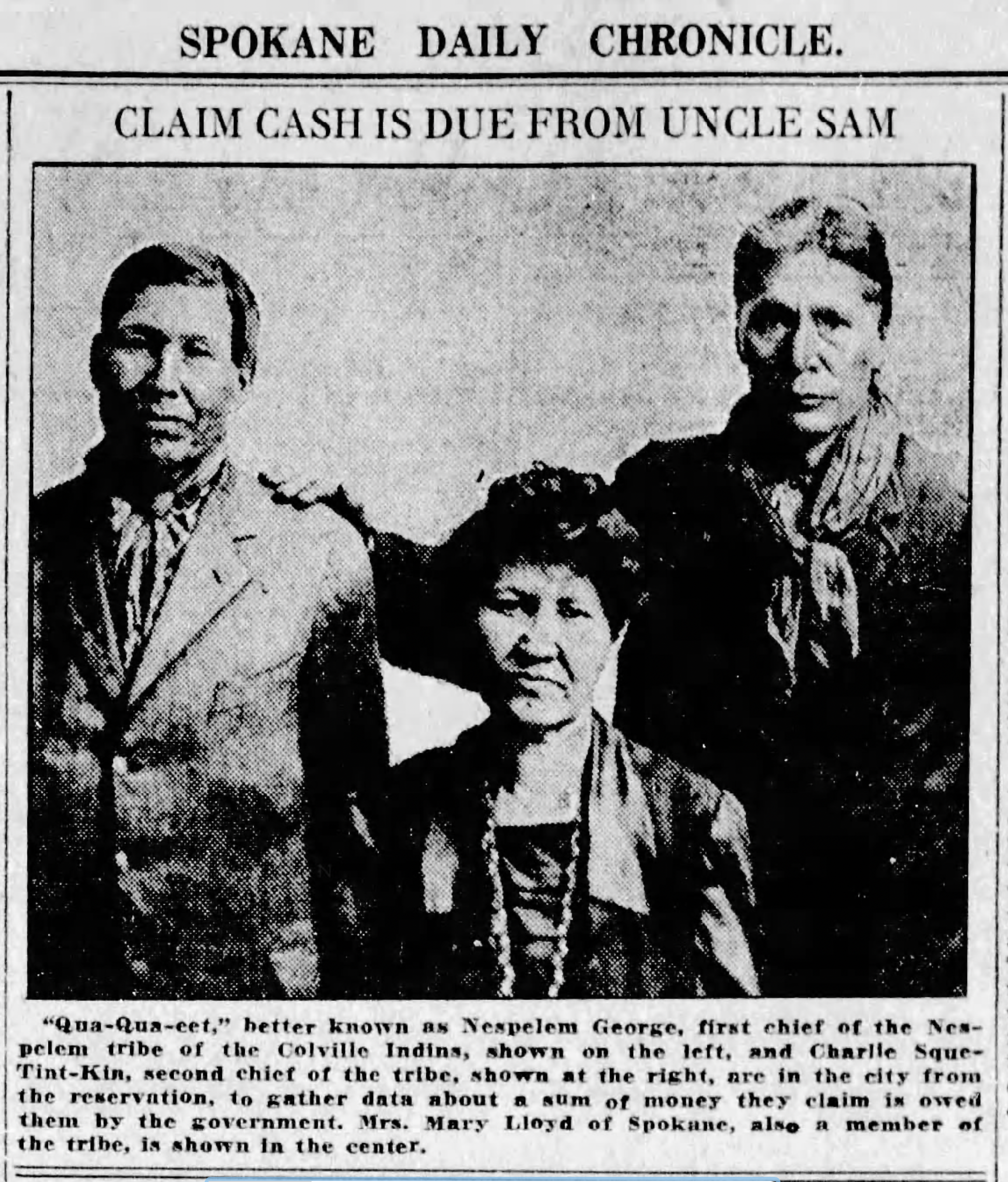
Furthermore, I am curious to know whether the WNIA motivated Native women in the 20th century to create their own organizations and clubs. We know that by the mid-1920s, hundreds of Native women from twenty-eight tribes came together to form The Eagle’s Feather Club in Spokane, Washington. Did these Native women create this organization in response to years of white women telling them how best to act and think?
I find the two organizations similar, but also very different.
Mary Lloyd (center). Photo courtesy of Spokane Daily Chronicle, March 14, 1923, p. 9.
Listen for a moment to Mary Lloyd of the Spokane Tribe in Washington (also adopted into the Colville Tribe), who also served as one of the Eagle Feather Club’s early presidents: “We pledge ourselves loyally to aide one another and all Indians to further ideals as first Americans, for developments and improvement. We pledge one another to drop all of our differences, and unite in a common friendship, cemented by this association, to work for our common good, and the betterment of all.” (Boston Daily Globe, August 5, 1926, p. A21).
And finally, I want to very briefly encourage or suggest that our two presenters spend more time examining Native (tribal specific) understandings of maternalism, and how this clashed with and complemented the political aspects of white American maternalism of the late nineteenth century.
There are ideological, cultural, and religious differences that are worth interrogating, and doing so (in addition to the inclusion of the Native voice) will only strengthen two already outstanding papers.
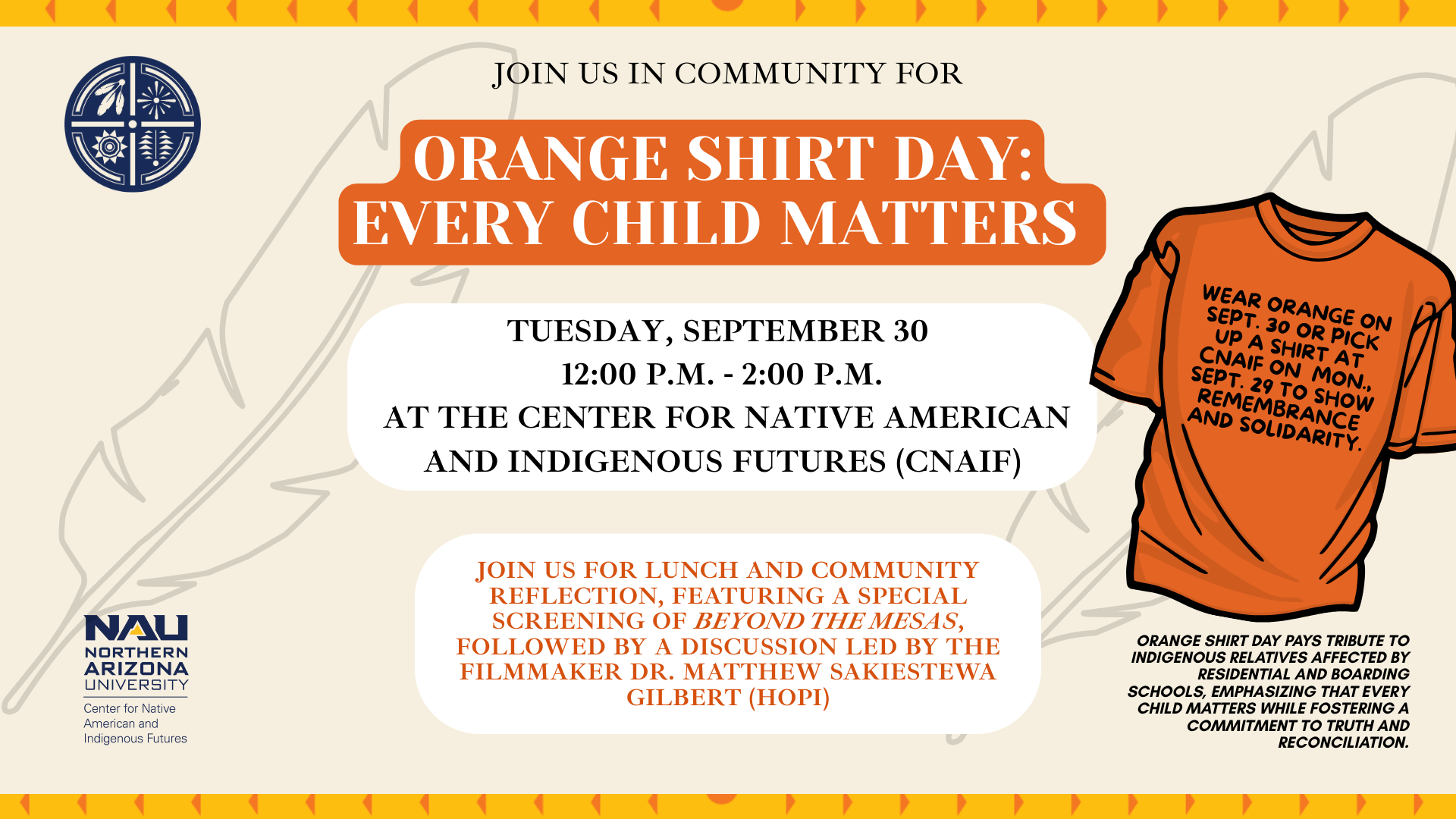
On September 30, 2025, the Center for Native American and Indigenous Futures (CNAIF) at Northern Arizona (NAU) invited me to screen Beyond the Mesas and say a few words before the screening. The event was part of CNAIF’s annual Orange Shirt Day to pay tribute to those who have been affected by the Indian boarding school experience. A special thanks to Sheena Hale, Director of the CNAIF, for this opportunity. Below is the text of my talk.
**************
Good afternoon, everyone,
Thank you for that kind and generous introduction.
It is such an honor to be here.
I have fond memories of Northern Arizona University.
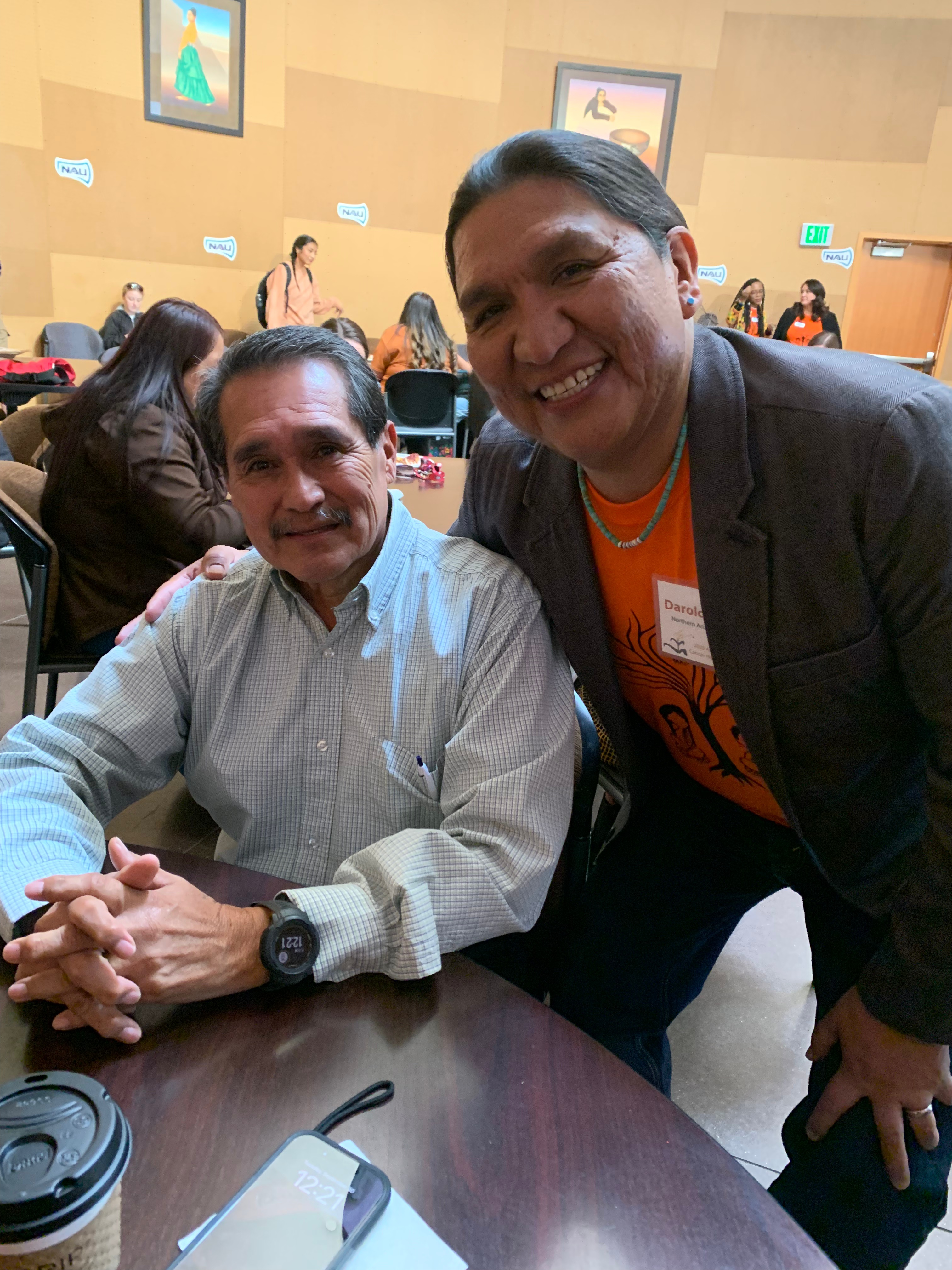
When I was ten years old, my father, Willard Sakiestewa Gilbert (who is here today), accepted a faculty position in the College of Education as an Assistant Professor of Curriculum and Instruction. He remained at NAU for 32 years, retiring in 2019 at the age of 67.
My father (left) with his former student, Dr. Darold H. Joseph (Hopi)
Needless to say, I spent a lot of time on this campus, especially when I was younger. Running around the track at the old Athletic Center building, swimming laps at the Aquatic Center, and one time I even got the day off from school (I attended Flag High) to job shadow my father, learning all about what he did as a professor at NAU.
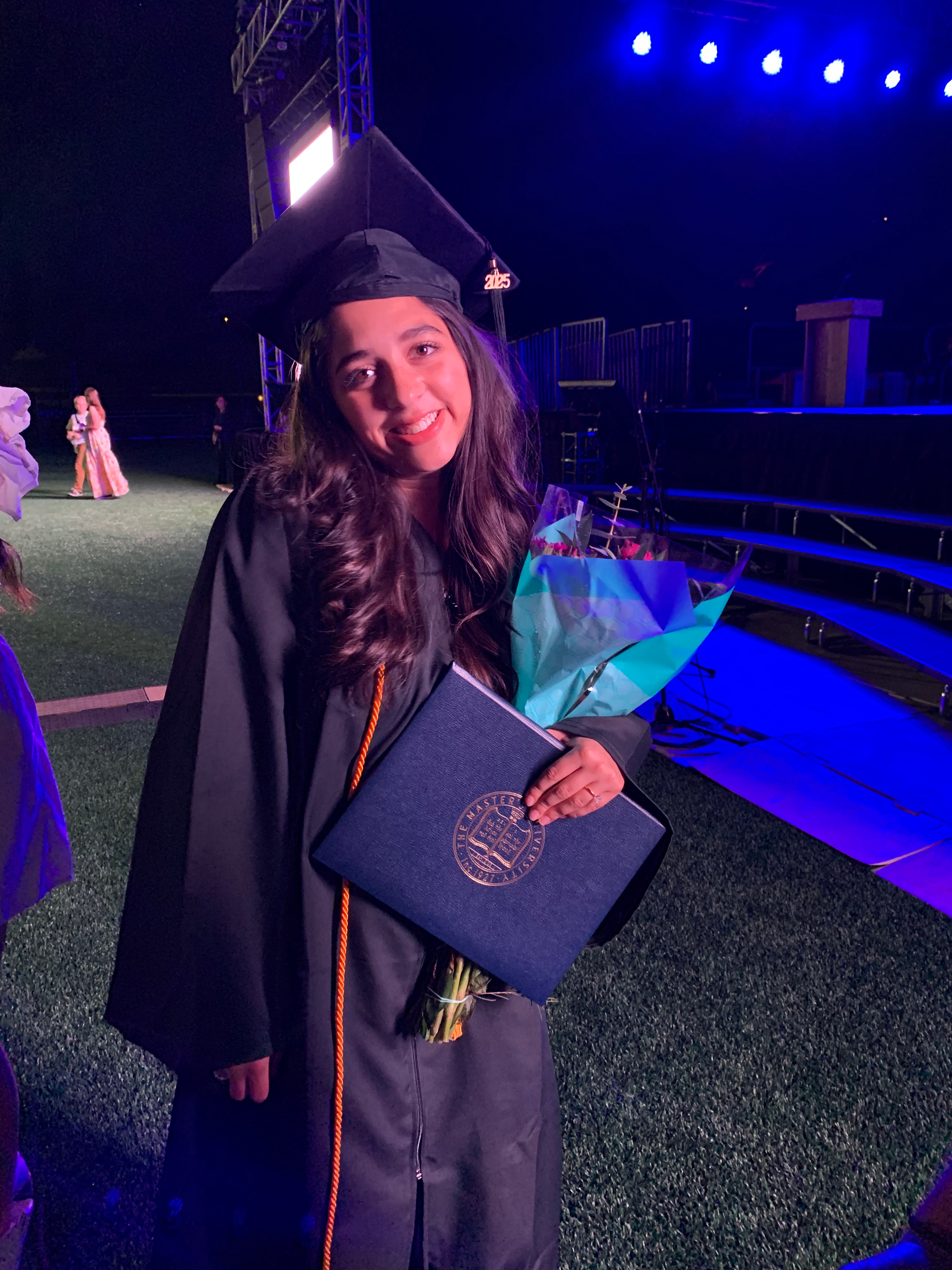
From an early age, my parents instilled in me an appreciation for education and a desire to pursue college beyond the mesas. I attended a small Christian school in Southern California called The Master’s College, now The Master’s University. And with the generous help of the Hopi Tribe Grants and Scholarship Program, I graduated in 1999, but my daughter, Hannah, also graduated from TMU earlier this year, and my other daughter, Meaghan, just started as a freshman there in August.
My daughter, Hannah, who graduated with a Business degree from The Master’s University
Any parent can tell you that sending your child away to school is not easy, especially when he or she is your first to go. You worry about their safety, whether they will quickly find good friends, who will care for them if they get sick, and a host of other things. And our children experience challenges, too. They often think of home, sometimes crying themselves to sleep (I know I did), missing their loved ones and longing for the day when they will be with their families. Life away from home can be full of uncertainties and insecurities, and yet (thankfully) it tends to get better over time.
As you are aware, the Hopi people, and I would add all Indian people, have a long history of having their children sent away to school, sometimes voluntarily, sometimes by force. Beginning in the late 1800s, the government began sending Hopi youth to off-reservation boarding schools in Albuquerque, Phoenix, and Riverside, to name a few. Most scholars who approach this topic interpret the Indian boarding school experience through federal Indian policies, including government attempts to assimilate them into American society. All are helpful and true, but there is another way of understanding it from an indigenous or Hopi perspective.
Ten or so years before he passed, the late Hopi historian Lomayumtewa C. Ishii described to me over lunch that the Hopi boarding school era was part of a second wave of Hopi migration. He reminded me that our clan people were once great travelers, traveling west to the Pacific Ocean, north into present-day Colorado, east into New Mexico, and far south into Central America.
And it was the late Ferrell Secakuku, while pursuing a Master of Science degree in anthropology at NAU, who taught me how these ancient travelers learned from their experiences, met other indigenous people on their journeys, and took that knowledge back to their ancestral lands to form the essence of Hopi society. In this regard, beginning in the late 1800s, the Hopi people once again ventured beyond the mesas, traveling to schools to receive an education, experience life away from home, and return to their villages with skills that were supposed to be useful to their communities.
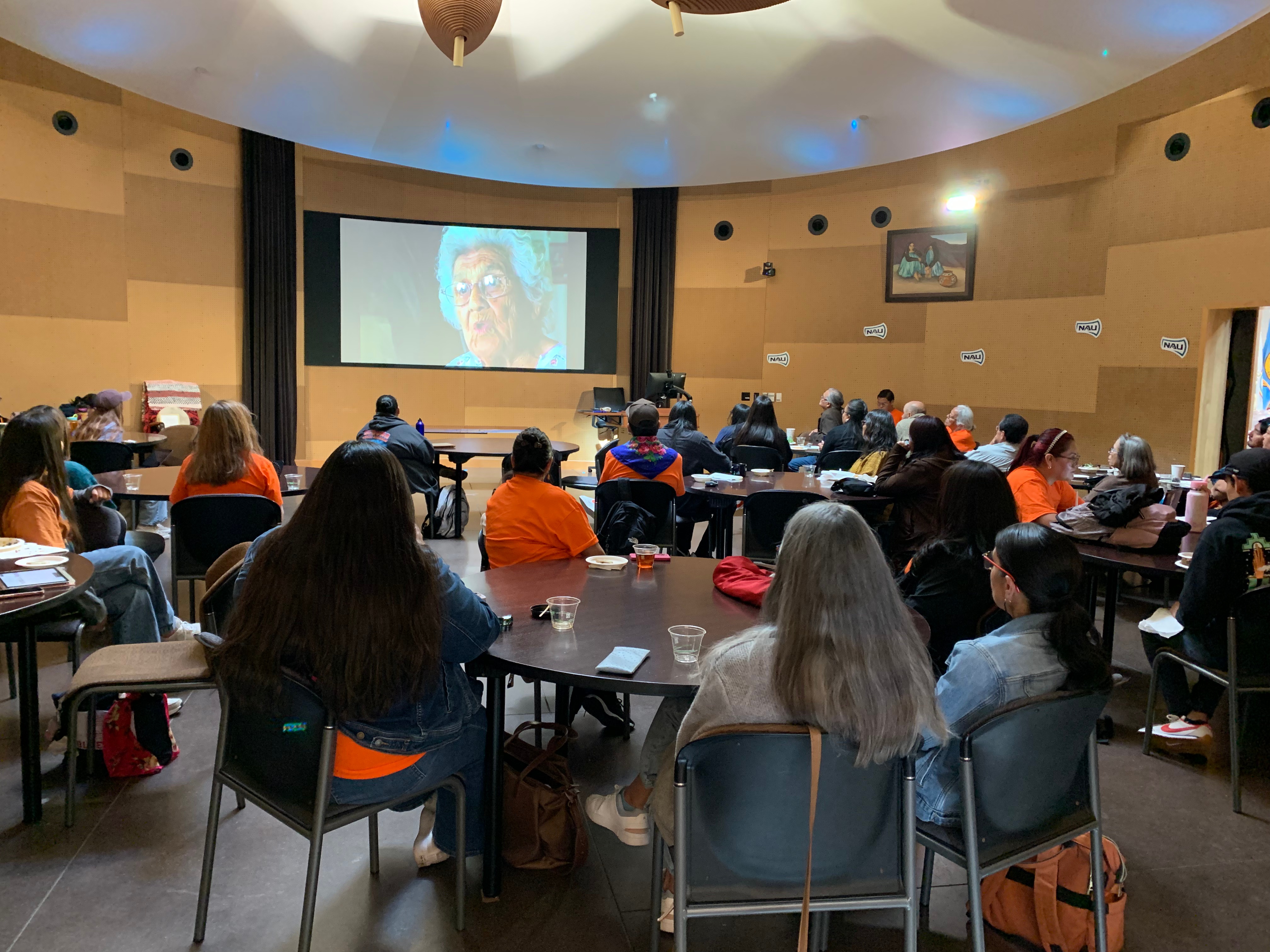
CNAIF Film Screening of Beyond the Mesas
While Hopi students returned to the reservation with new skills, many remained unlearned in some Hopi ways and customs back home due to being away at school. Students often stayed three years or more at off-reservation Indian boarding schools without returning home. Absent from home, Hopi students at Indian schools did not participate in various religious ceremonies and other cultural events throughout the year. This affected not only the students themselves but also their children.
Hence, the negative consequences of being away from home had a generational effect on the Hopi people. Lois Pooyouma, a Hopi student at Sherman Institute in the 1970s, remarked in the film: “I missed out…I never learned really how to do piki. I didn’t know really too much about Hopi weddings. I don’t remember being initiated and doing what these kids are doing now because I was gone. So that was the bad part about being in a boarding school that you didn’t learn what you were supposed to learn as you were growing up. And therefore I couldn’t really teach my daughter what she should do, and I think in a lot of ways we are both learning, or all of us are learning.”
Far from home for long periods of time, Lois and other Hopi students “missed out” on receiving a Hopi education in their homes and village communities. Instead of learning Hopi ways and customs and a worldview according to Hopi understandings, they learned about the superiority of Western society. In this regard, while they returned to the Hopi mesas as stronger American citizens, they came home as weaker Hopi individuals. And weaker individuals who lacked Hopi knowledge and skills made for a weaker Hopi society.
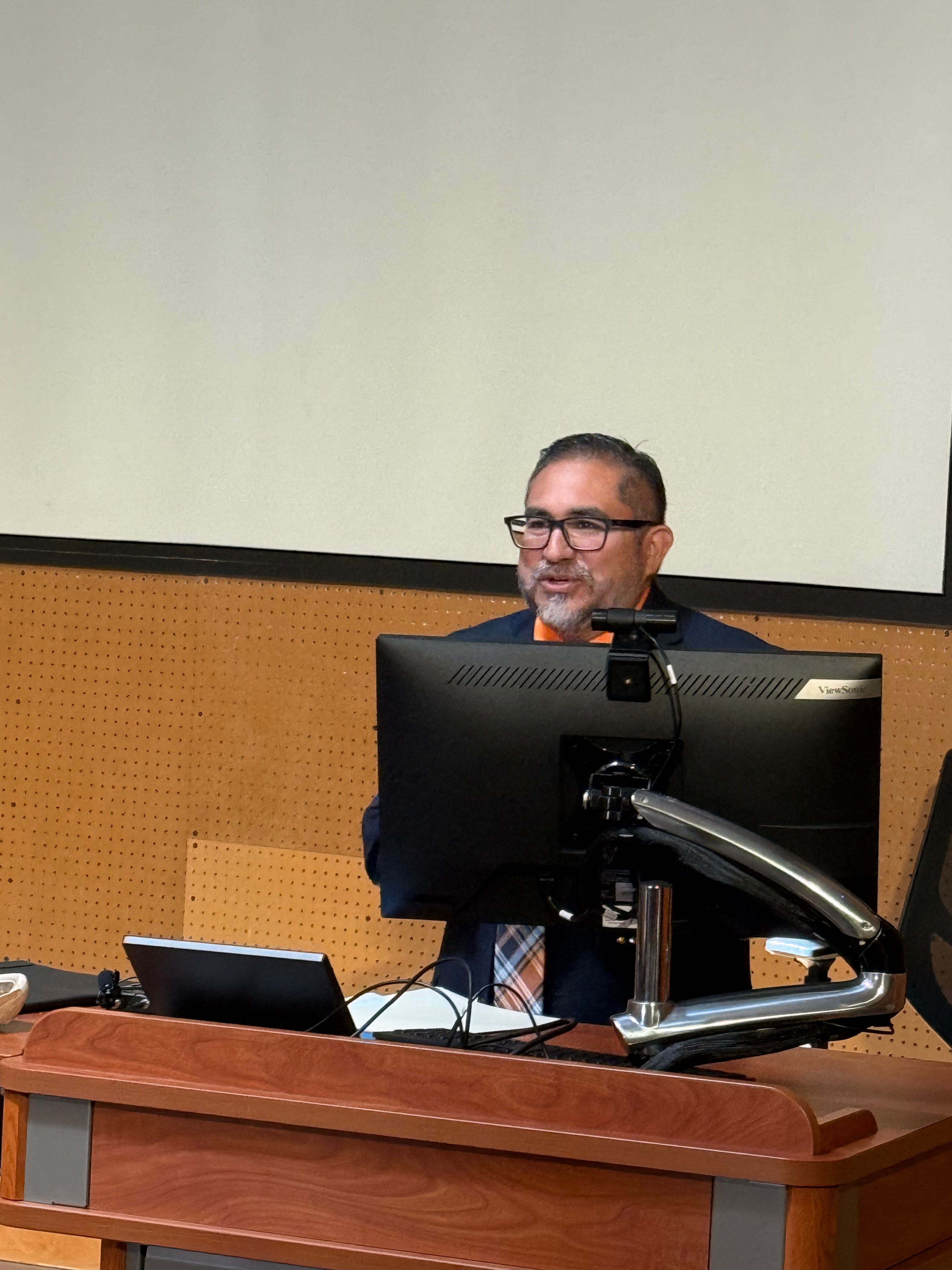
Author speaking at the CNAIF event
Perhaps the most detrimental consequence of being away from home, and one that had the longest negative effect on Hopi society, was that the off-reservation Indian boarding schools, including Catholic mission schools, did not teach Hopi youth to become good parents. Separated from their mothers and fathers, Hopi students received instruction and discipline from their teachers, matrons, and other school officials, including Catholic nuns.
Although they each took a parental role in the lives of Hopi youth, they did not parent them according to Hopi ways. Nor did they show love, instill confidence, or counsel them, including how to solve life’s problems, according to Hopi customs. As former Hopi Tribe Chairman Ivan Sidney noted in the film: “Being raised in the boarding school really did not teach us parenting, and some of that is carried on when we became parents. I know for a long time I had a difficult time telling my children that I love them and supporting their school because nobody ever said that to me.”
Sidney’s observation that boarding schools did not make for good parents is important for several reasons. In Hopi culture, parents are responsible for teaching and nurturing their children. They are responsible for preparing their children to learn knowledge and skills that will best prepare them for success on and beyond the mesas. The adolescent and later teenage years are challenging for young people. Becoming young adults and the hormonal and physical changes that come with it, older youth often struggle with anxiety, depression, and a lack of confidence.
In Hopi society, parents are supposed to be present for their children during these difficult and impressionable years; there to give counsel, instruction, and comfort during life’s hardships. And parents and other family members are to be there to instill in their children assurance of Hopi ways and confidence in their identity as clan and village members.
Instead, at boarding schools, officials wanted Hopi and other Indian students to see their cultures (and even their parents) as hindrances to their success. They did not provide Hopi youth with what they desperately needed, that is, parenting according to Hopi ways and customs. Instead, they modeled parenting from Western perspectives, which left the youth confused and feeling inadequate to parent their children on the reservation.
Perhaps, your very own Professor Alisse Ali-Joseph and Kelly McCue, in their insightful chapter in Indigenous Justice and Gender, said it best: “While boarding schools were the most prominent site of assimilation, policies outside of these schools further functioned to isolate youth from their families and communities. These policies left children without their mothers, traumatized by the horrific sexual, physical and emotional abuses they endured, and mothers without children, leading to generations of depression, substance use, domestic violence, and the inability to parent.”
I want to close my comments by retelling a story about an experience I had filming Beyond the Mesas, which speaks to the reason why I, and others, including the Hopi Cultural Preservation Office, produced this film.
Over the years, I often said that the “star” of the film was Marsah Balenquah from the Village of Paaqavi. Although I have written at length about Marsah in the Journal of American Indian Education, I thought I would close my talk this afternoon with her story, as a way to honor her memory and remind us of the sacrifices she and others made to get us where we are today.
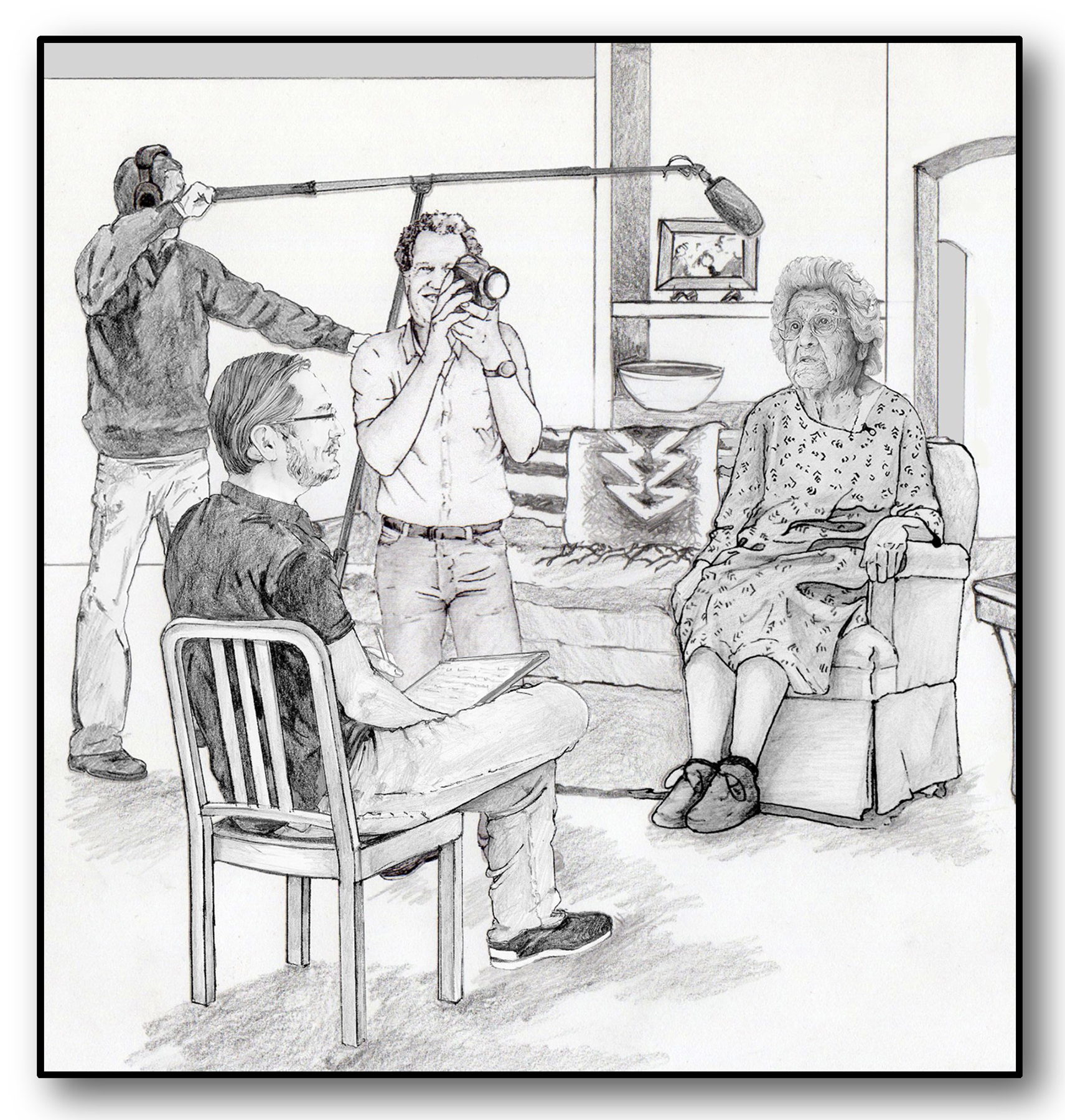
To film Beyond the Mesas, I, along with a small crew from 716 Productions, spent nearly a week at Hopi meeting individuals and talking with former boarding school students. Although we interviewed a number of people during that trip, an interview with Marsah will always remain special to me. We had been interviewing Eileen Randolph from the village of Bacavi, and her granddaughter, Leslie Robledo.
We spoke at length about Eileen’s mother, Bessie Humetewa, and her experience at Sherman during the 1920s (two years earlier, I interviewed Bessie, but shortly before this second visit she passed away). During their interview, Eileen and Leslie kept referring to a woman named Marsah Balenquah from the same village, who attended Sherman with Bessie. Even though my grandmother once told me about Marsah and how we are related, I had never met her. “She lives right across the road,” Eileen said to me, “you should interview her!” With their help, we made plans to visit Marsah at her home the next day.
Beyond the Mesas Interview with Marsah Balenquah. Drawing by Neil Logan. To be published in Modern Encounters of the Hopi Past by Matthew Sakiestewa Gilbert
When we arrived at the house, an elderly woman wearing an apron greeted me at the door, somewhat bewildered why I was standing on her porch. After telling her my name, I told her the reason for my unannounced visit. I explained that Eileen and Leslie had suggested that I interview her for my film on the Hopi boarding school experience. “Oh,” she said to me, “come in, come in.” She gestured for me to sit down on the couch, while she quickly prepared traditional Hopi tea for us called Hohoysi on her gas stove.
As we waited for the tea to brew, I told her that my So’oh (grandmother) Ethel from Upper Munqapi had sent her greetings. “I know Ethel” she exclaimed, “we are related to each other!” “Yes,” I said to her, glad and relieved that in determining Marsah’s familial connection to my grandmother, my family and clan connection to Marsah had also been established.
When our tea was ready, Marsah sat down next to me on the couch and immediately began telling about her school days at Sherman Institute. We must have talked for thirty minutes, all the while the film crew waited patiently outside. At one point in our conversation, Marsah recalled the first time she felt an earthquake. She explained that it was a frightening experience for all of the Hopi kids at Sherman, and she described how the walls in her dorm swayed back and forth until the quake stopped.
“Marsah,” I said to her, “I want to hear more about this and your other experiences at Sherman, but I need you to tell me these stories on camera. We cannot include your stories in our film if we are not able to record them.” The moment I said, “camera,” Marsah’s countenance and behavior changed. “I don’t want to do it,” she said to me, “I don’t want to be on camera.”
Marsah lived in a small village community. Perhaps worried about village gossip, or bashful of her story, she was reluctant to draw unnecessary attention to herself. I did not know how to respond. The last thing I wanted to do was make her feel uncomfortable. I respected her wishes, and her right to privacy, but maybe there was something I could say that would ease her mind? Perhaps I could help her see the situation and opportunity from a different, less threatening perspective?
I continued thinking about this as we finished our conversation, but no words or persuasive arguments came to mind. After we finished our tea, I collected my notes and headed toward the front door. Feeling somewhat hopeless and disappointed, I turned and asked one last question. “Have you ever told your children or grandchildren these stories about your school days?” She did not respond. “If you allow us to film you,” I said to her, “your family will have these stories forever.” She took five or so seconds to consider my words, and then she said, “Okay, I’ll do it.”
I think we would all agree that we are so thankful that she did.
In 2001, the Sherman Indian Museum had this bronze coin designed to commemorate the 100 year anniversary of Sherman Institute (now called Sherman Indian High School). Before I conducted research on the Hopi Reservation, Lorene Sisquoc, director of the Sherman Indian Museum, gave me several of these coins to give to the Hopi alumni that I interviewed.
One of these former students was Bessie Humetewa from the village of Bacavi. She attended the school from 1920 to 1928. Bessie also appears in Beyond the Mesas where she recalls that she stayed at Sherman “all eight years without coming home.”
At the time of the interview Bessie was blind, and so when I gave her the coin she examined it with her hands. Before I could tell her what was depicted on the coin, she said to me, “this is Sherman.”
She was able to discern the raised design of the school’s main building, the palm tree, and the superintendent’s office. The bronze coin reconnected Bessie to her alma mater. It took her back seventy-six years to when she last attended the Indian school in Riverside, California.
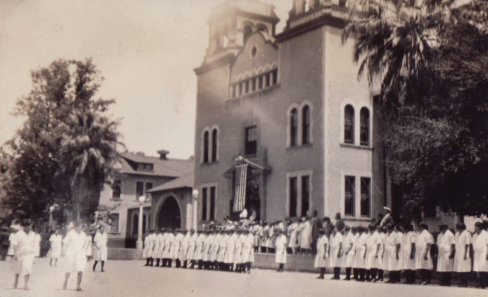
The producers of Beyond the Mesas were very fortunate that Marsah Balenquah from Bacavi on Third Mesa agreed to be interviewed for the film. In the documentary she explains that she attended Sherman for thirteen or fourteen years. At one point in the film she describes her impression of the school’s buildings. Built by Indian students in a Spanish Mission architectural style, the buildings did not resemble the sandstone homes she and other Hopis were familiar with on the reservation.
This photograph was taken when Marsah attended the Indian school in Riverside from 1920 to 1934. In the photo girls are standing in a line waiting for roll call and inspection. Everyday life at Sherman was very regimented. An American flag drapes from the portico of the school’s main building. Photo courtesy of the Sherman Indian Museum.
Today I read a blog about an American who now lives in Boquete, Panama. This week he visited the Hopi Reservation and took a picture of a home at Orayvi on Third Mesa and posted it to his blogcalled Boquete Panama Guide. Here is what he writes:
Recently a friend asked me why Hopis post signs at the entrance of their villages that forbid tourists from taking photos. I told him that one of the reasons is because Hopis want to protect their privacy.
Think of it in this way…
Imagine that you live in a remote area of North America that receives thousands of tourists each year. Your house is unlike most homes in the United States. It is made of sandstones and situated close to a highway. Throughout the year tourists zoom by your house, abruptly stop their cars, roll down their windows, and snap photos of your home. Sometimes this happens when you are sitting out front drinking ice tea and visiting with members of your family. Other times your children are playing outside. But it does not matter to the tourists if anyone is home, or whether people are outside. All they want is a photo of your home, and to them, the photo is only enhanced if you and your children are part of it. You sometimes wonder what people do with these photos. You imagine that some people put the picture of your home in a photo album, a book, make postcards and calendars from it, or sell it.
Concerned about your family’s privacy, you decide that enough is enough and so you put a sign in your front yard that reads: “Please do not take photos of my home.” And then you wait. It does not take long for the next tourist to drive by. He slows down. He reads the sign, then looks at your home, then reads the sign again. A Nikon camera is laying on the passenger seat. He finds himself in a dilemma, but he decides to honor your request. Five minutes later, another car approaches your home. These people stop and read your sign, then look around to see if anyone is looking, roll down their window, take several photos of your home and speed away. This happens day after day and it will only increase during the summer months.
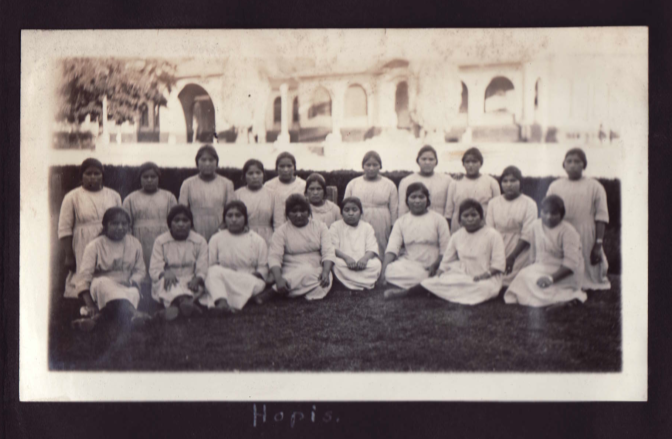
I was once asked how many photos and other images we included in Beyond the Mesas. I do not know the exact number, but it had to have been over a hundred. Some of these photos came from people who we interviewed for the film, others we uncovered at various archives. One of these photos was of a group of Hopi girls at Sherman Institute during the 1920s. I came across this picture in the Veva Wight Collection at the Sherman Indian Museum in Riverside, California. Wight was a Protestant missionary who led Bible studies and other Christian activities at the school. She worked as a “Religious Worker” at Sherman for more than thirty years. Although government officials allowed Christianity at Sherman to encourage the assimilation of Indian students, some Hopi girls had a genuine committment or interest in the Christian faith.
I am pleased to announce that UI-7, a local television station associated with the College of Media at the University of Illinois, will air Beyond the Mesas this week on the following days and times:
Tuesday, January 19 – 7:30pm and 9:00pm CST
Wednesday, January 20 – 1:00 pm CST
Friday, January 22 – 10:00 pm CST
Saturday, January 23 – 8:00 pm CST
UI-7 can be seen on Channel 7 for local Comcast subscribers.
If you are planning on watching the film on-line, remember to account for the different time zones. The above showings are listed in Central Standard Time (CST)
Beyond the Mesas Trailer
About the film:
Directed by Emmy Award winning director, Allan Holzman, and produced by Leigh J. Kuwanwisiwma, Stewart B. Koyiyumptewa, Matthew Sakiestewa Gilbert, and Gerald Eichner, Beyond the Mesas is a thirty-six minute documentary film on the removal of Hopis to on and off-reservation boarding schools and their experiences at schools such as Sherman Institute, Phoenix Indian School, Ganado Mission School, and Stewart Indian School. Topics covered in the film include Hopi understandings of education, early U.S. government attempts to assimilate Hopis, the Orayvi Split, Hopi language loss at American schools, and the future of the Hopi people. Produced with the cooperation and involvement of the Hopi Cultural Preservation Office in Kykotsmovi, Arizona, Beyond the Mesas is part I of a series of films on children and American Indian culture titled “Keeping the Culture Alive.”
The first public showing of the film was at the Hotevilla Bacavi Community School on the Hopi Reservation on November 8, 2006. Shortly afterwards, the Applied Indigenous Studies Department at Northern Arizona University and the Hopi Cultural Preservation Office hosted a screening at the Cline Library auditorium. Since November 2006, official screenings have taken place at other universities and schools, including the University of Illinois, University of California, Riverside, Cornell University, and Sherman Indian High School. The film has aired on several regional PBS stations throughout the United States.
In 2005, I published an article on a Hopi chief named Tawaquaptewa from Orayvi on Third Mesa. He was kikmongwi (village chief) at Orayvi during a very unstable time in Hopi history. In the early 1900s the village of Orayvi was divided over several issues. One of these issues was the mandatory enrollment of Hopi children at government schools.
In the past scholars have produced a great deal of material on Tawaquaptewa, but most of the scholarship focuses on Tawaquaptewa during this period. However, when I was writing my book on the Hopi boarding school experience I came across a fascinating article by Barry Walsh titled “Kikmongwi As Artist: The Katsina Dolls of Wilson Tawaquaptewa” in the American Indian Art Magazine (Winter 1998).
Walsh highlights an area of Tawaquaptewa’s life that has not received much attention. Tawaquaptewa was a carver and he sold his katsina dolls to tourists who visited the reservation between 1930 and 1960. Today his dolls are highly sought after by collectors. A website called TribalArtCollections.com has a photo gallery of his work.
In March 2008, the Antiques Roadshow (PBS) featured one of Tawaquaptewa’s katsina dolls. The segment is less than 3 minutes long, but I think you will find it interesting. To see the video click here. I have also pasted the appraisal transcript below.
GUEST: It’s a kachina doll. It was my father’s. I got it after he passed away. He taught school in Southern Idaho. During the ’20s, when they relocated tribal people from different places, they sent the children all over the United States, and this young man became a friend of my father’s, and when he left school, he gave my dad the doll, so…
APPRAISER: Do you know where it came from?
GUEST: From hearing what my dad talked about and what he said, you know, that it was from… Southwest America somewhere.
APPRAISER: It’s from Northern Arizona.
GUEST: Northern Arizona?
APPRAISER: It is a kachina doll, but… there’s some different things about this one that makes it a little bit special. It’s not like most kachina dolls. We actually know who made this doll.
GUEST: Oh, really?
APPRAISER: Yeah. It was made by a guy named Wilson Tawaquaptewa.
GUEST: Oh, my goodness.
APPRAISER: And he was the Hopi chief at Oraibi, but there’s two Oraibi villages and I’m not sure which one it was.
GUEST: See, that name sounds familiar.
APPRAISER: Yeah, but… because he was the chief, he wasn’t going to do something traditional and sell it, and so he made these kachinas that are like no other kachinas.
GUEST: Really?
APPRAISER: You go through the books and you’re not going to find one of these, because they most often represent a badger, or they have characteristics of a mouse or some animal in his world out there that’s not a traditional kachina, and this is one of them. The way that we spotted it is he liked to use this indigo color, and… it’s this really faded blue here.
GUEST: I never noticed it.
APPRAISER: Yeah, we almost didn’t, too. Tawaquaptewa worked from about 1930 into the early 1960s. If it wasn’t one of his and it was a kachina that looked like it was from the ’30s like this one, that’s worth some pretty good money– $2,500…
GUEST: Oh, my goodness.
APPRAISER:…to $3,500, but because it’s a Wilson Tawaquaptewa, there’s a group of collectors now who recognize his work, who buy his work. On a bad day, this is worth $7,500 to $8,500. Uh… …if it’s a good day and the right collector’s in the room, $9,000.
GUEST: My goodness.
APPRAISER: So it’s something real special and it’s something real unique that you ended up with.
GUEST: Oh, no kidding, and to know that, you know, you can recognize the maker, you know…
APPRAISER: Yeah.
GUEST:…that is, that is amazing. That surprises me, surprises me a great deal.
The Hopi of northeastern Arizona are among the most researched indigenous people groups in North America. Over the years anthropologists, historians, psychologists, ethnographers and many others have conducted research on the Hopi Reservation. Their scholarship has appeared in journals, books, internet websites, and even films. Some of these scholars collaborated with Hopi people, followed research protocols established by the Hopi Tribe, and sought ways to give back to the Hopi community. Others did not. But the purpose of today’s post is not for me to write about people who have exploited Hopis of their intellectual property or conducted research on the reservation without permission from the Hopi Tribe. Instead I want to introduce you to someone whom I believe has done the complete opposite.
While a graduate student in the Arts Administration program at Columbia University, Trevor Reed from the Hopi village of Hotevilla developed a research project called the “Hopi Music Repatriation Project” (HMRP). This project focuses on field recordings of Hopi songs that ethnomusicologists conducted during the 1930s and 1940s. The recordings are now archived at Columbia University’s Center for Ethnomusicology. As Reed points out on his blog Hopi Music Repatriation Project: “On one hand, these recordings are invaluable research tools for ethnomusicologists, anthropologists, and for the American public, who ideally should be educated in the indigenous heritage of the land on which they live. On the other hand, the recordings are an important link to Hopi past and identity, and contain highly sensitive material.” So what are the questions that this project seeks to answer? Again, Reed notes: “based on Hopi and U.S. concepts of intellectual property, to whom do these recordings rightfully belong and what should be done with them?”
I urge you to visit Reed’s blogand learn more about this important project. His current post, “Repatriation Initiative Receives Endorsement from Hopi Elders,” describes a recent meeting that he had with the Hopi Cultural Preservation Office and the Hopi Cultural Resources Advisory Task Team. At this meeting Reed gave a update on his project and played some of the Hopi songs that he uncovered at the University’s Center for Ethnomusicology. As Reed recalls, a highlight for him was when he played a particular song at the meeting and those in attendance joined in the singing. To visit Reed’s blog, click here.



 BEYOND THE MESAS, LLC