Receive 20% off EDUCATION BEYOND THE MESAS

Receive 20% off each copy of Education beyond the Mesas: Hopi Students at Sherman Institute, 1902-1929, if you order from the University of Nebraska Press. Mention promotion code 6AF10 to obtain the discount. For more information, please click on the following link to download the book’s promotional flyer: Education beyond the Mesas – flyer

Matthew Sakiestewa Gilbert

A Hopi runner and his marathon trophy

Photograph by Matthew Sakiestewa Gilbert

Most people who visit the Sherman Indian Museum in Riverside, California, see this first place trophy without knowing who won it. Marathon officials did not engrave the athlete’s name on the trophy, but they did include the date and the event, which was the Vallejo Pre-Olympic National Marathon held in California on December 22, 1929.

At one point in the school’s history, the student’s at Sherman Institute knew who won this award. But as time passed, the trophy, one of the largest in the Museum’s collection, became disassociated from its owner.

The trophy belongs to Hopi runner Harry Chaca from the village of Polacca on First Mesa. He was among the great Hopi runners of the twentieth century. Chaca attended Sherman in the 1920s and early 1930s and he earned several marathon honors while a student at the school.

I wrote about Chaca and his victory of the 1929 Vallejo Pre-Olympic National Marathon in my article “Hopi Footraces and American Marathons, 1912-1930” (American Quarterly, March 2010). I note that prior to this event, Chaca had won other prestigious marathons and his reputation as a great runner spread far beyond the United States.

In Japan, for example, a runner named Yoshikio Sudsuki heard that Chaca was the best runner in America and so he traveled to the U.S. for the sole purpose of competing against the Hopi from Polacca. But at the 1929 Vallejo Pre-Olympic National Marathon, Chaca’s speed and endurance proved too much for the forty-nine year old runner from Tokyo. In my article I write that the

Hopi runner ran at a “killing pace to win” the full marathon in two hours, forty-one minutes, and twenty-five seconds, a “full second better than the performance of Alpien Stenroos” in the 1924 Olympic Games in Paris. One of the fifty thousand spectators of the marathon recalled that Chaca’s “victory” was “all the more noteworthy for his sensational finish. After trailing for twenty-three miles it was at that mark that he applied a final burst of speed that sent him ahead” of Hopi runner Franklin Suhu. In addition to winning the race, Chaca set a new American marathon record, which immediately confirmed his place as the top long-distance runner in the nation. [p. 91]

Shortly after Chaca’s marathon victory, school officials took his trophy and displayed it in a large cabinet located in Sherman’s administration building (now the Sherman Indian Museum). According to school administrators, all individually won trophies belonged to the school.

At times Hopi students attempted to obtain their trophy cups after their terms at Sherman had expired.  During the 1940s, for example, Hopi runner Philip Zeyouma asked the school’s superintendent if he could reclaim his trophies (pictured on the front cover of American Quarterly), but school officials refused to honor his request.

More than eighty years after Chaca won the Vallejo Pre-Olympic National Marathon, his trophy remains at the Sherman Indian Museum. Although government officials consider the award to be property of the Bureau of Indian Affairs, the trophy will always belong to Harry Chaca and his family.

Matthew Sakiestewa Gilbert

Tenure and promotion awarded to Hopi historian

I am pleased to report that Hopi historian Lomayumtewa C. Ishii has been awarded tenure and promotion to Associate Professor of Applied Indigenous Studies & History at Northern Arizona University (NAU).  Ishii received his B.S., M.S., and Ph.D. in history from NAU in 2001.  During his doctoral program, he was also awarded the prestigious Ford Foundation Dissertation Fellowship.

In 2002, Ishii became a postdoctoral fellow of Native Studies at the University of Iowa and a year later he returned to NAU as a Visiting Assistant Professor of Applied Indigenous Studies. He began his tenure track appointment at NAU in 2004.

Ishii has taught courses on various topics, including American Indian history, Native representation, indigenous-centered historiography, and the American Indian post-colonial experience. His scholarship has appeared in several venues, including the Wicazo Sa Review, the Indigenous Nations Studies Journal, and in edited volumes.

For more information, please visit the following website:
http://navajohopiobserver.com/Main.asp?SectionID=1&SubSectionID=1&ArticleID=12475

Matthew Sakiestewa Gilbert

“Hopi Footraces and American Marathons, 1912-1930” (American Quarterly, March 2010)

For the past three years I have been working on a book on Hopi long distance runners and the American sport republic. Part of this project includes an article that I wrote titled “Hopi Footraces and American Marathons, 1912-1930.” This article recently appeared in the March 2010 Issue of American Quarterly (Vol. 62, No. 1, pp. 77-101). The American Quarterly is the flagship journal of the American Studies Association.

The photograph featured on the cover of the journal (pictured above) is of two trophy cups that Hopi runner Philip Zeyouma won at Sherman Institute. I took this photo at the Sherman Indian Museum in Riverside, California. Not long after the school established its cross-country team, Zeyouma won the Los Angeles Times Modified Marathon in April 1912. His victory also gave him an opportunity to compete in the 1912 Olympic Games in Stockholm, Sweden.

When Hopis such as Zeyouma, Harry Chaca, Guy Maktima and Franklin Suhu competed on the Sherman cross-country team, and Louis Tewanima ran for the Carlisle Indian Industrial School, their cultural identities challenged white American perceptions of modernity and placed them in a context that had national and international dimensions. These dimensions linked Hopi runners to other athletes from different parts of the world, including Ireland and Japan, and they caused non-Natives to reevaluate their understandings of sports, nationhood, and the cultures of American Indian people.

This article is also a story about Hopi agency, and the complex and various ways Hopi runners navigated between tribal dynamics, school loyalties, and a country that closely associated sports with U.S. nationalism. It calls attention to certain cultural philosophies of running that connected Hopi runners to their village communities, and the internal and external forces that strained these ties when Hopis competed in national and international running events.

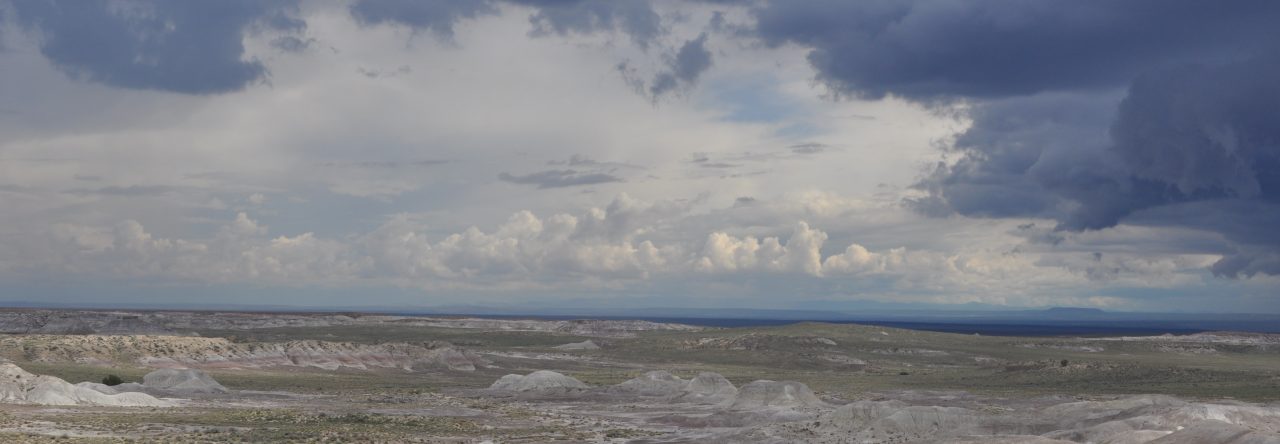
The back cover of the journal (pictured below) features a photograph that I took on the edge of Third Mesa near the village of Orayvi. At one point in the article I describe how one can stand in this location and see for miles in all directions:

To the south, the land extends beyond the Hopi mesas and the silhouette of Nuvatukiyaovi, or the San Francisco Peaks, is visible in the distance. In the valleys below, corn, melon, and bean fields stand out as green patches against a backdrop of earth and sandstone. From on top of the mesa one can enjoy the sweet smell of burning cedar, hear and feel the wind blowing over the mesa edge, and behold a breathtaking landscape surrounded by a canopy of deep blue sky. Looking east toward the village of Shungopavi on Second Mesa, running trails stretch from Orayvi like veins that connect and bring life to each of the Hopi villages. The trails near Orayvi give testimony to the tradition of running in Hopi culture and the continuance of running among today’s Hopi people. [p. 79]

I am indebted to several individuals who helped me revise this essay, including my colleagues at the University of Illinois, various Hopi and non-Hopi scholars, the Hopi Cultural Preservation Office, Lorene Sisquoc of the Sherman Indian Museum, and American Quarterly editors Curtis Marez, Jeb Middlebrook and Stacey Lynn.

If you would like a PDF copy of this article, please feel free to email me at sakiestewa@gmail.com, or submit a comment to this post.

Matthew Sakiestewa Gilbert

See also BEYOND THE MESAS post: Hopi runners article available for download

Hopi studies at the 2010 NAISA conference

There will be several Hopi presentations at this year’s Native American and Indigenous Studies Association (NAISA) conference hosted by the University of Arizona in Tucson. This event will take place on May 20-22. I have copied a list of Hopi presenters and Hopi related papers/panels to this post. To learn more about the conference and to access the complete program, please click on the following link: http://naisa.ais.arizona.edu/

—————————————

FRIDAY, MAY 21, 2010 10:00-11:45 am

76. Youth & Culture [S29]
Organizer: NAISA Program Committee
Chair: TBA
“The Good Life” and “The Fast Life”: Childhood and Youth among Algonquian Peoples at Mid-Century
Kim Anderson, Centre for Research in Inner City Health/ St. Michael’s Hospital, Toronto, Canada
Unintended Truths: The Paradoxes of Cultural Reconnection for Urban Native Youth
Tracy L. Friedel, University of British Columbia, Canada
Traditional Education Tools in Hopi and Dakota Communities
Sherrie L. Stewart, University of Arizona

Cultural Identity in Education
Roy Weasel Fat, Red Crow Community College
Comment: Audience

79. Attending to “Missing” Youth and Opportunities for Language Activism in Indigenous Language Contexts [P74]
Organizer & Chair: Leisy T. Wyman, University of Arizona
Indigenous Youth – The Missing Link in Language Revitalization Research and Praxis
Teresa L. McCarty, Arizona State University
Articulating a Critical Language Consciousness among New Mexico’s Indigenous Youth
Tiffany S. Lee, University of New Mexico
Hopi Youth “Wanting in Tradition”: Seeking the “Missing Piece” – The Heritage Language
Sheilah E. Nicholas, University of Arizona

Recognizing Youth Migration in Linguistic Ecologies and Educational Efforts: Yu’pik Examples
Leisy T. Wyman, University of Arizona
Comment: Perry Gilmore, University of Arizona

FRIDAY May 21, 2010 12:00-1:45 pm

87. ROUNDTABLE: Collaborating on Native American History: The Hopi History Project [R6]
Organizer: Anton Daughters, University of Arizona
Chair: Thomas E. Sheridan, University of Arizona
Participants: T.J. Ferguson, University of Arizona
Leigh Kuwanwisiwma, Hopi Cultural Preservation Office
Stewart Koyiyumptewa, Hopi Cultural Preservation Office
Lee Wayne Lomayestewa, Hopi Cultural Preservation Office

FRIDAY, MAY 21, 2010 2:00-3:45 pm

93. Displaying Common Unity: New Directions in the Exhibition of “Indigenous” and “Black” Lives in the Americas
[P21]
Organizer & Chair: Robert Keith Collins, San Francisco State University
Toward a Dynamic Ethnography of Common Unity between Africans and Native Americans: Evidence from WPA Slave
Narratives
Robert Keith Collins, San Francisco State University
Mulattos, Mongrels, and Mulgenons: Race, Ideology, and Public Policy in the Construction of American Indian and
African American Identity
Angela A. Gonzales, Cornell University

Our brethren by the ties of consanguinity, of suffering, and of wrongs: Narrating Crispus Attucks and Paul Cuffee
“Home”
Judy Kertész, North Carolina State University

101. Intellectual Property, Cultural Patrimony, and Museum Partnerships [S19]
Organizer: NAISA Program Committee
Chair: Kevin Gover, National Museum of the American Indian, Smithsonian Institution
Perspectives on Working Relationships and Contracts: Indigenous Intellectual Property and Museums
John R. Grimes, Cook Inlet Tribal Council and Merry Glosband, Peabody Essex Museum
Repatriation and Representation in Tribal Museums and Cultural Centers
Sunny K. Lybarger, University of Arizona
Returning Hopi Voices: Redefining Repatriation through Community Partnership
Trevor Reed, Columbia University

Iroquoia Collected: The Alienation of Haudenosaunee Cultural Patrimony
Scott Manning Stevens, Newberry Library McNickle Center
Comment: Audience

SATURDAY, MAY 22, 2010, 8:00-9:45 a.m.

103. Renewal of Indigenous Languages & Cultures: Up and Coming Indigenous Scholars’ Research Findings [P26]
Organizer & Chair: Candace K. Galla, University of Arizona
Reversing Language Shift in the Cheyenne River Sioux Tribe
Jesse Johnson, University of Arizona
Use of Ancestral Indigenous Languages to Promote Student Development within the Classroom Maxine R. Sam, University of Arizona
“Uma tuuqayi, umu sinmuy amungem lavaywisni” (When you have learned, advocate for your people)
Darold Joseph, University of Arizona

Revitalizing Our Languages: Towards Decolonizing Technologies for Indigenous Communities
Candace K. Galla, University of Arizona
Comment: Audience

SATURDAY, MAY 22, 2010 2:00-3:45 pm

129. New Directions in Hopi Arts: Incorporating the Past, Inventing the Future [P72]
Co-Organizers & Co-Chairs: Jessica Welton, Virginia Commonwealth University and Zena Pearlstone, California
State University, Fullerton
Picturing the Rational Mind: Archaeology Meets Michael Kabotie
Kelley Hayes-Gilpin, Museum of Northern Arizona & Northern Arizona University

Brian Honyouti: Send in the Clowns
Zena Pearlstone, California State University, Fullerton
New Directions and Change: Discomfort and Growth
Mark Tahbo (Hopi), Independent Scholar
New Directions from Ancient Roots: The Art and Philosophy of Michael Kabotie
Jessica Welton, Virginia Commonwealth University

Comment: Audience
Hopi runners in the audience

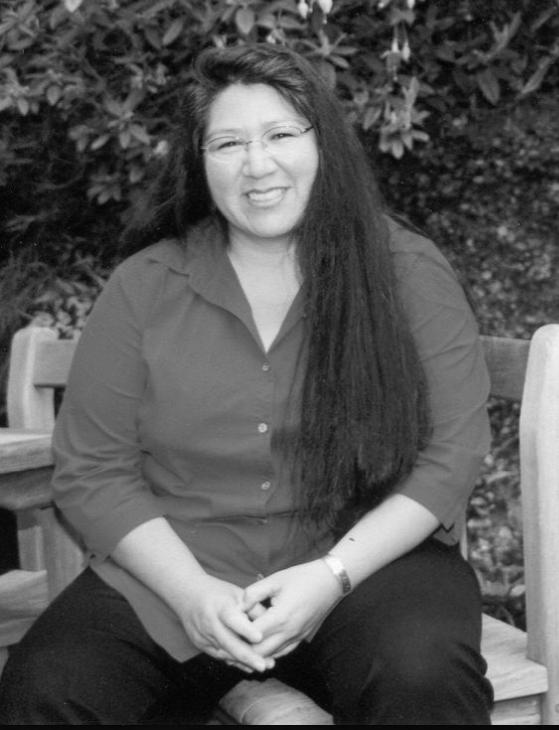
I recently returned from attending the American Indian Studies Association (AISA) Conference in Tempe, Arizona. I delivered a paper titled “Hopi Footraces and American Marathons, 1912-1930.” This paper, in its article form, will appear next month in American Quarterly. I was happy to see that some Hopis came to my talk, including two students from ASU. Since I first presented on this topic, I cannot recall the last time I had Hopi long distance runners in the audience. Both of these students were runners.

After the session I talked at length with the students about how the world focuses so much attention on Louis Tewanima, but back home our people realize that while Tewanima was good, other Hopi runners were just as good or better than the famous Olympian from Shungopavi. Although these students already knew about Tewanima, they had not heard of the other runners that I mentioned in my paper. I also did not know about these runners before I started this project.

One of the most rewarding aspects of being a faculty at the University of Illinois is the opportunity I have to make my research available and meaningful to the Hopi community. This has always been the driving force behind my work.

Matthew Sakiestewa Gilbert

Hopi Music Repatriation Project

The Hopi of northeastern Arizona are among the most researched indigenous people groups in North America. Over the years anthropologists, historians, psychologists, ethnographers and many others have conducted research on the Hopi Reservation.  Their scholarship has appeared in journals, books, internet websites, and even films. Some of these scholars collaborated with Hopi people, followed research protocols established by the Hopi Tribe, and sought ways to give back to the Hopi community. Others did not. But the purpose of today’s post is not for me to write about people who have exploited Hopis of their intellectual property or conducted research on the reservation without permission from the Hopi Tribe. Instead I want to introduce you to someone whom I believe has done the complete opposite.

While a graduate student in the Arts Administration program at Columbia University, Trevor Reed from the Hopi village of Hotevilla developed a research project called the “Hopi Music Repatriation Project” (HMRP). This project focuses on field recordings of Hopi songs that ethnomusicologists conducted during the 1930s and 1940s. The recordings are now archived at Columbia University’s Center for Ethnomusicology. As Reed points out on his blog Hopi Music Repatriation Project: “On one hand, these recordings are invaluable research tools for ethnomusicologists, anthropologists, and for the American public, who ideally should be educated in the indigenous heritage of the land on which they live. On the other hand, the recordings are an important link to Hopi past and identity, and contain highly sensitive material.” So what are the questions that this project seeks to answer? Again, Reed notes: “based on Hopi and U.S. concepts of intellectual property, to whom do these recordings rightfully belong and what should be done with them?”

I urge you to visit Reed’s blog and learn more about this important project. His current post, “Repatriation Initiative Receives Endorsement from Hopi Elders,” describes a recent meeting that he had with the Hopi Cultural Preservation Office and the Hopi Cultural Resources Advisory Task Team. At this meeting Reed gave a update on his project and played some of the Hopi songs that he uncovered at the University’s Center for Ethnomusicology. As Reed recalls, a highlight for him was when he played a particular song at the meeting and those in attendance joined in the singing. To visit Reed’s blog, click here.

Matthew Sakiestewa Gilbert

Hopi professor earns tenure and promotion

It gives me great pleasure to announce that Hopi professor Angela A. Gonzales from Shungopavi on Second Mesa has received tenure and promotion to Associate Professor at Cornell University. This truly is an incredible accomplishment. Gonzales received her undergraduate degree from UC Riverside and her MA, EdM, and PhD in Sociology form Harvard University. Her first academic post was at San Francisco State University where she served as an assistant professor and acting chair of American Indian Studies from 1997 to 2000. In 2002 she joined the faculty in the Department of Development Sociology at Cornell where she also teaches in the American Indian Program. As an assistant professor Gonzales has had a prolific and remarkable career.

In addition to publishing chapters in many books, her articles have appeared in the Social Sciences Journal, the Public Historian, the American Indian Culture and Research Journal, and the International Social Sciences Journal. Alongside her faculty appointments, she was the director of the Hopi Tribe Grants and Scholarship Program on the Hopi Reservation from 1994 to 1995, and from 2005 to 2007 she held a postdoctoral fellowship at the University of Colorado at Denver Health Sciences Center, Native Elder Research Center, and the American Indian and Alaska Native Program.

In 2009 she was awarded the Ford Foundation Diversity Fellowship for her project titled “Racializing American Indians: The Politics of Identity, Displacement, and Dispossession.” Gonzales’ tenure and promotion is a proud moment for Hopi people. She is only one of a few Hopi professors in the academy with indefinite tenure.

Matthew Sakiestewa Gilbert

University of Illinois at Urbana-Champaign

Sheilah E. Nicholas publishes article on Hopi language and youth

Sheilah E. Nicholas (Hopi) from the village of Songoopavi, and assistant professor in the College of Education at the University of Arizona, recently published an article titled, “‘I Live Hopi, I Just Don’t Speak It’ – The Critical Intersection of Language, Culture, and Identity in the Lives of Contemporary Hopi Youth”, Journal of Language, Identity & Education, Vol. 8, Issue 5, November 2009, pp. 321-334. This article is a major contribution to the fields of education and Hopi studies. It is a wonderful essay to read alongside Beyond the Mesas. To view the abstract, click here.