Trails kept open at the Oraivi Footrace

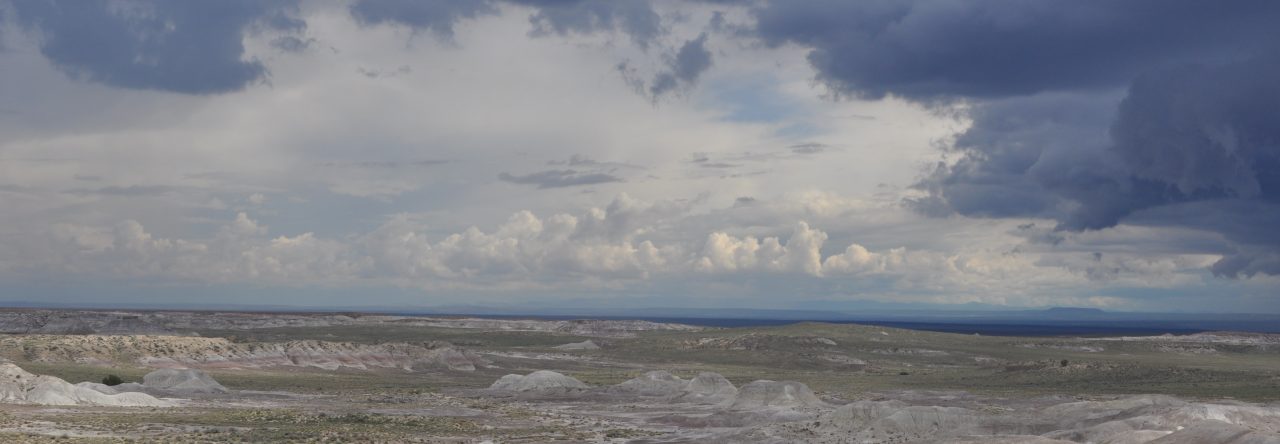
Oraivi Footrace (2009), Photograph by Matthew Sakiestewa Gilbert

This Saturday August 6, Hopi runner Juwan Nuvayokva and the village of Oraivi will host the annual Oraivi 8K Footrace and 2 Mile Fun Run and Walk.  The 8K race will begin at 6:30AM.  Be sure to arrive early if you intend to run but have not yet registered.  And bring extra cash with you to buy coffee, breakfast burritos, and race t-shirts and mugs. Kwakwha’ to all those who keep our trails open by running in this event!

Running through exhaust

Illinois cornfield and rural road - Photograph by Matthew Sakiestewa Gilbert

On Friday of last week I went on a run that brought me to the middle of corn fields outside the city of Champaign, Illinois. As I plugged away on a country road, a large truck drove by and I got a mouth full of exhaust. This is one of my least favorite parts about running on rural roads.

But it reminded me of Hopis during the 1910s and 1920s who “ate exhaust” in many marathons that they competed in. It was not uncommon for newspaper reporters or race officials to drive their automobiles 10 or 15 feet in front of the lead runners.  Some runners were so overcome with exhaust that they quit.

Back out at Hopi, runners did not have to contend with automobile exhaust, but when they competed in events beyond the mesas, it became a serious issue for them to manage.

It’s difficult enough to run long distances with high heat and humidity, and sore legs and feet, but adding the heavy exhaust element to running must have seemed unbearable.

And yet the vast majority of Hopi runners pressed on to complete (and sometimes win) the marathons that they started.

For the runners, the exhaust was simply another obstacle for them to overcome. It was one more hurdle for them to navigate through when they ran beyond their homelands in northeastern Arizona.

Matthew Sakiestewa Gilbert

Google Search Story for www.beyondthemesas.com

I want to extend a big kwakwha’ to my friend and colleague, Debbie Reese, for telling me about a free program called Google Search Stories. On Wednesday of this week she gave a lecture on her use of social media at the University of Illinois, which is where she told the audience about Google Search Stories.

This program allows people to make Google search engine videos on any topic. The search terms that I included in my video are terms that people often use to get to BEYOND THE MESAS. In case you’re wondering, Search Story videos are very easy to make. Just click on the following link for more information: http://www.youtube.com/user/searchstories

I hope you enjoy the video!

I run because I’m Hopi

I have been running regularly for the past twelve months. This winter I found myself running in all kinds of wet and frigid conditions. Sometimes when I run, I imagine myself on the dirt trails out at Hopi, and not the city streets and paths of Champaign, Illinois. But Hopis have a long tradition of running beyond the mesas, and I like to think that this tradition still exists in the Midwest.

I am not the only one in my immediate family who runs.  My wife is an avid runner, and our daughters refer to themselves as “Hopi runners.”  They are also Irish on their mother’s side and I often remind them that the Irish are known for running long distances as well. I hope they will appreciate this more as they get older.

My daughter is already quite the runner.  I am constantly amazed by her running form and how effortlessly she makes running appear.  She and her sisters are sure to run cross-country in middle and high school.

Some people run to lose weight or to relieve stress.  Others run to lower their cholesterol or blood pressure. Although these are great benefits of running, I tend to focus less on these reasons. A friend once asked me why I run.  I simply replied, “I run because I’m Hopi, and that’s what Hopis do.”

Matthew Sakiestewa Gilbert

Running Spirit by Hopi video producer Alexander D. Chapin

I came across an interesting YouTube video on running by Hopi video producer Alexander D. Chapin. The video appeared on YouTube in November 2010. I do not know much about Chapin, except that he has produced a number of short videos on-line. A few years ago, Chapin discovered interview tapes of his grandfather James (Jimmy) S. Kewanwytewa and he used a section of the interview on running to make Running Spirit. Kewanwytewa was from Orayvi on Third Mesa. Some people consider him to be the most famous Hopi kachina carver of the twentieth century. In addition to carving, he spent several years working with zoologist Harold S. Colton, co-founder of the Museum of Northern Arizona, to identify a large collection of kachina dolls. Below is the YouTube commentary that goes with the video:

I recently (2009) obtained an audio recording of my Great Grandfather Jimmy Kewanwytewa. In this recording I chose one of the stories he told and composed music to it.

My Great Grandfather was Hopi Indian and was known for being a talented distance runner. So in this story he tells about a time when he was headed home from work and saw someone running ahead of him, so he thought he would go an catch up with that person on his way home.

But the entire way to the Oraibi village, as talented as a runner that my great grandfather was said to be, he could not catch up with that person. Afterwards he told his father what happened and his father laughed at him and told him the same thing happen to him one time, and that he was never going to catch that person because that person was a spirit.

I created this video for the song in a rush so I could share this song with everyone but hope to produce a better video in the future.

Watch & listen or just listen & enjoy my most accomplished musical composition to date.

Thank you.

Shot & Edited by Alexander D. Chapin
Alexander D. C. Productions

Hopi runners article available for download

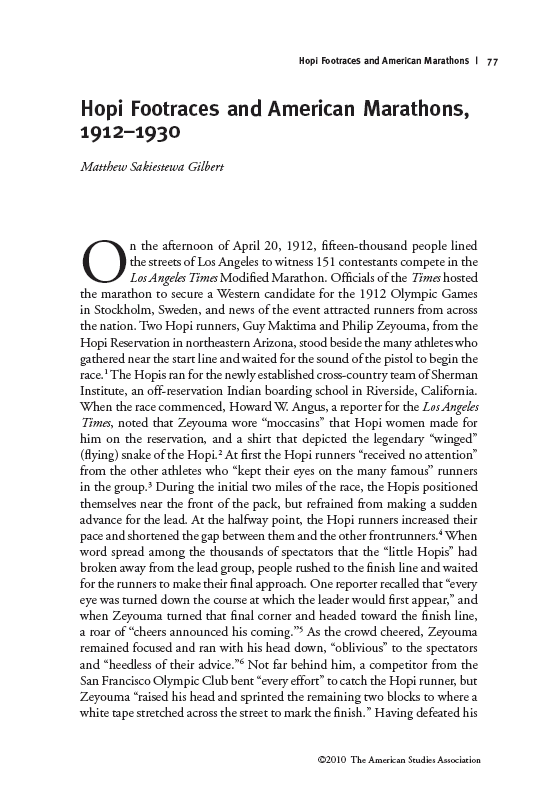
Over the past year, several people have stumbled across my blog looking for information on Hopi runners. For those who might be interested, I have made my article “Hopi Footraces and American Marathons, 1912-1930” (American Quarterly, March Issue 2010, Vol. 62, No. 1, pp. 77-101) available for download. Simply click on the above image to download the article as a PDF document.

Matthew Sakiestewa Gilbert

Hopi High Cross Country Team Wins 21st Straight State Championship

I want to congratulate our Hopi High boys cross country team for winning their 21st straight Class 2A State Championship. This is a remarkable achievement. In an article in The Arizona Republic, reporter Jose M. Romero noted that Hopi runner Justin Secakuku won the Division IV meet for the team yesterday in Phoenix, Arizona. Congratulations to the Hopi High runners and their coaches for once again bringing honors to our people. Be sure to check out the following link for more information about this story: http://www.azcentral.com/sports/preps/articles/2010/11/06/20101106hopi-boys-cross-country-titles.html

Matthew Sakiestewa Gilbert

A Hopi runner and his marathon trophy

Photograph by Matthew Sakiestewa Gilbert

Most people who visit the Sherman Indian Museum in Riverside, California, see this first place trophy without knowing who won it. Marathon officials did not engrave the athlete’s name on the trophy, but they did include the date and the event, which was the Vallejo Pre-Olympic National Marathon held in California on December 22, 1929.

At one point in the school’s history, the student’s at Sherman Institute knew who won this award. But as time passed, the trophy, one of the largest in the Museum’s collection, became disassociated from its owner.

The trophy belongs to Hopi runner Harry Chaca from the village of Polacca on First Mesa. He was among the great Hopi runners of the twentieth century. Chaca attended Sherman in the 1920s and early 1930s and he earned several marathon honors while a student at the school.

I wrote about Chaca and his victory of the 1929 Vallejo Pre-Olympic National Marathon in my article “Hopi Footraces and American Marathons, 1912-1930” (American Quarterly, March 2010). I note that prior to this event, Chaca had won other prestigious marathons and his reputation as a great runner spread far beyond the United States.

In Japan, for example, a runner named Yoshikio Sudsuki heard that Chaca was the best runner in America and so he traveled to the U.S. for the sole purpose of competing against the Hopi from Polacca. But at the 1929 Vallejo Pre-Olympic National Marathon, Chaca’s speed and endurance proved too much for the forty-nine year old runner from Tokyo. In my article I write that the

Hopi runner ran at a “killing pace to win” the full marathon in two hours, forty-one minutes, and twenty-five seconds, a “full second better than the performance of Alpien Stenroos” in the 1924 Olympic Games in Paris. One of the fifty thousand spectators of the marathon recalled that Chaca’s “victory” was “all the more noteworthy for his sensational finish. After trailing for twenty-three miles it was at that mark that he applied a final burst of speed that sent him ahead” of Hopi runner Franklin Suhu. In addition to winning the race, Chaca set a new American marathon record, which immediately confirmed his place as the top long-distance runner in the nation. [p. 91]

Shortly after Chaca’s marathon victory, school officials took his trophy and displayed it in a large cabinet located in Sherman’s administration building (now the Sherman Indian Museum). According to school administrators, all individually won trophies belonged to the school.

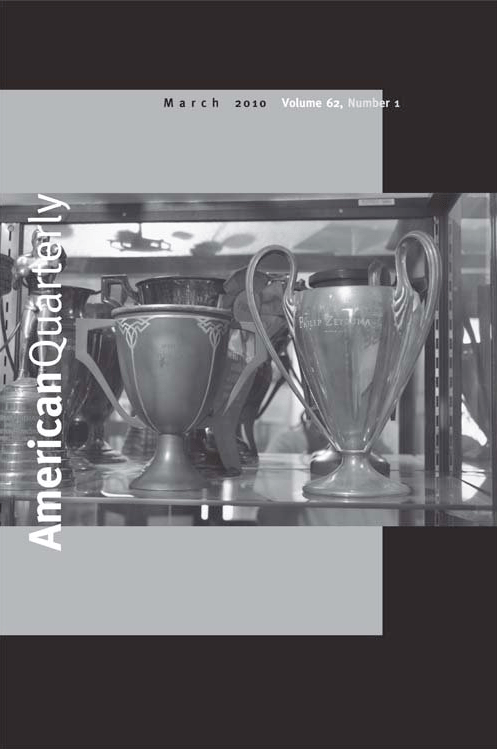
At times Hopi students attempted to obtain their trophy cups after their terms at Sherman had expired.  During the 1940s, for example, Hopi runner Philip Zeyouma asked the school’s superintendent if he could reclaim his trophies (pictured on the front cover of American Quarterly), but school officials refused to honor his request.

More than eighty years after Chaca won the Vallejo Pre-Olympic National Marathon, his trophy remains at the Sherman Indian Museum. Although government officials consider the award to be property of the Bureau of Indian Affairs, the trophy will always belong to Harry Chaca and his family.

Matthew Sakiestewa Gilbert

“Hopi Footraces and American Marathons, 1912-1930” (American Quarterly, March 2010)

For the past three years I have been working on a book on Hopi long distance runners and the American sport republic. Part of this project includes an article that I wrote titled “Hopi Footraces and American Marathons, 1912-1930.” This article recently appeared in the March 2010 Issue of American Quarterly (Vol. 62, No. 1, pp. 77-101). The American Quarterly is the flagship journal of the American Studies Association.

The photograph featured on the cover of the journal (pictured above) is of two trophy cups that Hopi runner Philip Zeyouma won at Sherman Institute. I took this photo at the Sherman Indian Museum in Riverside, California. Not long after the school established its cross-country team, Zeyouma won the Los Angeles Times Modified Marathon in April 1912. His victory also gave him an opportunity to compete in the 1912 Olympic Games in Stockholm, Sweden.

When Hopis such as Zeyouma, Harry Chaca, Guy Maktima and Franklin Suhu competed on the Sherman cross-country team, and Louis Tewanima ran for the Carlisle Indian Industrial School, their cultural identities challenged white American perceptions of modernity and placed them in a context that had national and international dimensions. These dimensions linked Hopi runners to other athletes from different parts of the world, including Ireland and Japan, and they caused non-Natives to reevaluate their understandings of sports, nationhood, and the cultures of American Indian people.

This article is also a story about Hopi agency, and the complex and various ways Hopi runners navigated between tribal dynamics, school loyalties, and a country that closely associated sports with U.S. nationalism. It calls attention to certain cultural philosophies of running that connected Hopi runners to their village communities, and the internal and external forces that strained these ties when Hopis competed in national and international running events.

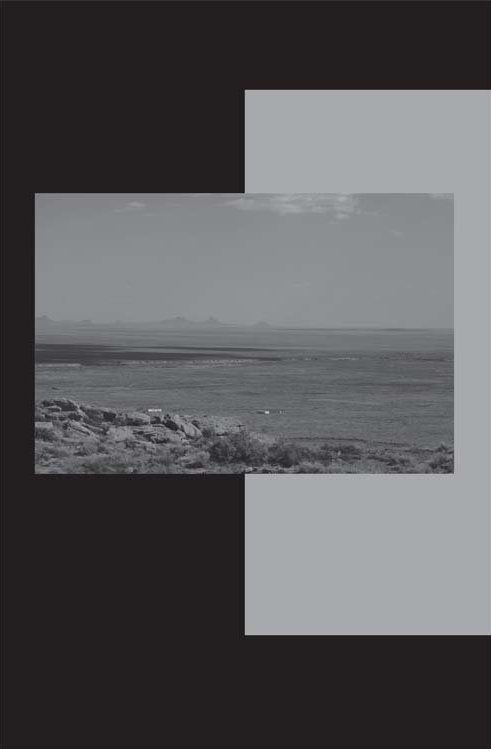
The back cover of the journal (pictured below) features a photograph that I took on the edge of Third Mesa near the village of Orayvi. At one point in the article I describe how one can stand in this location and see for miles in all directions:

To the south, the land extends beyond the Hopi mesas and the silhouette of Nuvatukiyaovi, or the San Francisco Peaks, is visible in the distance. In the valleys below, corn, melon, and bean fields stand out as green patches against a backdrop of earth and sandstone. From on top of the mesa one can enjoy the sweet smell of burning cedar, hear and feel the wind blowing over the mesa edge, and behold a breathtaking landscape surrounded by a canopy of deep blue sky. Looking east toward the village of Shungopavi on Second Mesa, running trails stretch from Orayvi like veins that connect and bring life to each of the Hopi villages. The trails near Orayvi give testimony to the tradition of running in Hopi culture and the continuance of running among today’s Hopi people. [p. 79]

I am indebted to several individuals who helped me revise this essay, including my colleagues at the University of Illinois, various Hopi and non-Hopi scholars, the Hopi Cultural Preservation Office, Lorene Sisquoc of the Sherman Indian Museum, and American Quarterly editors Curtis Marez, Jeb Middlebrook and Stacey Lynn.

If you would like a PDF copy of this article, please feel free to email me at sakiestewa@gmail.com, or submit a comment to this post.

Matthew Sakiestewa Gilbert

See also BEYOND THE MESAS post: Hopi runners article available for download