Native Historians and the Future of American Indian History

Below is a talk I gave at the Organization of American Historians conference (San Francisco, CA) on April 12, 2013. My talk was part of a panel discussion organized by Creek historian Donald Fixico on Native historians and the field of Native American history. At the time, I was an assistant professor of American Indian studies and history at the University of Illinois at Urbana-Champaign. It was an honor for me, especially so early in my career, to be invited to deliver a paper for this panel by such an esteemed Native historian.

********************************************

Native Historians and the Future of American Indian History

by Matthew Sakiestewa Gilbert

It’s an honor to be here today. 

I want to thank my fellow panelists, Rose Stremlau and Paul Rosier, our Chair Sherry Smith, and a special thanks to Don Fixico, who invited us to participate in this morning’s panel.

As many of you would agree, it’s an exciting time to work on American Indian history.

I think back to much of the 20th century when Native history was predominantly written by white, male scholars.

Some here might say that not much has changed.

Perhaps this is true, and it likely is, but there are shifts in our field that encourage me as an indigenous person, and that are worth discussing in today’s forum.

This morning, I want to focus my comments, albeit very brief comments, on the work and role of Native historians.

I’m encouraged by the number of Native historians who recently completed their Ph. D.s, secured faculty appointments, and are actively publishing their work. I’m thinking here of Oneida historian Doug Kiel, Cherokee and Choctaw historian Kent Blansett, and Apache and Dakota historian Kiara Vigil.

These, and many other Native historians, are on my “radar.” And they should be on all of our “radars” as we think about the future of American Indian history.

Some of these historians, such as Doug Kiel, have chosen to write about their own people, and some have attempted to explain their people’s histories by using indigenous frameworks and Native ways of understanding.

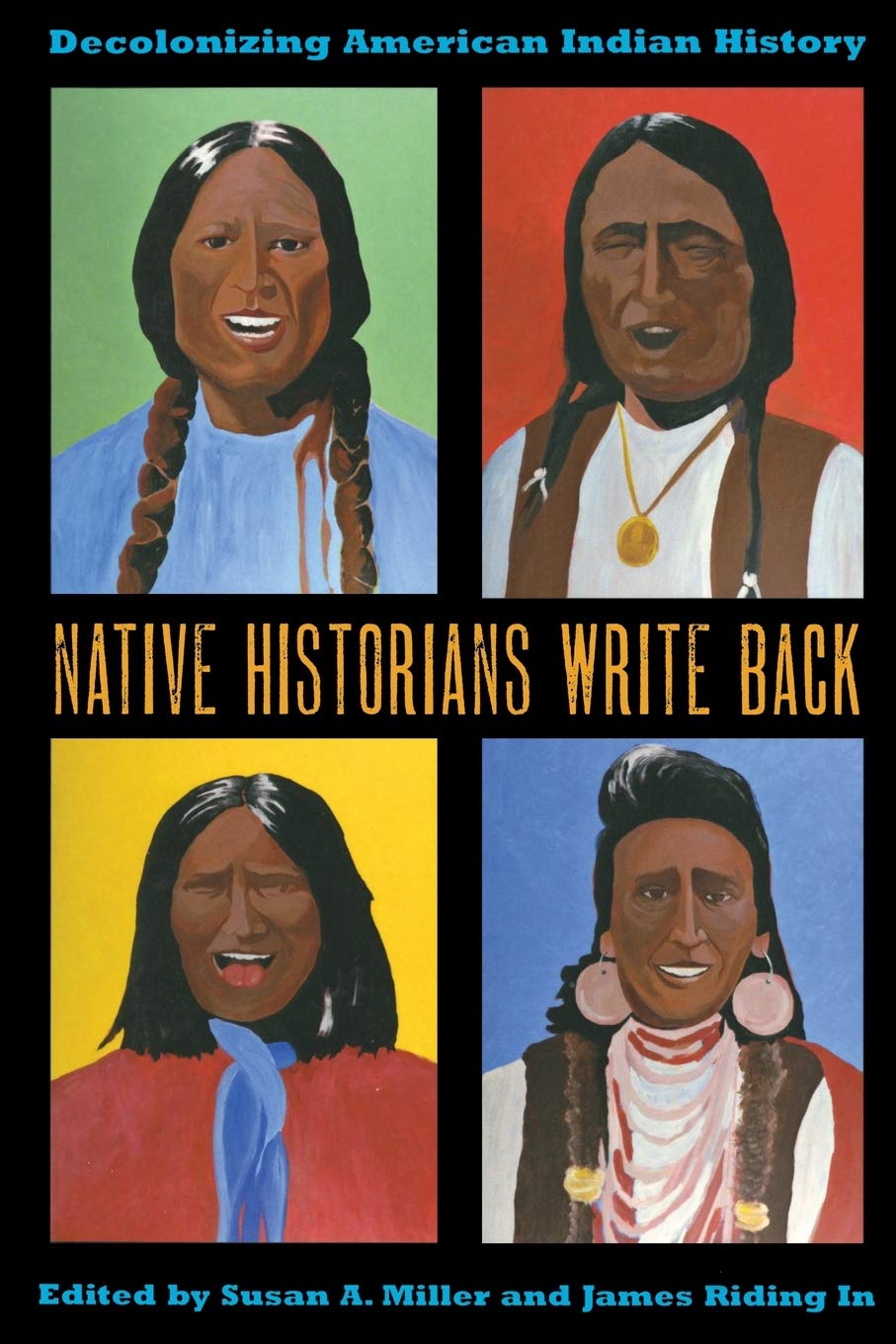
This, of course, reminds me of Seminole historian Susan Miller, who in her edited book Native Historians Write Back, keenly observed that Indigenous thinkers often prefer to “work within” their “own people’s specific worldview.”
Native historians understand this. We get it, but our use of indigenous frameworks (or epistemologies) in our work do not always clearly or convincingly translate with non-Native historians.

I experienced this most recently when I submitted an essay on Hopi runner Louis Tewanima to the Western Historical Quarterly. 

I was surprised that one of the reviewers had noted that my essay lacked a theoretical frame or argument. 

In my essay, I argued (in part) that when Tewanima competed and excelled in American and Olympic marathons, he followed in the tradition of ancient Hopi clan runners who once ran far beyond Hopi ancestral lands to bring blessings to the Hopi people. 

I situated Hopi culture at the center of the narrative, and I used a Hopi frame to explain his participation and success in national and international running events.

I did not want to write just another article on running – or even Native running. Nor did I want to provide readers with another romantic portrayal of Tewanima. 

Either my reviewer did not see the Hopi frame that I was employing, or he or she refused to accept it.

As Native historians, we need to continue asserting and introducing indigenous frameworks of understanding in so-called mainstream academic history journals. 

We know that this approach to Native history will be welcomed in American Indian Studies journals, but we have a broader (history) audience to reach with our work.

And this audience needs to be reminded that there are ways of thinking of Native history that go beyond the theories and models so commonly used and accepted by Western historians. 

Finally, some of us need to do a better job consulting the scholarship of Native historians and other thinkers when we research and publish on their indigenous communities. 

When we write about the Choctaw or Kiowa, we ought to honor their people by citing and listening to their scholars and other writers. Of course, I’m thinking here of Choctaw historian Jacki Thompson Rand, Choctaw writer LeAnne Howe, and Kiowa historian Jenny Tone-Pah-Hote.

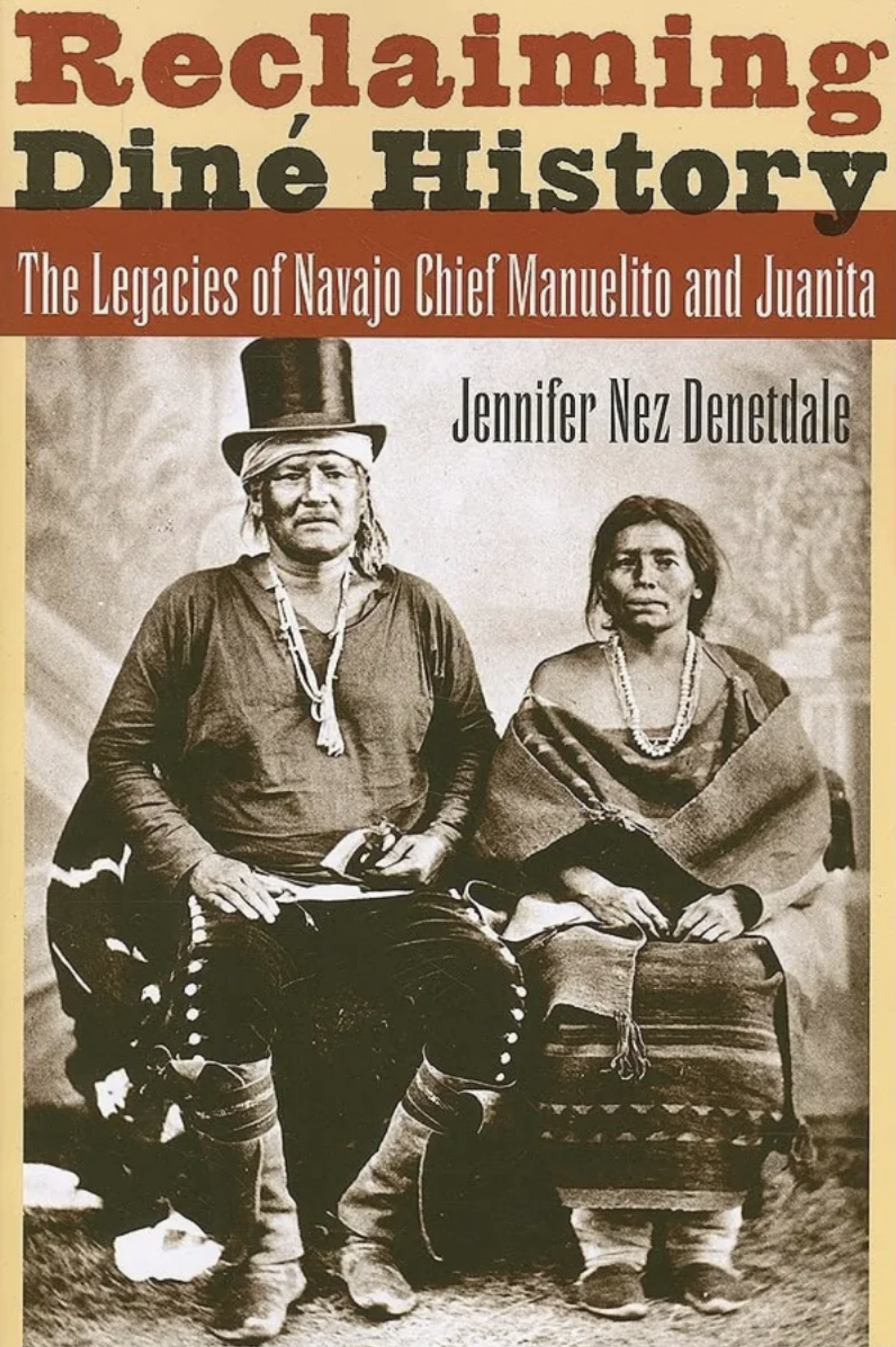
And when we write about the Dine’, we ought to ask ourselves how the work of Dine’ historians Jennifer Nez Denetdale, Lloyd Lee, and many others might enlighten our understanding of their people.
Some here might say that I am simply stating the obvious.

I wish this were the case, but having peer-reviewed numerous essays for journals and other academic publications in my relatively short academic year, I know that this remains a problem in our field.

Indigenous communities did not send us to academic institutions to receive Ph. D.s in history to simply increase the number of Native faculty at universities and colleges.

They did not send us to academic institutions to simply add a bit of color to a once predominantly white narrative.

We have a message to tell about our history and cultures. And we have a responsibility to tell these histories in ways that are meaningful and useful to our people.

When we write about our people, our voices matter. They have always mattered. 

I know that I spent my time talking about Native historians, but there are also young non-Native scholars such as Kate Williams and Kevin Whalen who are making noteworthy contributions. We should be appreciative when our Non-Native colleagues do it right and honor Indian people with their work.

In conclusion, I want to emphasize again that this is an exciting time to research and write on the history of American Indian people. We have a bright future ahead of us, and I look forward to seeing how the field will evolve and improve as Indian people take greater ownership of their past and write histories that originate from their communities and perspectives.

Kwa-kwa
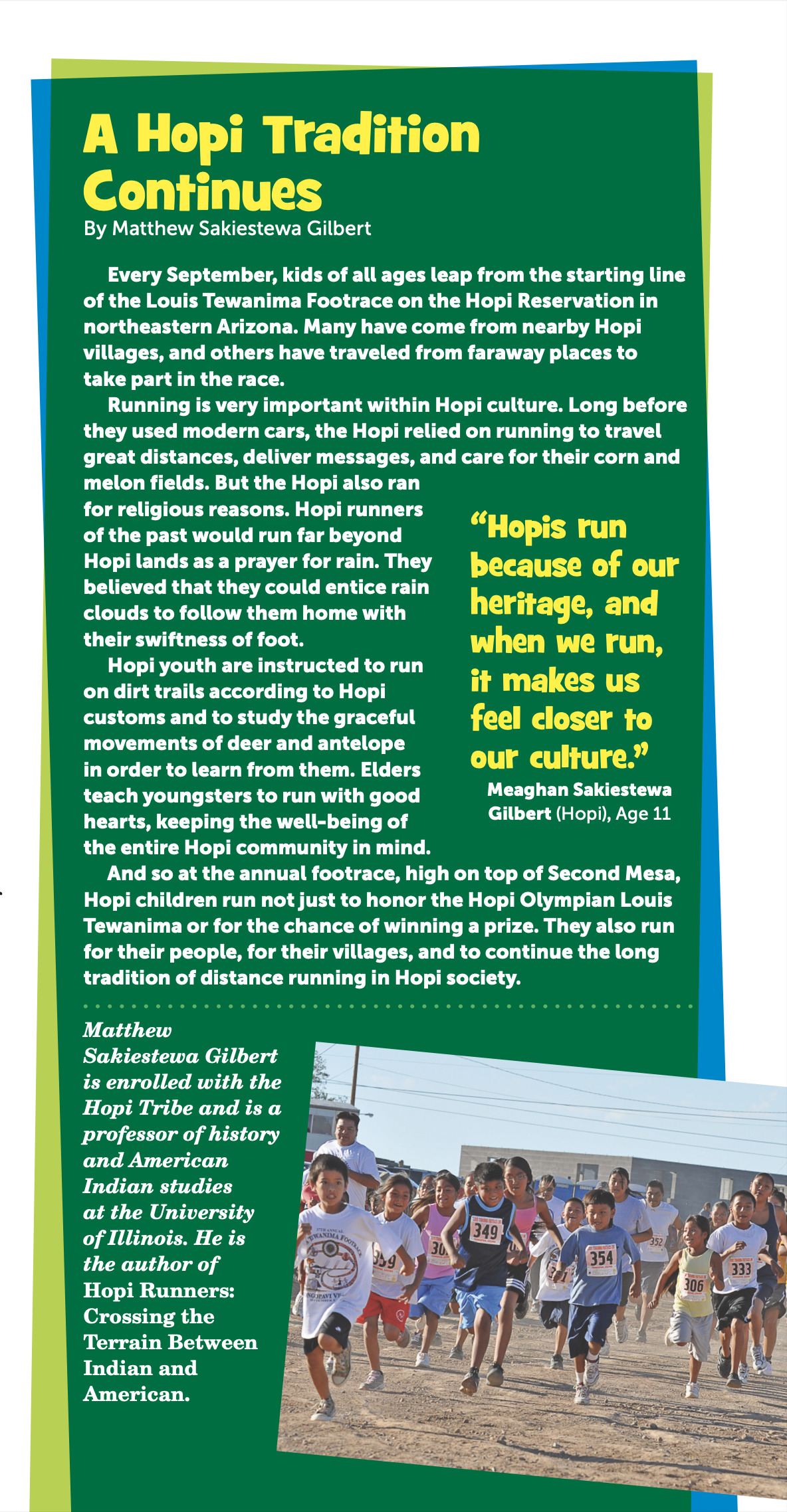
A short piece on Hopi running for Highlights magazine

Seven years ago, editors from Highlights, a magazine for children, asked if I would be willing to write a short piece on Hopi running. I was thrilled to do so. The piece, titled “A Hopi Tradition Continues,” was part of a larger story on Hopi runner Louis Tewanima called “Miles from Home” by Kim Valice.

When I was young, my parents (and school) subscribed to Highlights, and I, along with my siblings, spent hours reading its stories, fascinated by the many colorful drawings and other images gracing its pages. Taking place before children could “surf” the internet, we waited for the arrival of each new edition with great anticipation. The magazine became our gateway to the world.

As I reflect on my childhood, this contribution will always remain special to me. It is not a “heavy-hitting” scholarly piece, published in one of the academy’s esteemed journals. It is not something that would significantly enhance a faculty’s tenure and promotion case. However, it is more meaningful than that. It was written for children, most of whom had never heard about the Hopi people, where we come from, or our long tradition of distance running.

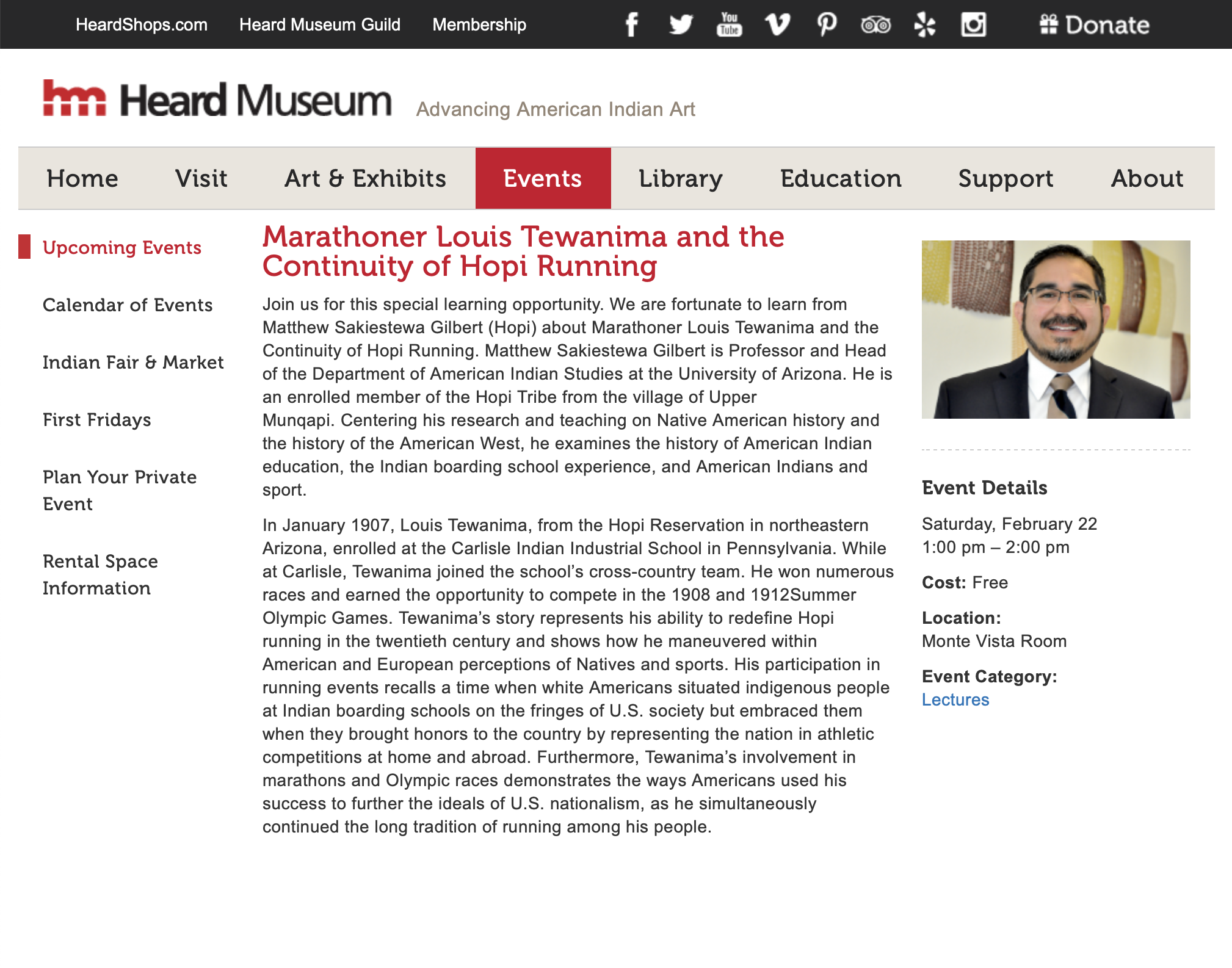
Upcoming talk on Hopi runner Louis Tewanima at the Heard Museum

Hopi Runner talk announcement
For more information, visit: https://heard.org/event/marathoner-louis-tewanima-and-the-continuity-of-hopi-running/

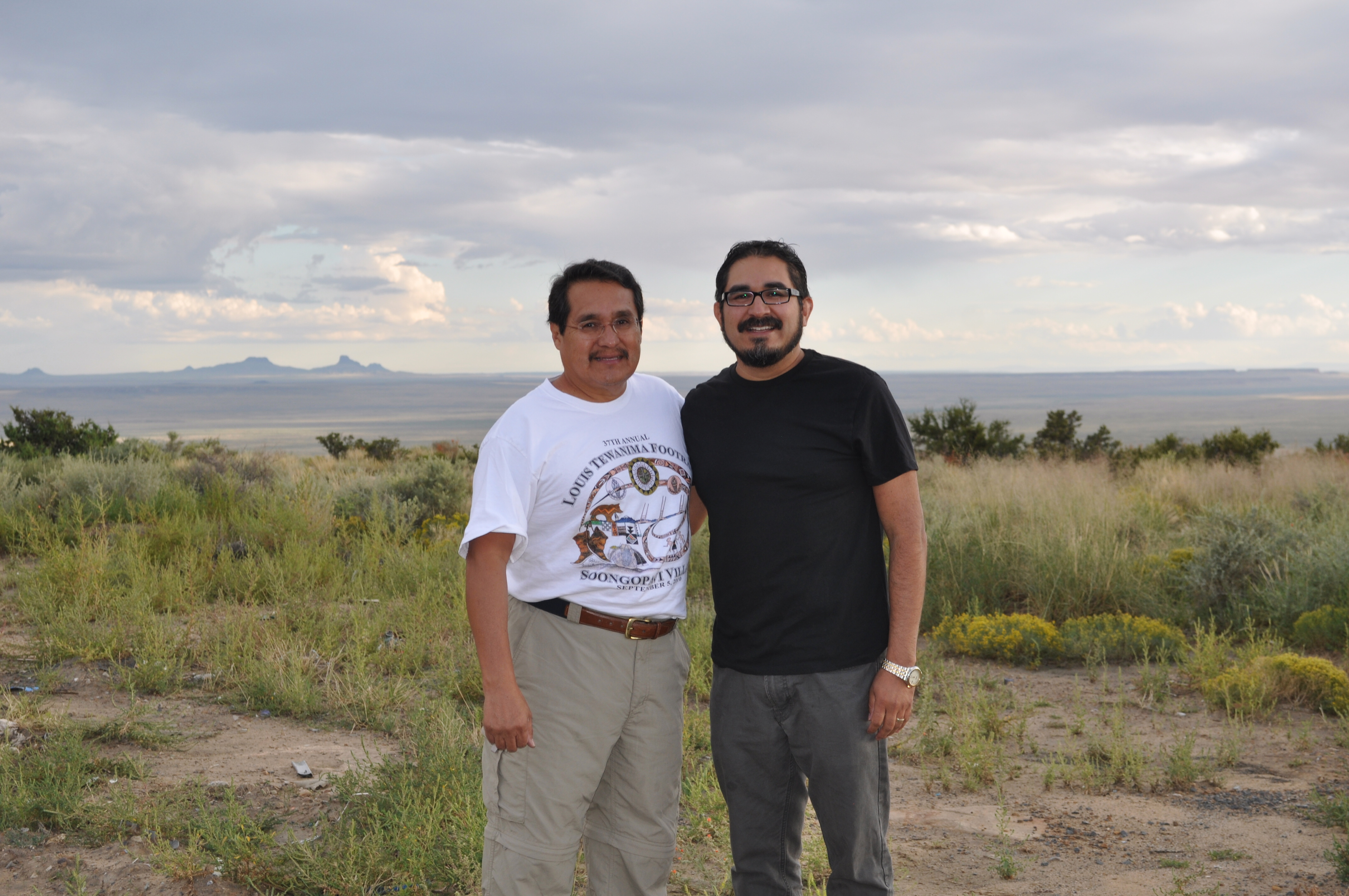
Spending time with my dad on Second Mesa

2015-09-05 19.40.00 copy

Last month I spent time with my dad, Willard Sakiestewa Gilbert, on Second Mesa. As some readers know, I often write and speak about his influence on my life and career. [See my post “Job Shadowing my Father, and my Path to Tenure”]

He, along with my mom and other members of my family, accompanied me to the Village of Shungopavi where I gave a talk on Hopi runners at the Louis Tewanima Footrace Pre-Race Dinner.

The photograph above is of me standing with my dad – right before I went inside the Shungopavi Community Center to present (below).

A special thanks to Sam Taylor and the Louis Tewanima Association for the opportunity to participate in their event.

2015-09-05 20.16.44 copy

“Tracking Tewanima” by Cindy Yurth of the Navajo Times

On September 1st I traveled back home to deliver a talk on Louis Tewanima at the Louis Tewanima Footrace Pre-Race Dinner. A reporter for the Navajo Times named Cindy Yurth was present in the audience, and recently published a story about the gathering. A special thanks to Yurth for granting me permission to republish her article on my blog.

————————————–

Tracking Tewanima

Centennial footrace draws record crowd to mesas

By CIndy Yurth

Tséyi’ Bureau

SHUNGOPOVI, Ariz. — Louis Tewanima may be the most celebrated Hopi runner, but he himself would have admitted he was not the fastest, a Hopi historian told the crowd gathered Saturday night for a celebration of the centennial of Tewanima’s bringing home an Olympic silver medal to this tiny but spectacular hamlet on top of Second Mesa.

The fastest Hopi ever was probably some unheralded farmer who never had a chance to go to school — or was forced to, as Tewanima was.

Still, Tewanima was the one who brought home the medal, and this past weekend Hopis along with well-wishers from around the world celebrated the centennial of that feat with footraces of varying lengths along some of the very trails Tewanima himself once graced.

“It was great to follow in his footsteps,” said the second-place finisher in the commemorative 10K race, 16-year-old Kyle Sumatzkuku of Moencopi and Mishongnovi. “I look up to him, even though he was even smaller than me.”

Sumatzkuku is not a large person by any means, but he’s probably correct in assuming Tewanima was smaller. Tewanima was 5-foot-4 1/2 and 115 pounds, according to Illinois University Professor Matthew Sakiestewa Gilbert, who gave the historical address Saturday night. In the press of his day, he was referred to as “the little Hopi redskin.”

This past weekend, though, he was everywhere. Perhaps literally.

“We believe they (the spirits of the departed) come to us in the clouds,” said race announcer Bruce Talawyma. “So he’s all around us today.”

Somewhere else, in fact, the race might have been cancelled when a torrential downpour washed out part of the trail Saturday. But Hopis, those ultimate dry farmers, know better than to scoff at moisture, even when it comes at such an inopportune time.

“That’s what we’re running for, right?” asked Sam Taylor, Tewanima’s great-nephew and one of the organizers of the race, at the pre-race carb-loading party that featured both the traditional spaghetti and a Korean noodle dish, courtesy of a Second-Mesa war bride and her churchmates. That’s a whole ‘nother story.

Running for rain was certainly the rule  in Tewanima’s time. As a member of the Sand Clan, Gilbert explained, Tewanima and his kinsmen were charged with running to far away places and back to “bring back the rain.”

That could be part of why Tewanima offered to run for Carlisle Indian School even though he was dragged to the school after protesting Natives being forced to study at Western institutions — and how he ultimately ended up in the Olympics.

As for the history of the Louis Tewanima race itself, it was mostly started because the organizers — the Hopi Athletic Association — saw the need for a competitive footrace on Hopi to give Hopi runners a goal. Naming it after Tewanima was almost an afterthought, said Leigh Kuwanwisiwma, who helped organize the first Tewanima Footrace in 1972.

“I’m not really sure how Louis Tewanima was brought into it,” Kuwanwisiwma confessed.

One sure thing is that the race succeeded in bringing attention to Tewanima’s feat, which may have been nearly forgotten otherwise.

“Everybody knew Louis Tewanima, just like we know everyone in the village,” explained race volunteer Kathy Swimmer of Shungopovi. “When I was growing up, him and his wife used to sit on their front porch in the morning and watch the kids load into the school bus. We just thought they were a nice old couple. I had no idea he was an Olympian until I joined the high school booster club and started helping with the race.”

After winning the silver medal, Tewanima returned to Shungopovi and never ran again except for religious reasons and pleasure.

As Gilbert mentioned in his talk, Tewanima himself knew he was not the fastest Hopi and never had been.

In the course of his research for a book on Hopi running he plans to publish soon, Gilbert uncovered a tale that he thinks sheds some light on the Tewanima era.

Apparently, Tewanima and fellow Hopi track star Philip Zeyouma, who attended Sherman Institute, were both home for a break and people encouraged them to race each other to prove once and for all which man was the best runner.

As both men appeared on the starting line in their school-issue tracksuits, the older men of the village started teasing them.

“You don’t look much like Hopi runners,” taunted one man.

“If you think you can do better, then come and show us!” challenged Tewanima.

Two 50-year-old men stepped forward.

“According to the New York Times report, they had essentially no clothes on, no shoes on, and looked like they were dying of consumption,” Gilbert said.

However, “By the time they reached the six-mile mark, those older men were so far ahead that Louis Tewanima and Philip Zeyouma dropped out of the race.”

The two 50-year-olds crossed the finish line “and just kept going,” Gilbert said.

So neither Tewanima nor Zeyouma was the fastest Hopi. And yet, Gilbert argued, they deserve to be honored, particularly Tewanima.

“This new generation of Hopi runners represented a transition in Hopi running,” the historian said.

“Whereas before people ran for transportation, and for religious reasons,” Gilbert said, “Tewanima ran as an ambassador of his people. He used running to create a privileged condition for himself at the Indian school. He used running to broaden his experience of the world.”

And as for the Louis Tewanima Footrace, “it gives testimony to the importance of running in Hopi society,” Gilbert said. “It celebrates the continuity of Hopi running.”

A record crowd of 361 runners would seem to agree.

————————————–

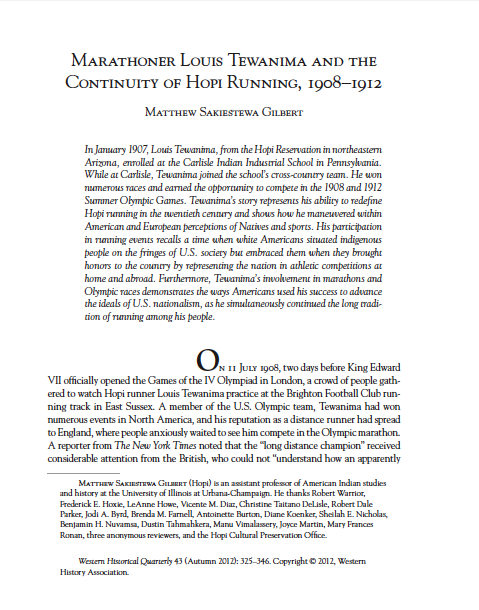
“Marathoner Louis Tewanima and the Continuity of Hopi Running, 1908-1912” (Western Historical Quarterly, Autumn 2012)

Click to download article (23 pages)

In the summer of 2010, I started writing an article titled “Marathoner Louis Tewanima and the Continuity of Hopi Running, 1908-1912.” The article was recently published in the Western Historical Quarterly (Autumn 2012, Vol. 43.3, pp. 324-346), which is the official journal of the Western History Association.

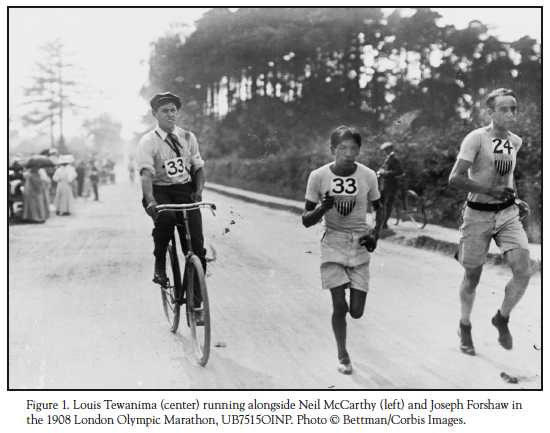
Louis Tewanima was from the village of Shungopavi on the Hopi Reservation in northeastern Arizona. In January 1907, he and ten other Hopis traveled to Pennsylvania to attend the Carlisle Indian Industrial School. While at Carlisle, Tewanima received fame and notoriety by winning several running events, which gave him opportunities to compete in the 1908 (London) and 1912 Olympic Games in Stockholm, Sweden. At the Stockholm Olympics, he won the silver medal in the 10,000 meter race.

Over the years, a number of people, especially non-Hopi individuals, have written about Louis Tewanima. The majority of the scholarly literature on Tewanima is found in Peter Nabokov’s Indian Running or larger narratives on Natives and sports, most notably Joseph B. Oxendine’s American Indian Sport Heritage and John Bloom’s To Show What an Indian Can Do.

Although popular audiences often read Tewanima’s story in newspaper articles, magazines, and books, these publications tend to focus on his participation in the 1912 Olympic Games in Stockholm, and many of them perpetuate a romantic portrayal of Tewanima by retelling accounts of him running after rabbits as a young man and running to Winslow, Arizona, “just to see the trains [go by].”

Contrary to one contemporary writer who noted that Tewanima was “almost totally forgotten,” scholars have remained intrigued by his accomplishments, although they are often overshadowed by accounts of his Carlisle teammate, Sac and Fox athlete Jim Thorpe. While references to Tewanima grace the pages of many articles and books, further studies are needed, particularly ones that interpret his accomplishments within the contexts of Hopi and American sport culture.

In my article I argue that Tewanima’s story represents his ability to redefine Hopi running in the twentieth century and shows how he maneuvered within American and European perceptions of Natives and sports. His participation in running events also tells of a time when white Americans situated indigenous people on the fringes of U.S. society but embraced them when they brought honors to the country by representing the nation in athletic competitions at home and abroad.

Furthermore, Tewanima’s involvement in marathons and Olympic races demonstrates the ways Americans used his success to advance the ideals of U.S. nationalism as he simultaneously continued the long tradition of running among his people.

A number of individuals helped me along the way as I conducted research and revised the article for publication, especially my colleagues in the American Indian Studies Program, and the Department of History at the University of Illinois. I am also thankful for the assistance of various Hopi individuals, including Tewanima’s relatives, the remarkable editorial staff of the Western Historical Quarterly, the Journal’s three anonymous reviewers, and officials with the Hopi Cultural Preservation Office for their support of my work.

If you would like to download a copy of my essay, please visit the following link: https://beyondthemesas.com/wp-content/uploads/2012/09/marathoner-louis-tewanima-and-the-continuity-of-hopi-running-1908-1912-whq-autumn-2012.pdf

Indian Country Today: The Summer Games Are the Native Games

On July 31, Indian Country Today published a nice write-up on past Native athletes and the Olympic Games. Scroll down on the article to read about Hopi runner Louis Tewanima.

Image
Click image for full story

Smithsonian to host exhibit on Native Olympic athletes

This Friday May 25, the Smithsonian will open an exhibit titled “Best in the World: Native Athletes in the Olympics.” The exhibit will feature Jim Thorpe, Duke Kahanamoku, Andrew Sockalexis, Billy Mills, and Hopi runner Louis Tewanima of Shungopavi on Second Mesa.

The Smithsonian has a nice write-up about the event on its website:

On the 100th anniversary of the Olympic Games in which athletes Jim Thorpe (Sac and Fox), Duke Kahanamoku (Native Hawaiian), Andrew Sockalexis (Penobscot) and Lewis Tewanima (Hopi) represented the United States in Stockholm, the Smithsonian’s National Museum of the American Indian presents “Best in the World: Native Athletes in the Olympics.” The exhibition opens Friday, May 25.

In 1912, Thorpe swept both the pentathlon and decathlon at the Olympic Games, becoming the first and only Olympian to accomplish such a feat and earning the accolades of King Gustav V of Sweden, who proclaimed Thorpe to be “the greatest athlete in the world.” Thorpe was joined that year by fellow Native teammates Kahanamoku, who won the 100-meter freestyle; Sockalexis, who placed fourth in the marathon; and Tewanima, who won the silver medal and set an American record for the 10,000 meters that stood for more than 50 years until Billy Mills (Oglala Lakota) won the gold medal in Tokyo in 1964.

Louis Tewanima competed in the 1908 (London) and 1912 (Stockholm) Olympic Games. For those who might be interested, I have written an article on Tewanima titled “Marathoner Louis Tewanima and the Continuity of Hopi Running, 1908-1912,” which will appear soon in the Western Historical Quarterly.

Upcoming lecture on Louis Tewanima at University of Notre Dame – Wed. April 11, 2012

Arizona Republic highlights Louis Tewanima

At the end of January, I wrote a post about recent articles on Native runners. In this post, I mentioned that as the 2012 Olympic Games in London approaches, we should expect to see an increase in the number of articles being published on Native athletes, especially long distance runners.

With that in mind, I want to direct you to an article that Jeff Metcalfe published last week titled “Louis Tewanima was Arizona’s sports icon in 2012” in the Arizona Republic. Most of the material for Metcalfe’s article came from previously published sources, including Kate Buford’s Native American Son: The Life and Sporting Legend of Jim Thorpe and Bill Crawford’s All American: The Rise and Fall of Jim Thorpe

I also wrote an article on Tewanima titled “Marathoner Louis Tewanima and the Continuity of Hopi Running, 1908-1912.” The essay is scheduled to appear in the August 2012 edition of the Western Historical Quarterly – the official journal of the Western History Association.