Three Hopi villages now formally reject SB 2109

Rosanda Suetopka Thayer of the Navajo-Hopi Observer (NHO) recently reported that in addition to the leadership at Hotevilla, village leaders at Bacavi and now Shungopavi have officially notified Chairman LeRoy Shingoitewa and the Hopi Tribal Council of their disapproval of SB 2109. Momentum against SB 2109 is building back home, and I anticipate similar actions by other villages in the near future. See Thayer’s articles in the NHO:

Shungopavi religious leaders oppose Hopi Tribe’s claim to waive Hopi water rights (June 13, 2012)

Village of Bacavi formally rejects Senate Bill 2109 (June 12, 2012)

Village of Hotevilla formally rejects SB 2109 (May 29, 2012)

Hopi Tumalhoymuy Tutuveniam – June 2012

Click image to download (12 pages)

NO RUNNING ALLOWED

I recently returned from attending the Native American & Indigenous Studies Association conference at Mohegan Sun and Resort. Mohegan Sun is a tribally owned and operated hotel and casino in Uncasville, CT.

The day after I arrived at the hotel I stopped by the Concierge and asked about running paths in the area. The woman behind the desk told me that people were not permitted to run on the roads near the hotel.

She said that if security saw me running outside, they would drive after me, put me in the car, and take me back.

It sounded like fun. But I quickly came to the conclusion that hotel security had better things to do than chase after running Hopis.

Still, I  wonder how long it would have taken the hotel police to catch up with me? Probably not very long.

Officials at Mohegan Sun are not against running. They put the “NO RUNNING” rule in place to protect their guests. According to the Concierge, several runners have been hit by cars, and many of these incidents have been “hit and runs.”

Nevertheless, I found it ironic that I was staying at a hotel on an Indian reservation and not allowed to run outside. But again, they had good reasons for their running policy.

After my conversation with the Concierge, I made my way to the hotel rec room and reluctantly got on a treadmill.

I don’t like running on treadmills.

I wanted to be outside dodging cars and attempting to outrun the police. Instead I was stuck on a machine, watching court t.v., and feeling very little sense of accomplishment.

MacDonald: If Navajo can build casinos, it can build waterlines – Story by Kathy Helms of the Gallup Independent

MacDonald:                                                                                                                                             If Navajo can build casinos, it can build waterlines

Gallup Independent                                                           June 7, 2012

By Kathy Helms

Diné Bureau

WINDOW ROCK — If the Navajo Nation can borrow $200 million to build casinos, why would it give away the Navajo people’s future for $199 million worth of groundwater projects when it could borrow the money, build the pipelines itself and not have to answer to anybody?

That’s what former Navajo Nation Chairman Peter Mac-Donald wants to know.

“It doesn’t make sense to me at all,” he said. “You don’t have to give anything away that belongs to your people and particularly to the future generation.”

But that is exactly what Navajo will be doing if it agrees to the proposed Navajo-Hopi Little Colorado River Settlement and the two water projects it offers, he believes.

“It’s really sickening to see senators and representatives exploit the economic misery of the Navajo people, their constituents, by telling lies and saying that because these people are hauling water with a wagon, we’re going to fix it by this Senate Bill 2109. My God, that’s the kind of rhetoric they have been using over the past 100 years to steal all of Native American precious resources,”MacDonald said last week.

“Everybody hauls water in pickup trucks. How can anyone accept that without asking for an apology? It’s fraud.”

He said rather than having a picture of Dr. Adrienne Ruby and her horses and wagon in the background when U.S. Sen. Jon Kyl introduced S.2109, he should have had a big sign stating, “Help us steal more water from the Indians.”

All of these federal “socalled help for the Indians” attempts have resulted in misery and deprivation, MacDonald said, citing the Navajo-Hopi Land Dispute as example. “It’s the same kind of tactics that are being used on this settlement. ‘We’re going to fix the Indian problem. They’re not going to have to haul water anymore, blah, blah, blah, blah, blah.’ Well, a hundred years from now, it’s going to be even worse than that. We’re going to be taking our buckets down to Phoenix to get some water,” he said.

No matter what anyone says, Navajo has primary rights to all the water within the four sacred mountains, MacDonald said. “The Winters’ doctrine, and the laws that were put in place by the Supreme Court back in 1908 are still there. The Treaty of 1868 has not been changed either. All of us who are aware of these water rights fights know that over the past 100 years, western states have been trying every way they can to get Native American water rights away from Native Americans, even to the point of stealing it.”

MacDonald has written a list of recommendations on how Navajo should go about quantifying its water — something he says is not found in the settlement. Navajo should throw away the Upper and Lower Colorado River Basin Compact — “a method used by the seven states to steal our water” — and pursue litigation against the United States using Winters’ doctrine, which establishes rights prior to Arizona and New Mexico statehoods.

“The lawyers that we have say, ‘Oh, no, Congress says all the water rights litigation has to go through state court.’ That may be what it says, but Winters’ doctrine doesn’t say that. Yes, the states my try to come in and the federal judge may let them come in, but so what. It’s your lawsuit and you are going to assert water rights before the states were drawn.”

Navajo should plan to spend as much as $25 million a year to get the world’s best water rights expert to fight the United States. “For goodness sake, don’t use Window Rock lawyers,” he said.

Meanwhile, Navajo could build two or three water systems similar to Central Arizona Project. “You go get the money just like you got the money for the casino. This is your land. You said you’re sovereign. Use your sovereignty to build the water system for your people, for your nation. You’ don’t need anybody’s approval to build these water lines because you can finance it yourself,” he said.

“All the things that the government is doing here is based on treaty obligation. We don’t have to give up anything for them to build roads, to build hospitals, to build schools for us. Why are we going to give up everything for them to build a water line for us? That’s wrong, wrong, wrong. You don’t have to be a water rights expert to see that that’s wrong,” he said, adding that Navajo Generating Station and Peabody have no place in the water rights question.

Asked whether he supports a referendum on the proposed Little Colorado River settlement, MacDonald said there’s nothing wrong with a referendum, but Navajo also has elected leaders to watch out for the people’s interest. “Why should they be leaders and let the public make a decision unless there’s really two defining issues that are equally one way or the other?

“But this is not that way. This is a case where somebody has stolen 100 head of your sheep and you know where it is and who is herding that sheep with your brand and your earmark on them. The guy is saying, ‘I know this was your sheep, but it’s mine now. If you want something, if you agree not to sue me — any claim you have on these sheep, you’ve got to waive it — in return for you not to bother me, I’m going to give you one old ewe. The other 99 I’m going to keep. Leave me alone.’ That’s the situation. How could you have a referendum on something like that?

“Or to make it even worse, they want to cut the tail off one sheep and they want to give you that tail back for you to shut up forever, and they want to keep the rest of the sheep. You want a referendum on something like that?”
Village of Hotevilla formally rejects SB 2109 – Story by Rosanda Suetopka Thayer

The following story by Rosanda Suetopka Thayer will be published soon in various newspapers. News of Hotevilla’s formal rejection of SB 2109 is very significant and I hope that other villages will make similar statements in the near future. The official Hotevilla Proclamation and Resolution on SB 2109 is included at the end of this post. PLEASE DISTRIBUTE WIDELY.

————————————————————————–

Village of Hotevilla formally rejects SB 2109

Historical, unprecedented move by ” Hopi traditional” village a first in dissaproving LCR settlement

Story by Rosanda Suetopka Thayer

Exercising its aboriginal sovereignty rights, the “traditional” village of Hotevilla, 3rd Mesa has formally rejected the Hopi tribal approval of SB 2109, making it the first of 12 villages located on the Hopi reservation to formally notify the Hopi Tribal Council of its dissaproval of any further action or legislative movement on its village behalf.

In a formal village meeting held on May 21, 2012, at a regular meeting of the village community, Hotevilla adopted a Proclamation and Resolution directing and mandating that the Hopi Tribal Council reject Senate Bill 2109 – Navajo -Hopi Little Colorado River Rights Settlement Act of 2012 and that “failure” to honor the village directive “shall constitute gross neglect of duty as defined in the Hopi constitution and By-Laws, Article V, section 2.

This Hotevilla proclamation is consistent with the Hopi Appellate Courts Final Decision in the Village of Bacavi’s Certified Question filed in 2010 that traditional Hopi villages retain all aspects of “their inherent aboriginal sovereignty” and that those powers are “outside the scope of authority of the Hopi Tribal Council.

The discussion and approval of this village proclamation was a result of two separate village public meetings held at Hotevilla to educate its village membership on the water issue.

Public meetings were held on March 26th and April 13th, 2012.

The second public meeting on April 13th, the Hopi Tribes’ Water and Energy Team Chair-George Mase, along with Hopi Chairman Leroy Shingoitewa, made their arguments to the village in favor of the settlement agreement and “agreement in principle.”   This meeting was requested by Hotevilla village with the added special condition that no outside tribal attorneys be present and that the Hopi Chairman and his Water and Energy Team present their materials in the Hopi language solely on their own.

This proclamation asserts that the village of Hotevilla has the “inherent sovereign power” to maintain and exercise its rights and powers over all matters and resources belonging to the village and asserts that these rights and powers have “never been delegated to the Hopi Tribal Council.”

The Hopi Constitution and By-Laws does in fact, specifically “admonish” that the Hopi Tribal Council “shall not sell or lease tribal properties which includes water rights.”

Despite protests from Hopi Energy and Water Team Chairman-George Mase at the public meeting who said that “we cannot walk away from this agreement”, the Hotevilla Village Board of Directors, on behalf of its traditional village membership wholly reject SB2109 and “any form of agreement intended to waive, or extinguish our rights to our sacred waters” and directs the Hopi Council to reject the bill.

The formal 3-page village proclamation by Hotevilla is titled, “HV-102-2012” and was signed off on May 21st.

Click to download the Hotevilla Proclamation and Resolution on SB 2109 (4 pages).

Smithsonian to host exhibit on Native Olympic athletes

This Friday May 25, the Smithsonian will open an exhibit titled “Best in the World: Native Athletes in the Olympics.” The exhibit will feature Jim Thorpe, Duke Kahanamoku, Andrew Sockalexis, Billy Mills, and Hopi runner Louis Tewanima of Shungopavi on Second Mesa.

The Smithsonian has a nice write-up about the event on its website:

On the 100th anniversary of the Olympic Games in which athletes Jim Thorpe (Sac and Fox), Duke Kahanamoku (Native Hawaiian), Andrew Sockalexis (Penobscot) and Lewis Tewanima (Hopi) represented the United States in Stockholm, the Smithsonian’s National Museum of the American Indian presents “Best in the World: Native Athletes in the Olympics.” The exhibition opens Friday, May 25.

In 1912, Thorpe swept both the pentathlon and decathlon at the Olympic Games, becoming the first and only Olympian to accomplish such a feat and earning the accolades of King Gustav V of Sweden, who proclaimed Thorpe to be “the greatest athlete in the world.” Thorpe was joined that year by fellow Native teammates Kahanamoku, who won the 100-meter freestyle; Sockalexis, who placed fourth in the marathon; and Tewanima, who won the silver medal and set an American record for the 10,000 meters that stood for more than 50 years until Billy Mills (Oglala Lakota) won the gold medal in Tokyo in 1964.

Louis Tewanima competed in the 1908 (London) and 1912 (Stockholm) Olympic Games. For those who might be interested, I have written an article on Tewanima titled “Marathoner Louis Tewanima and the Continuity of Hopi Running, 1908-1912,” which will appear soon in the Western Historical Quarterly.

Rare bottles

On Thursday there was a garage sale in our neighborhood.
As I drove by with my daughters, we decided to stop and take a look.
An old man, who reminded me of a train conductor (hat, overalls, etc.), greeted us.
He had a lot of junk for sale, but nice stuff, too.
One of the things that caught my eye was a set of cobalt blue beer bottles sitting on a table, which I thought were rather interesting.
“What’s the story behind these bottles?”, I asked him.
I thought perhaps they were from a day long ago.
“Oh, these are really rare, and quite expensive” the old man remarked.
“They’re very special. I  cleaned them up good [he had washed off the labels], and people can use them as flower vases.”
He then showed me how to do this with a bunch of fake flowers, which he was also selling.
As he finished with his flower trick, I turned over one of the bottles and I saw a stamp that read: “Best by 6-30-2012”
“Aren’t these the new Bud Light bottles?”, I asked.
He looked up at me, knowing that he had been caught, and said, “Yes, that’s right.”
Our friendly conversation quickly came to an end.
He went on to helping someone else, and we got back in our car and drove away.

Lilian Hill presentation on Hopi Tutskwa Permaculture

This is a 30 minute presentation by Lilian Hill of Kykotsmovi on the great work that she and others are doing in the Hopi Tutskwa Permaculture program. She talks about Hopi farming, orchard keeping, ecological building, sustainability, and many other topics. Also, be sure to check out her article about the program in the Green Fire Times. Here’s additional information on Hopi Tutskwa Permaculture from the Kleiwerks International website:

Hopi Tutskwa Permaculture is a community group based in Kykotsmovi Village within the Hopi Nation in Arizona. Tutskwa means “the life ways and knowledge of the land,” an important part of mission of Hopi Tutskwa Permaculture: to create opportunities for community members to participate in the continuation of Hopi culture.

Thoughts of corn back home

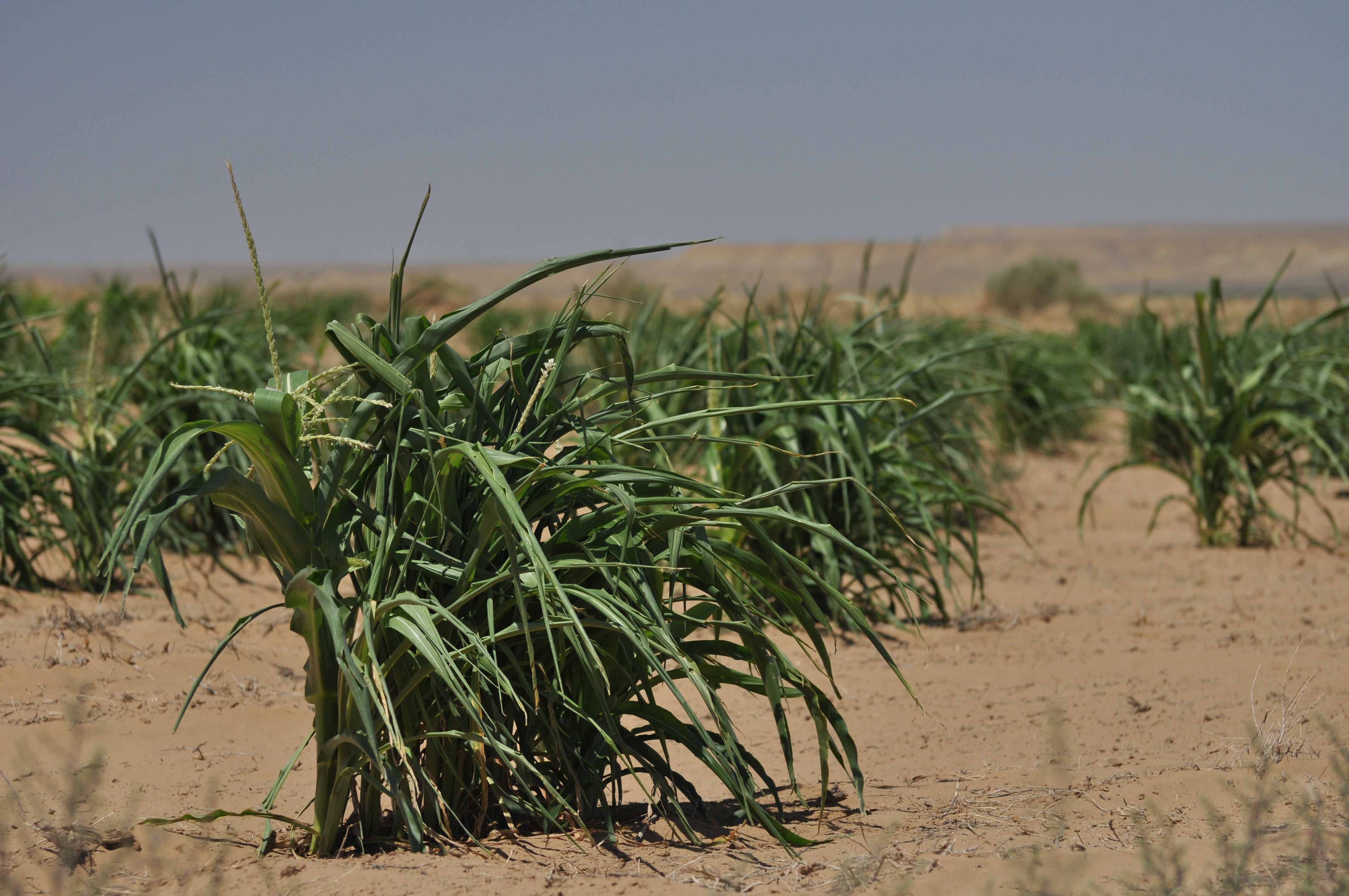
This week I’ve been writing a lot about Hopi corn beyond the mesas. And yet, the more I write about Hopi corn in Illinois, the more I think about corn back home. Here’s a scene (depicted in the photo) that one can never replicate in the Midwest, or any other place besides the Hopi mesas of northeastern Arizona.

Hopi Third Mesa Corn, Photograph by Matthew Sakiestewa Gilbert

Indigenous corn

This afternoon I took a break from grading final exams to check on our corn, which students from the University of Illinois planted last week. As many of you know, we are filming this corn for a film by Victor Masayesva, Jr. titled “Maize.”

When I arrived at the plot, I was glad to see that our corn was coming up.

The first photo is of Hopi sweet corn (twaktsi), and the second one shows Tzeltal corn (teosinte) of southern Mexico. They are planted next to each other.

I also added a few photos to give readers a sense of the plot and surrounding area.

Hopi sweet corn (twaktsi), photograph by Matthew Sakiestewa Gilbert
Teosinte, Photograph by Matthew Sakiestewa Gilbert
Photograph by Matthew Sakiestewa Gilbert